
The flight from Catania to Bari was only a short one so it was extremely humorous when the flight attendant came over the PA advising that we could purchase drinks and food during the flight. He quickly realised his mistake although did not admit it, coming back on the PA a short time later stating only that the flight time was too short to provide onboard service today.
We were beyond excited to be heading back to Puglia often called the “Heal of Italy”. We had travelled through Puglia on the 2023 Summer Vintage Tour and enjoyed it so much that we knew we had to travelled back as soon as we could to not only go back to some of the wonderful places that we had fell in love with but also visit some new places that we didn’t get the opportunity to explore previously.
On arrival at Bari Airport, we picked up the hire car and headed north instead of the usual southerly route that most tourists to the region now follow. Our first destination was the coastal town of Trani located about an hour’s drive from Bari. It was getting late in the day when we turned off the highway and headed for the Old Town section of the city where our accommodation was located.
As we had not been to Trani previously we weren’t sure what to expect and more importantly, where the ZTL zone was located and when it was in operation around the Old Town area. On our first pass we headed straight for the apartment’s address only to find the road leading up to it was closed off which meant we had to do a compete circuit of the town through tight cobblestone streets to locate the nearby town square where we could leave the car overnight and then walk to the apartment with our bags.

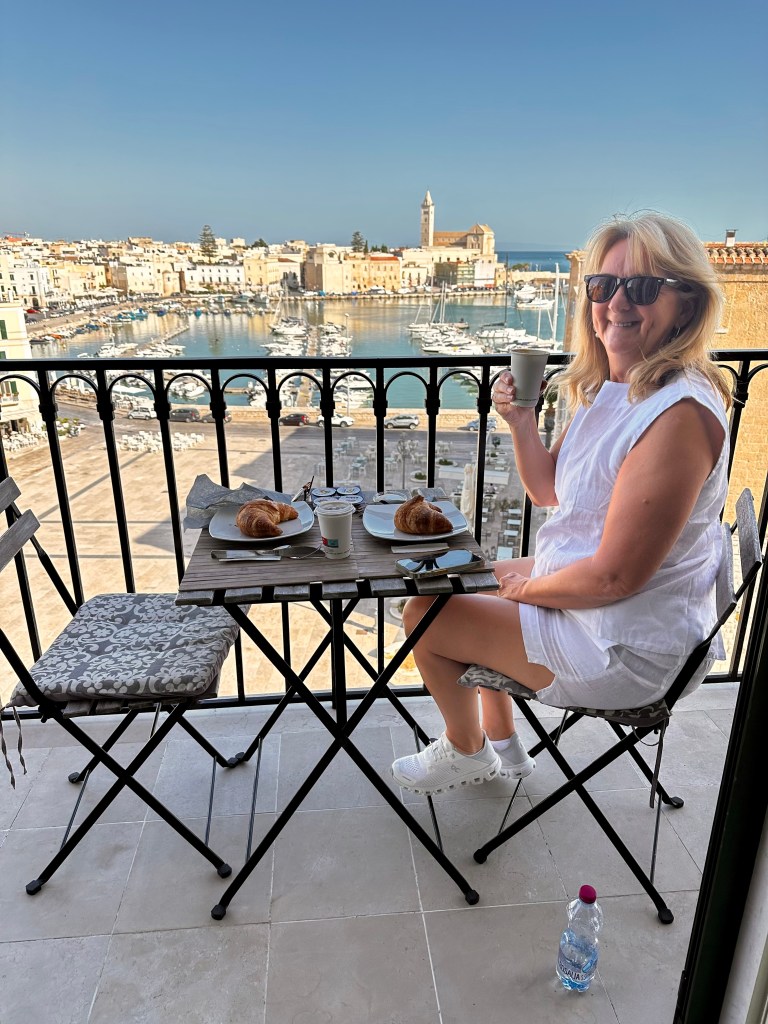
When we finally arrived, we were met by a friend of the owner and on opening the front door to the Guest House we could not believe the view that greeted us – our room had a balcony overlooking the Adriatic Sea and the beautiful harborside precinct – it was a fantastic location.

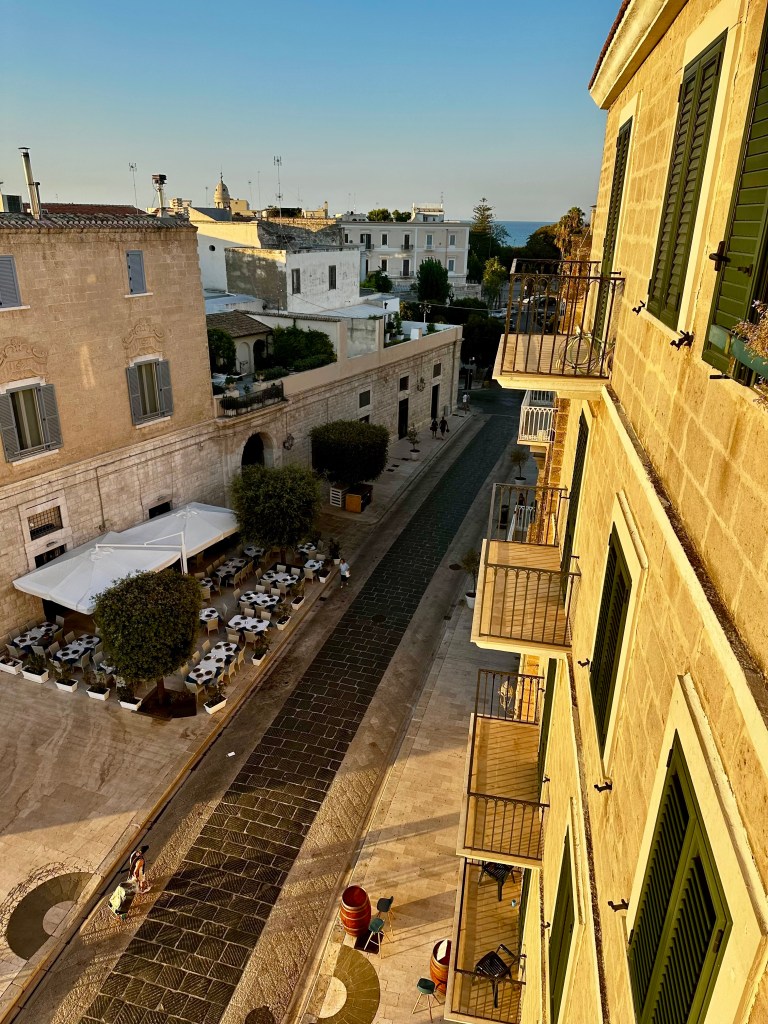
Each morning a person from a nearby coffee shop would turn up at our door with coffee and croissants for breakfast as part of our stay to have on the balcony overlooking the magnificent view which you could not get enough of.
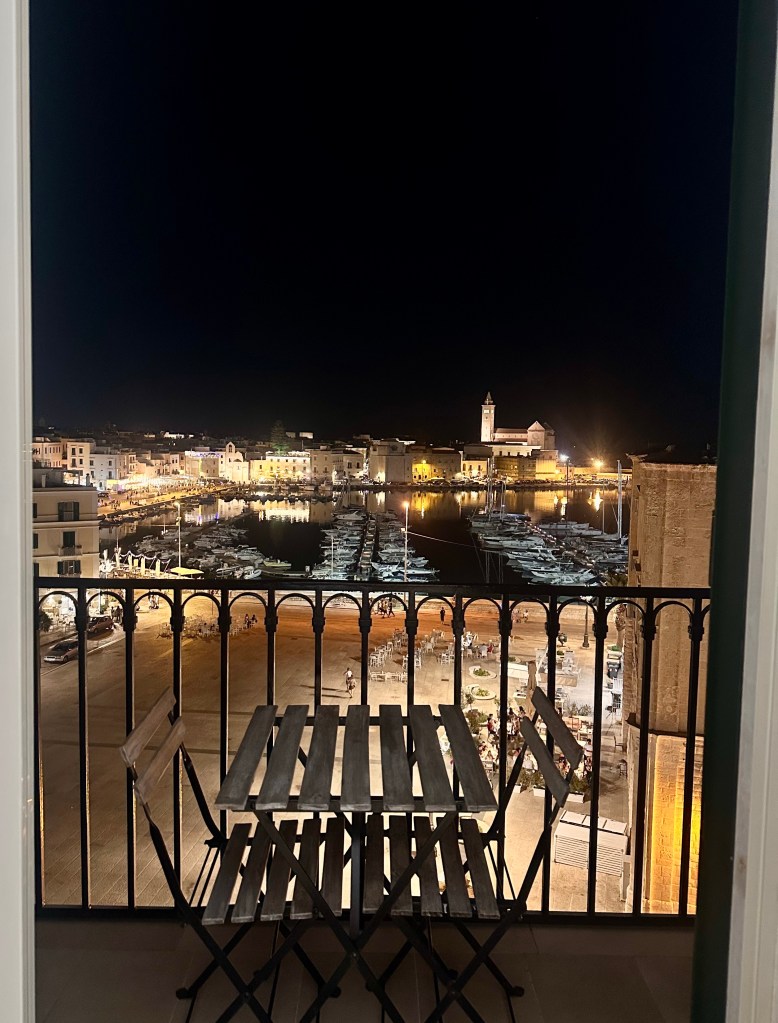
Trani dates to around the 9th century and has gone through many iterations since then, particularly between the 11th and 13th centuries when it was an important departure point for the Crusaders later becoming a key trading port for wines, fruit and grain during the 19th century.
It is primarily known for the beautiful Romanesque seaside cathedral (Cattedrale di Trani) that was built during the Norman period and completed in 1143, a delightful maze of medieval streets, whitewashed buildings, Emperor Frederik II’s castle built in 1233,
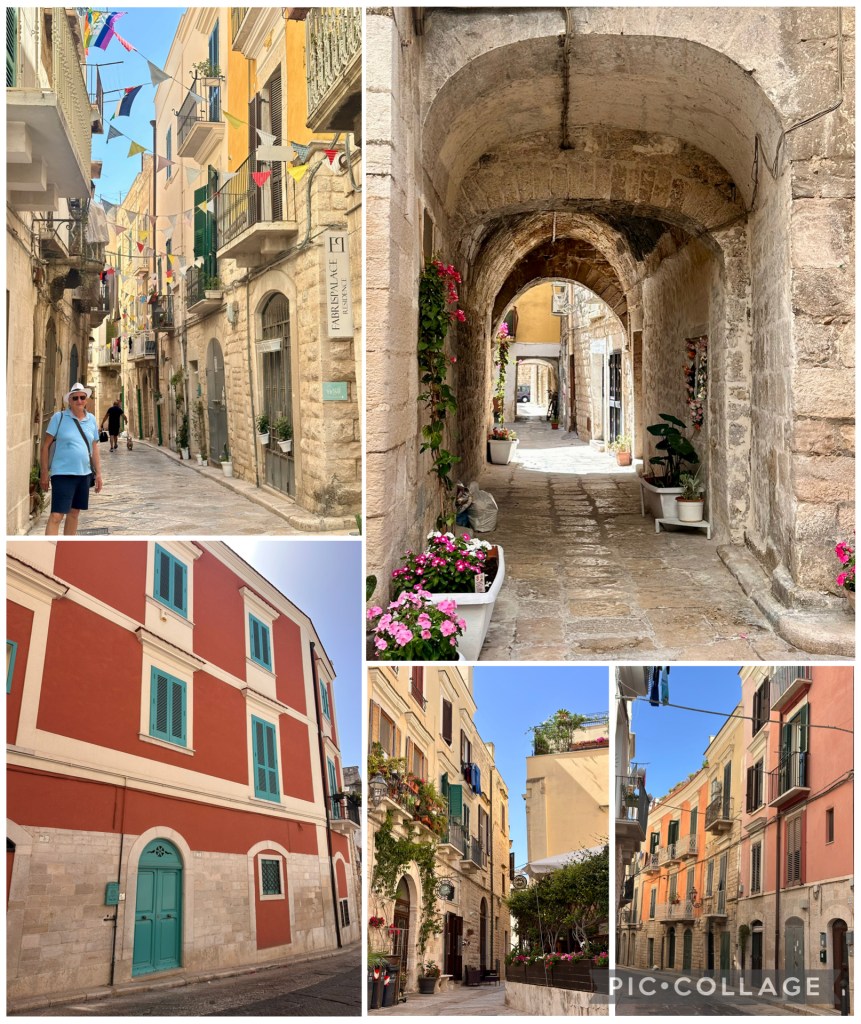
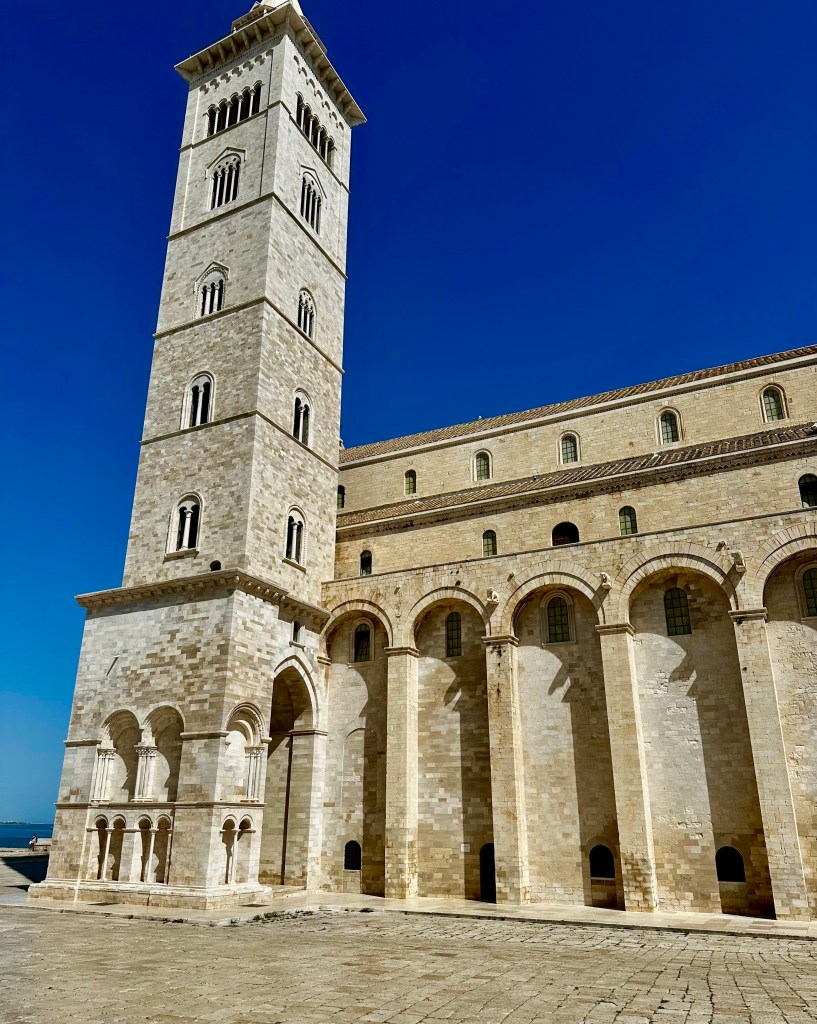
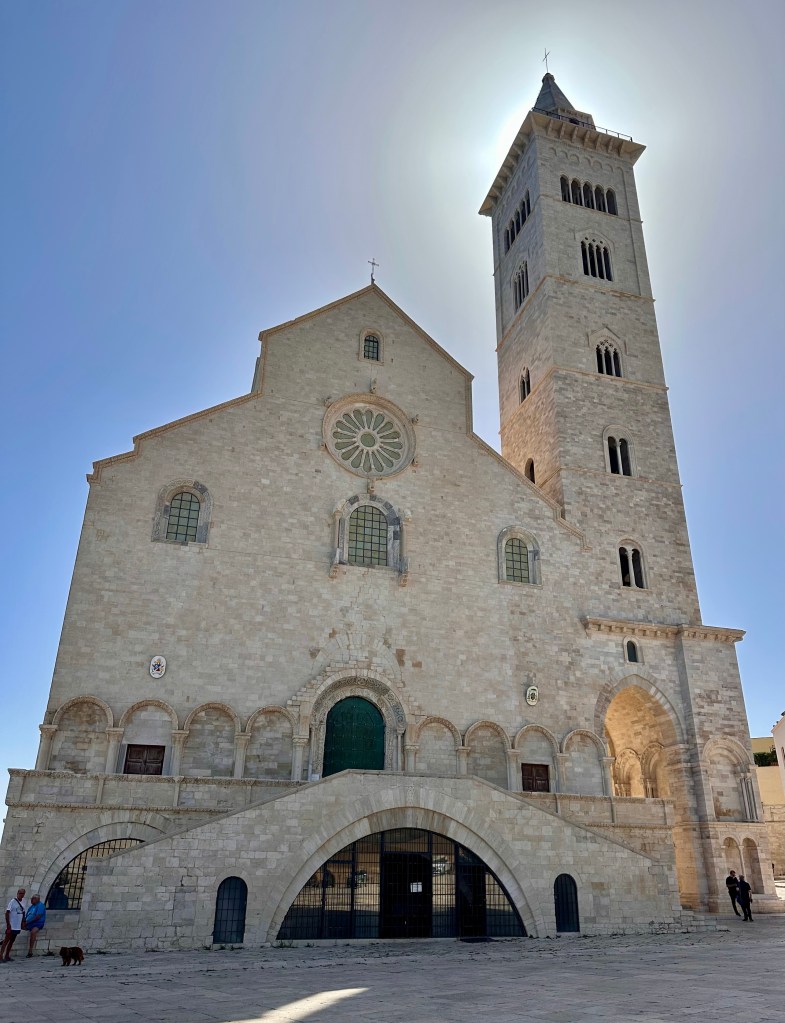
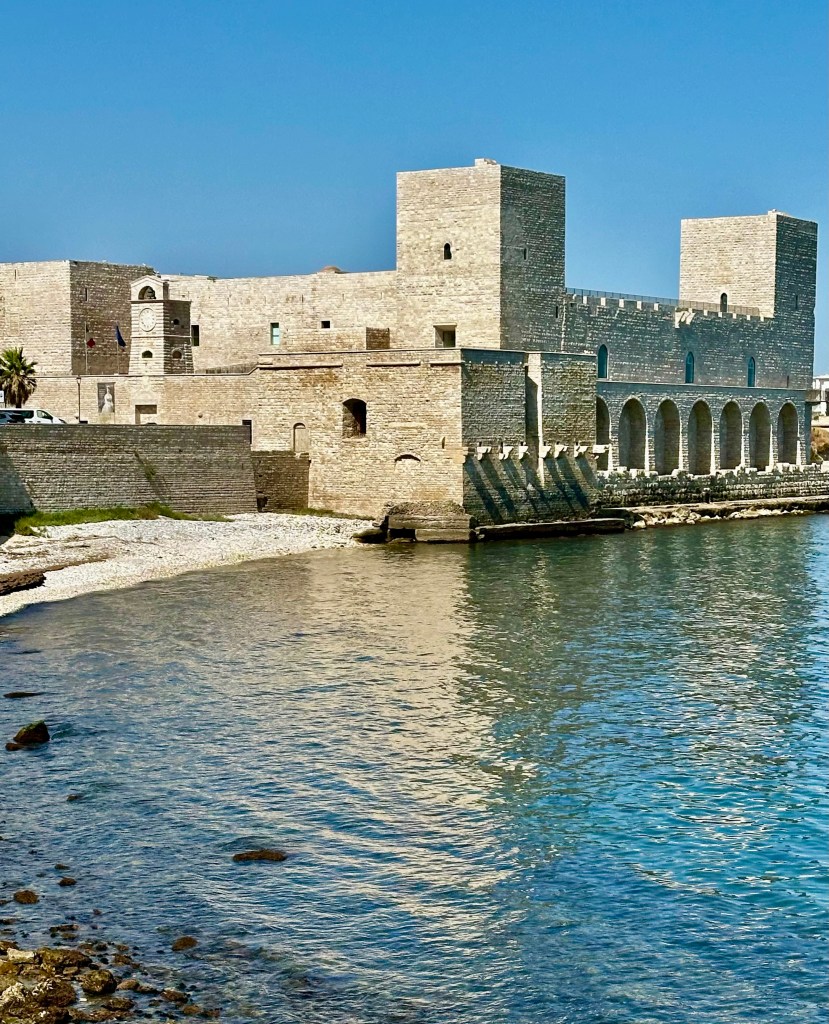
and a very attractive harbour and the freshest local seafood sold directly on the waterfront (with no ice in sight)
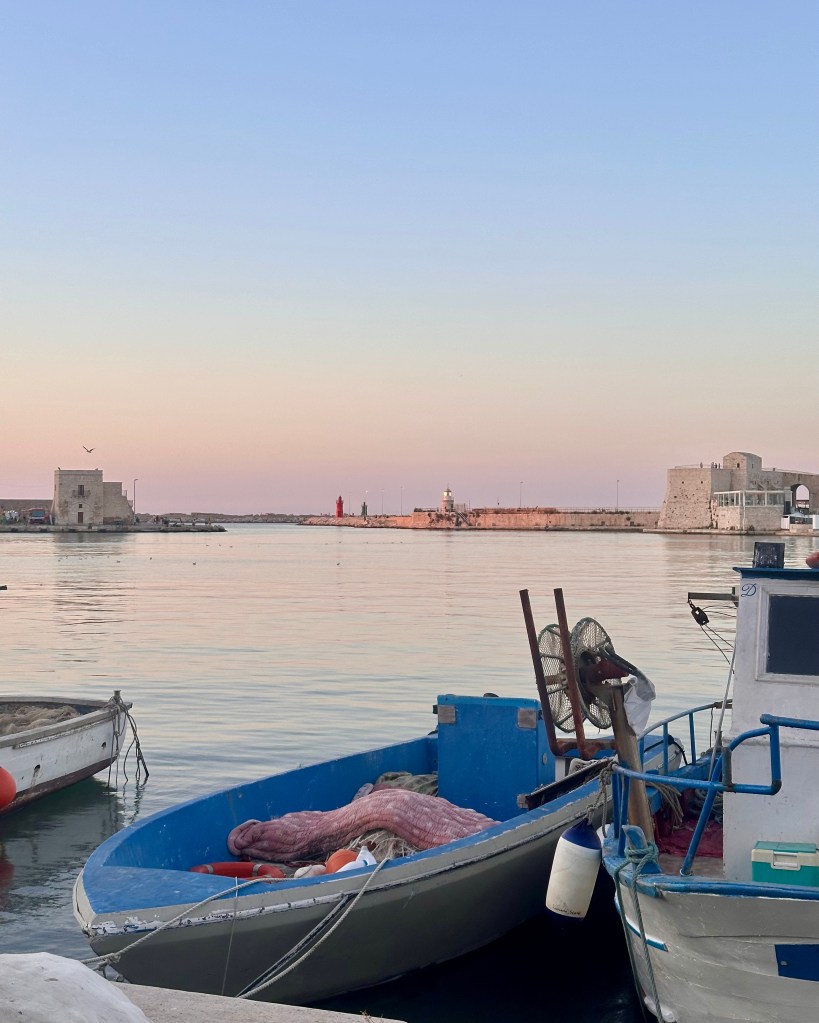

where an array of restaurants attempt to entice you to their establishments each evening.

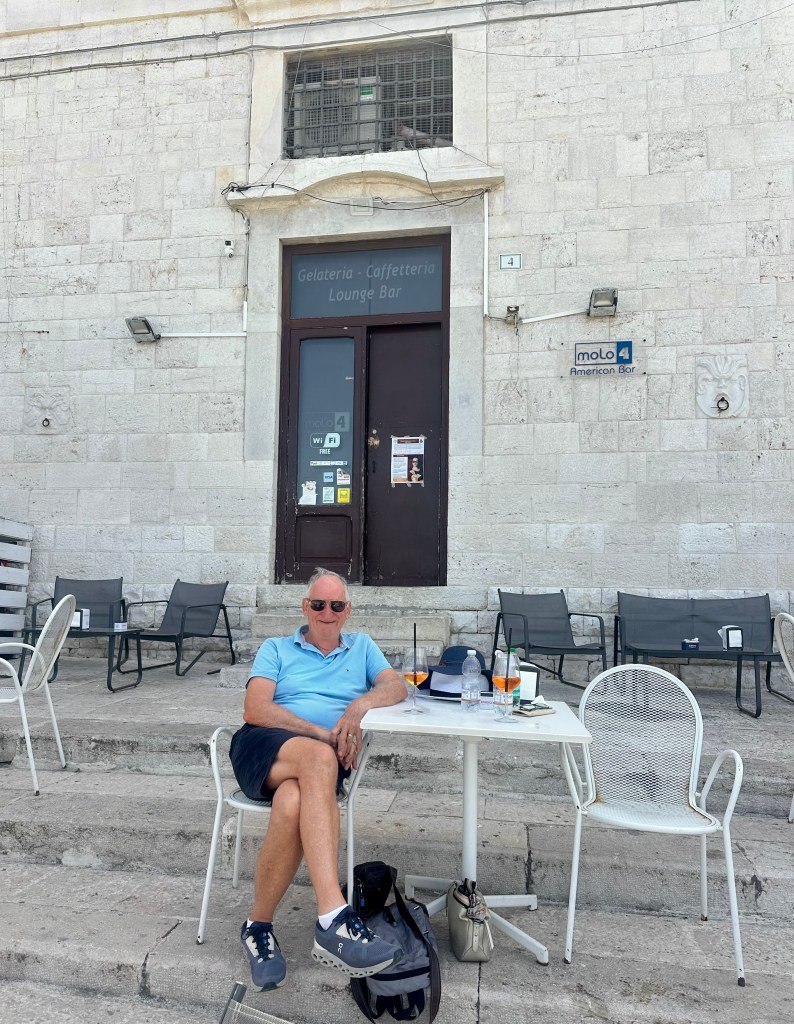
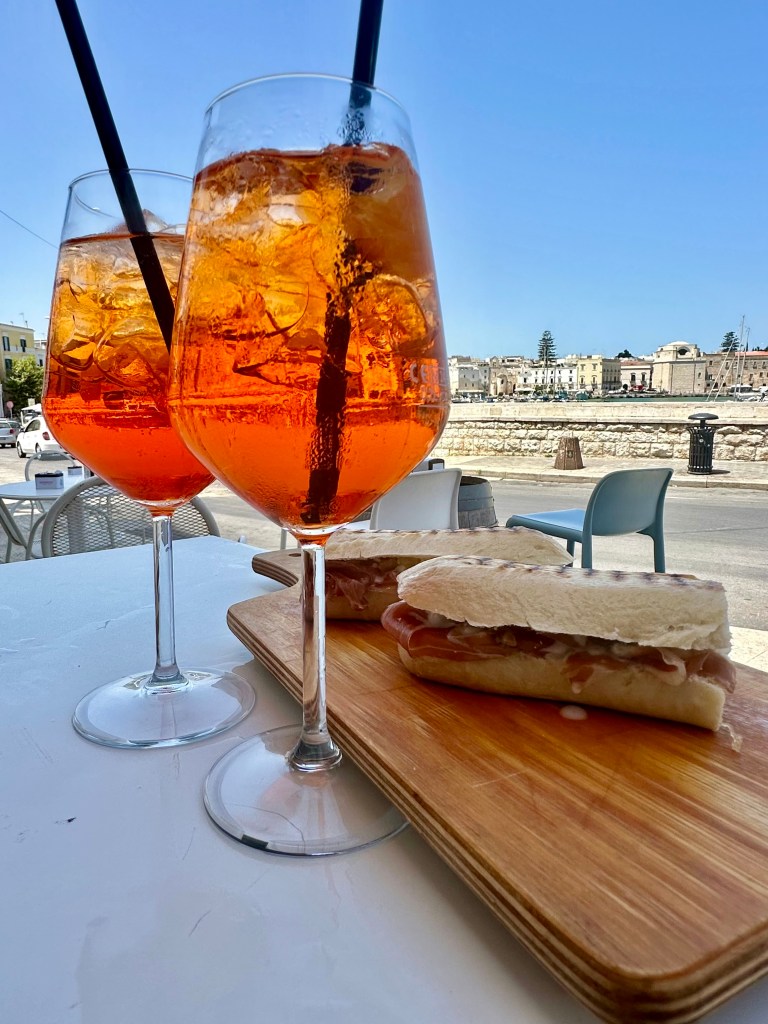
In Trani there was mostly Italian tourists wandering the beautiful cobblestone streets and we felt like we were the only non-Italians in this beautiful city which made communicating interesting at times. They were also big on the afternoon siesta here and on one day when we decided to stop at a waterfront bar for lunch with an Aperol and paninis’ the waiter came up to us to say they were closing up for siesta but to continue drinking and leave the glasses at the closed front door when we had finished – quite funny but very refreshing compared to other places in the world.
We really enjoyed our few days here, but it was time to head further north along the coast to our next stop, another seaside town, Vieste. However, on route we wanted to head up to the famous hilltop village of Monte Sant’Angelo located in the southern part of the Gargano at about 800 metres above sea level.
The village is known for Monte Sant’Angelo Castle, built around 837 by the Doge of Venice Orso 1.

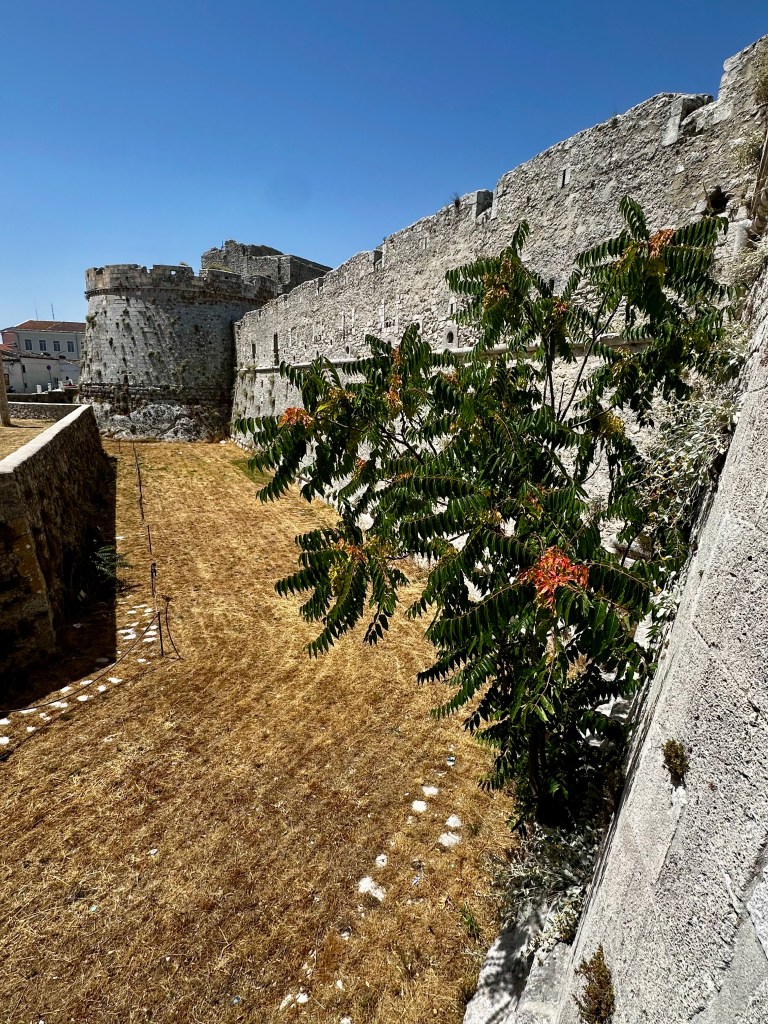
as well as the historic Rione Junno district:
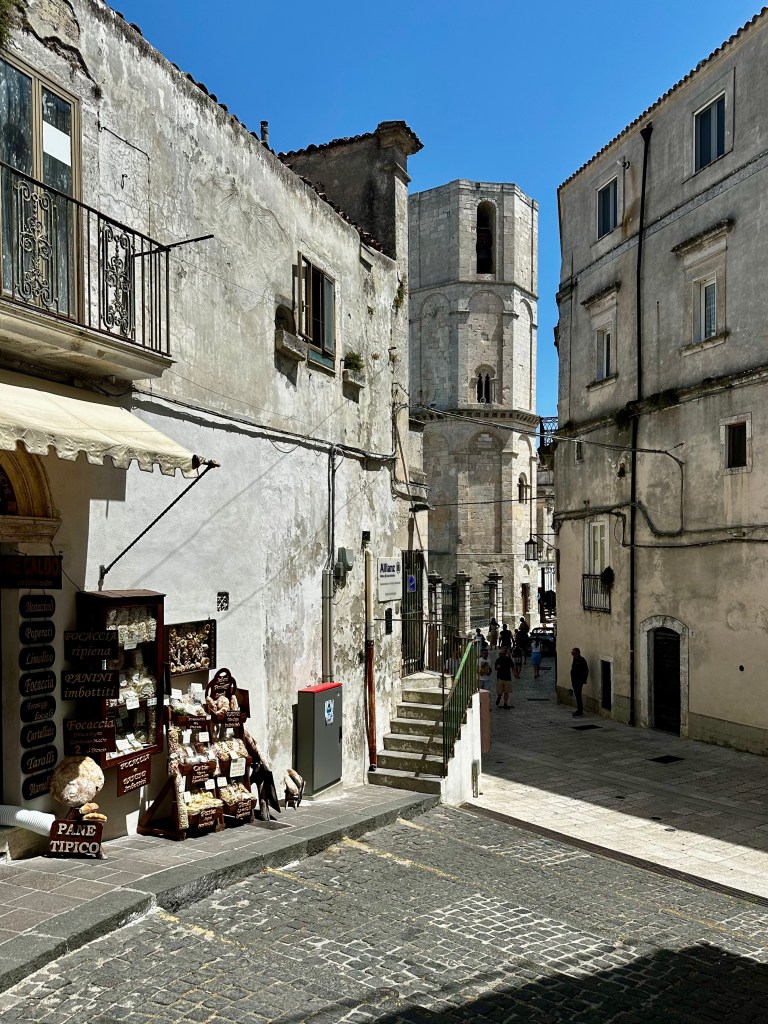
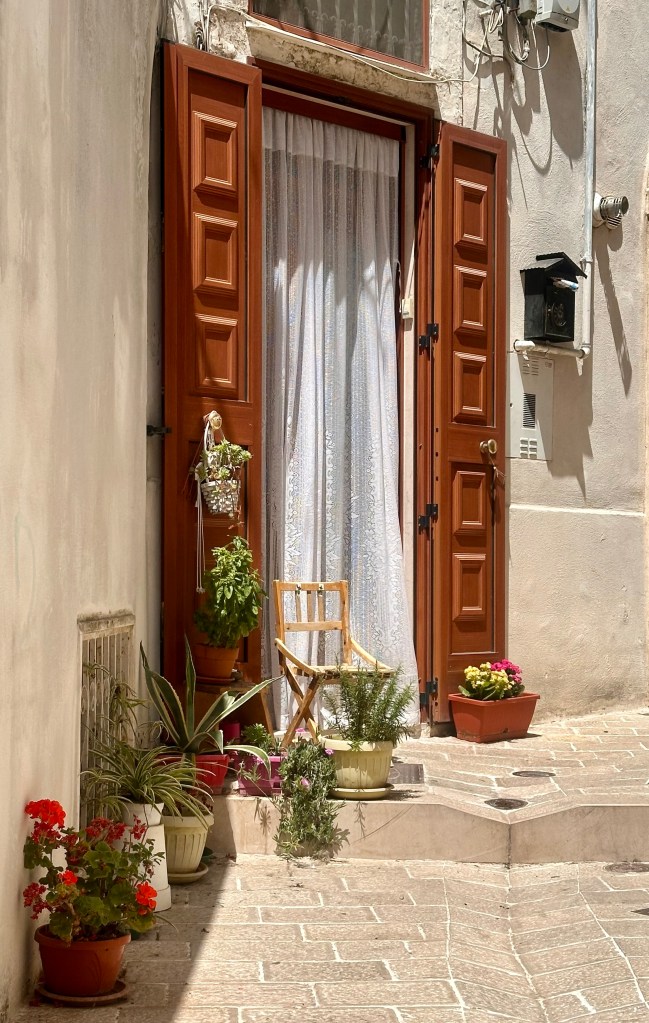
and more significantly, the famous Sanctuary of Monte Sant’ Angelo , an ancient place of worship visited over the centuries by many pilgrims including Popes and where, according to tradition the Archangel Michael appeared inside the cave.
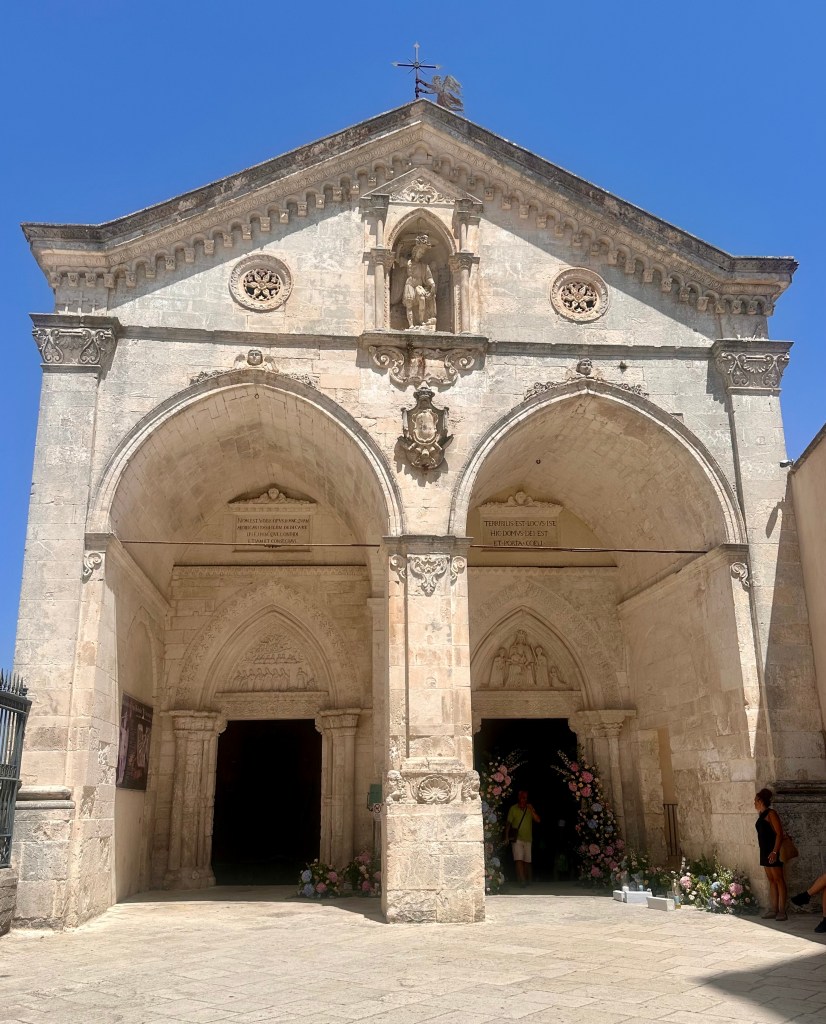
The basilica consists of an upper level comprising the Romanesque portal and bell tower with the lower level including the amazing cave accessed via the medieval Angevin staircase comprising 86 steps dug directly into the rock.
It is forbidden to take photos inside the cave, but we were lucky enough to be invited in despite it being closed to be part of a wedding that was being held in there at the time. This was not the first time that we had been invited to be a guest at a wedding ceremony on this trip which is quite different to at home. Standing in the cave was an amazing, surreal experience and although we could not capture the moment on our cameras the images will long stay with us and certainly made the drive up the steep windy road to the village worth the effort.
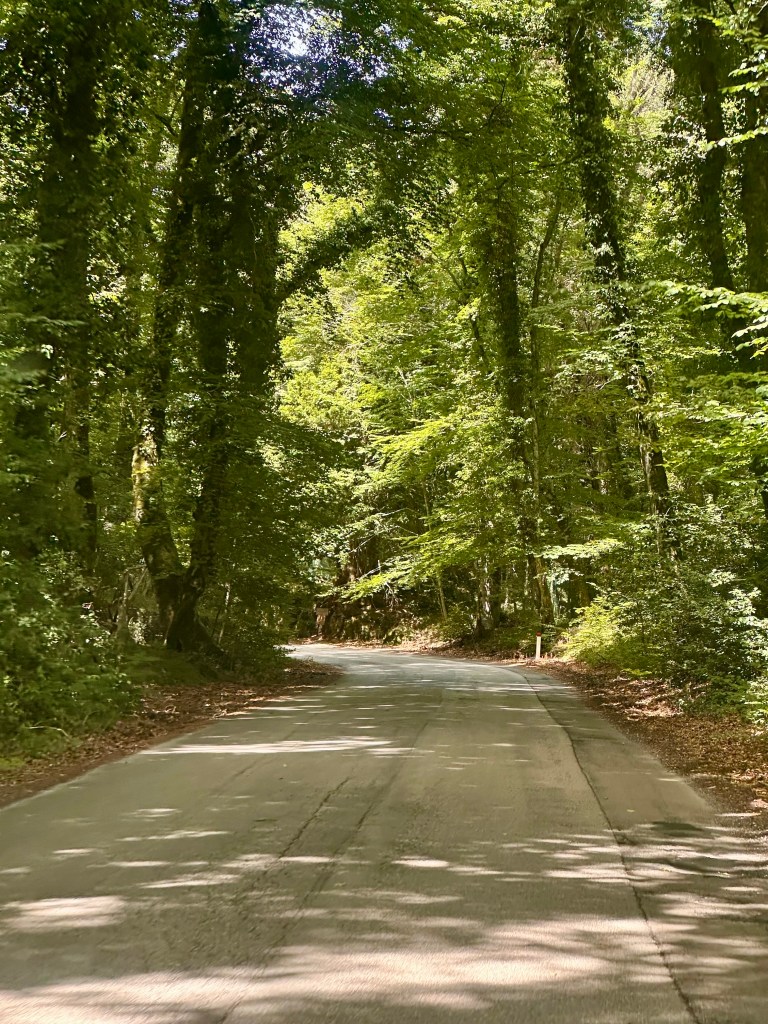
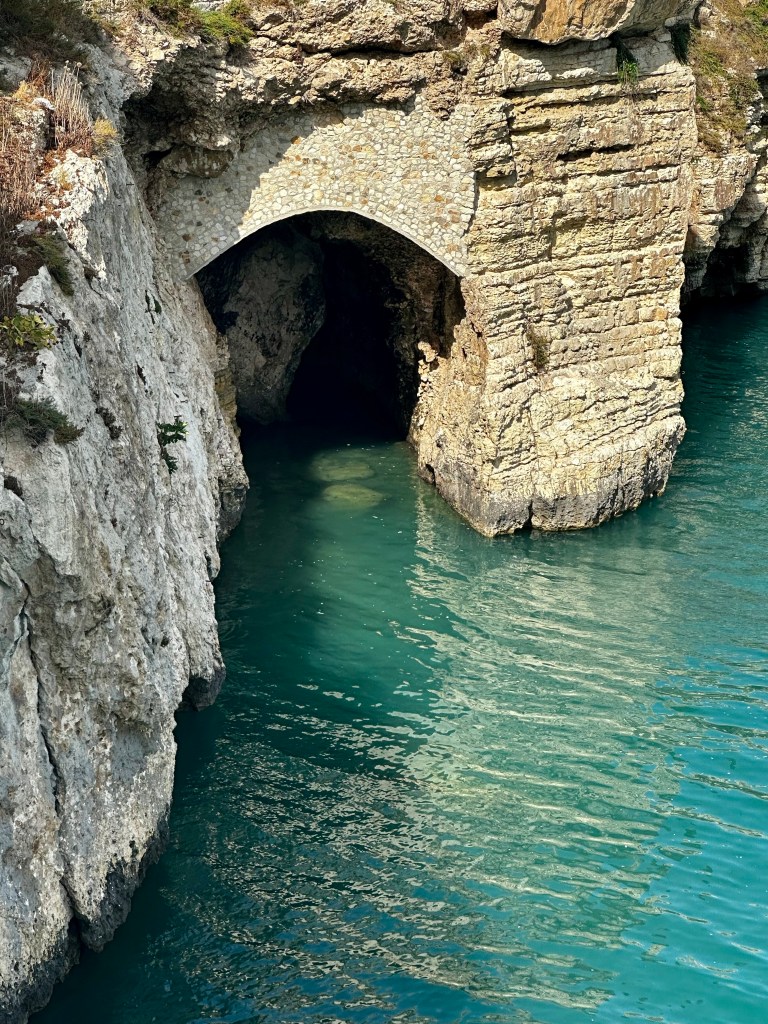
Coming back down the hill we decided to take the inland route to Vieste through the western mountainous side of the Gargano National Park. The park is often called ‘the spur of Italy” bathed on 3 sides by the Adriatic Sea with the Foresta Umbra containing lush pine forests, a spectacular coastline with white limestone cliffs, sea caves and sandy beaches. Although the road through the Foresta Umbra was extremely windy in parts it was very picturesque, and it was a shame we did not have more time to explore the area.
On arrival in Vieste we drove to a private parking yard in the open near the beach with the property owners offering a transfer service into town and then assistance with our bags up the hill into the Old Town where our boutique hotel was located. On opening the front door, directly in front of us was a steep staircase up to the reception area and it was clear that the guy who had delivered us to this point was not going any further. Fortunately, he yelled out to our host who immediately offered to come down the staircase to assist although he regretted it soon after as we gave him the large heaviest case to take up.
After we all got our breadth back at the top landing, we were very glad to hear that our room was on that level and not the upper two floors where the staircase was even more precarious.

We would head up those stairs each morning to the rooftop during our stay for breakfast overlooking the Old Town but without suitcases.

Our room comprised of a renovated cave with whitewashed walls over the limestone and a shower/ bath and separate bathroom built into the cave wall – simply stunning.

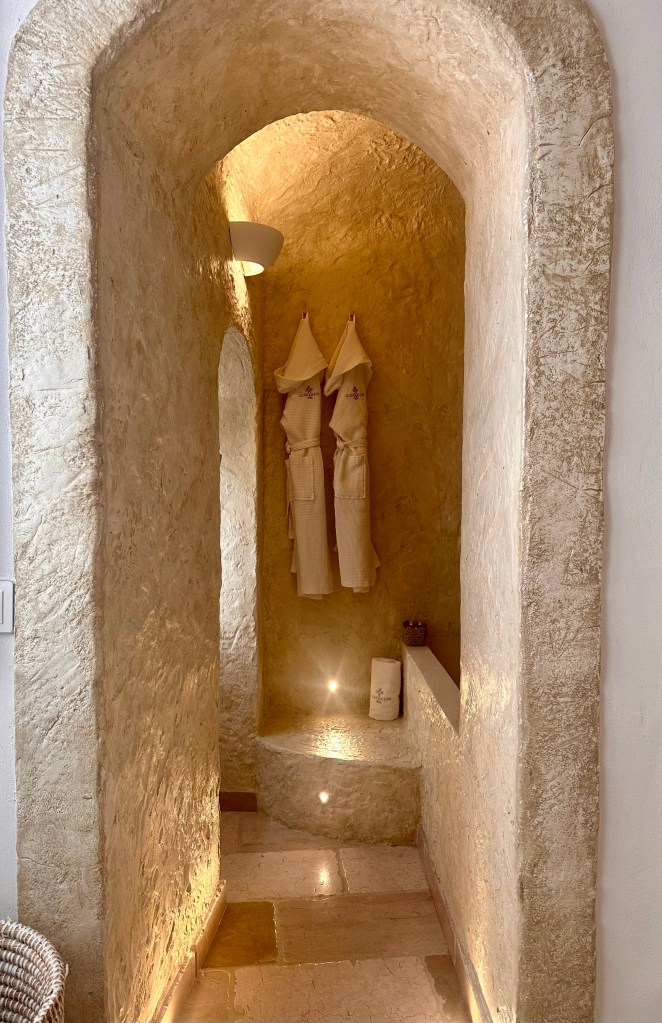
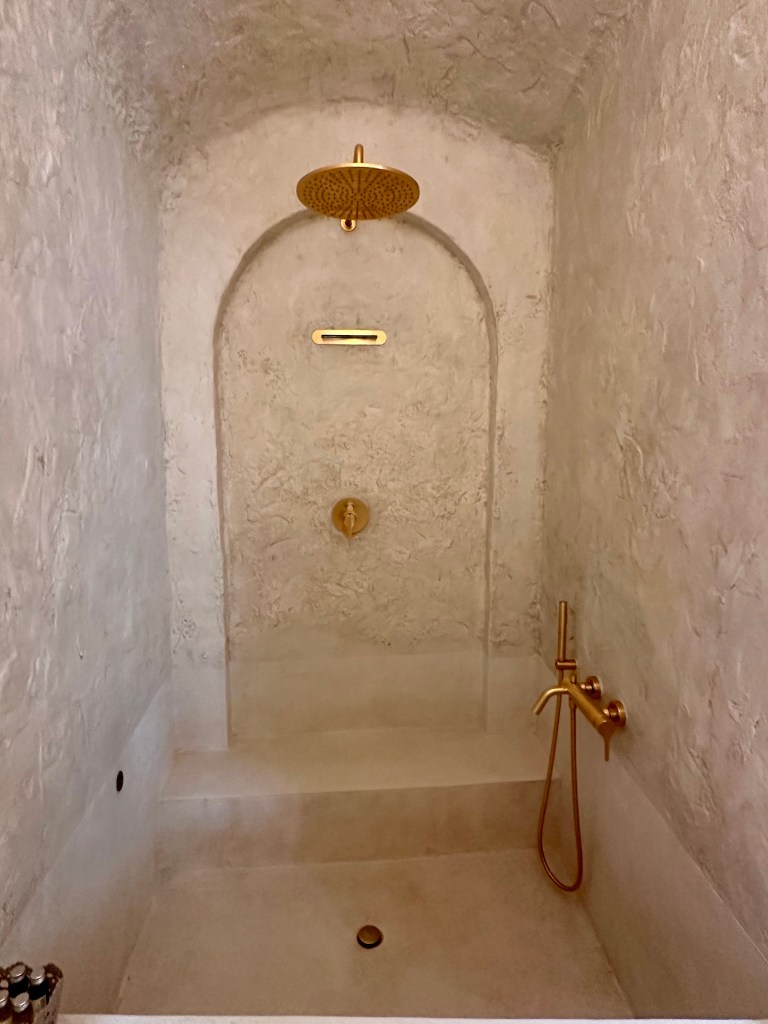
Like Trani the tourists in Vieste were predominantly Italians having their annual beach holiday and English was not widely spoken in restaurants and shops – by now on the trip though we were used to working our way through the communication issues and embraced the challenges with many humorous situations arising, particularly with understanding the restaurant menus.
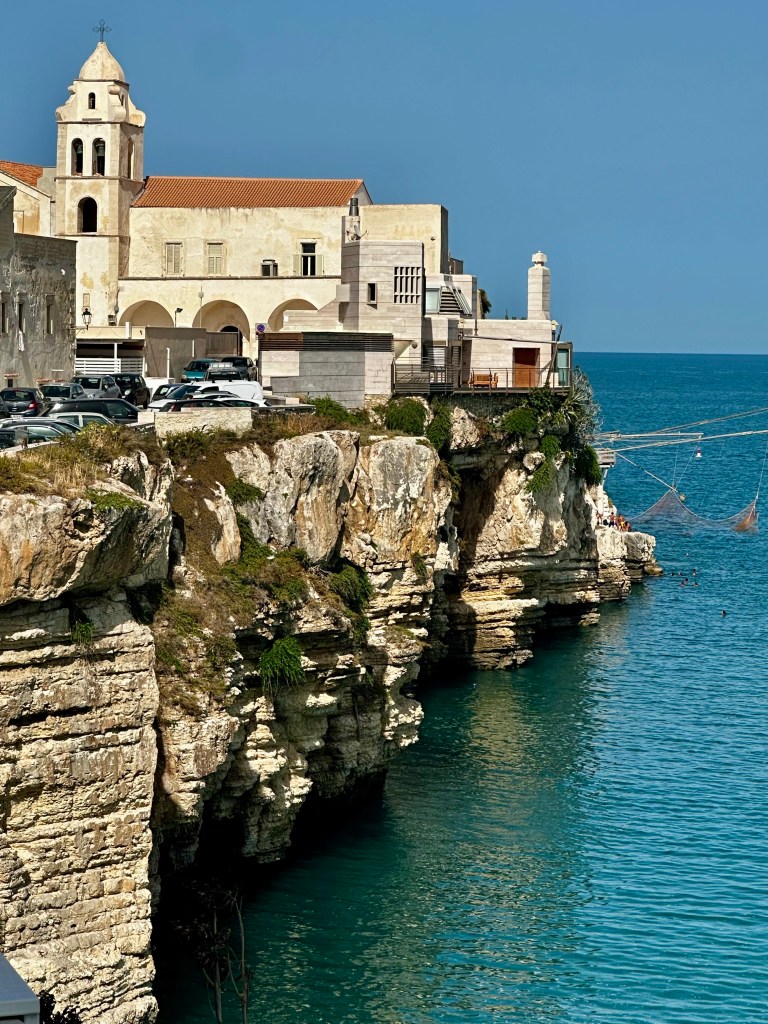
The old town of Vieste, commonly called “Vieste Vecchia” stands compactly on a rock overlooking the sea and is of medieval origin with characteristic irregular alleyways, squares/belvederes opened to views of the sea and terraced houses united by arches and plenty of steps. It is a very beautiful Old Town to wander around with amazing features such as Chiesa di San Francesco,
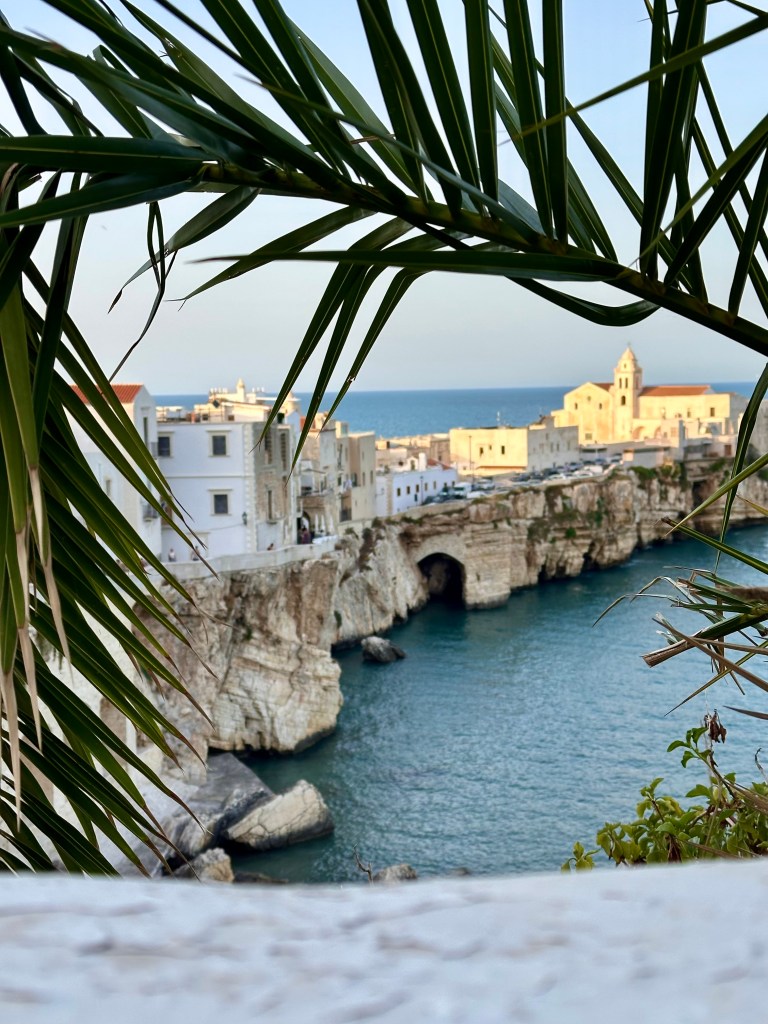
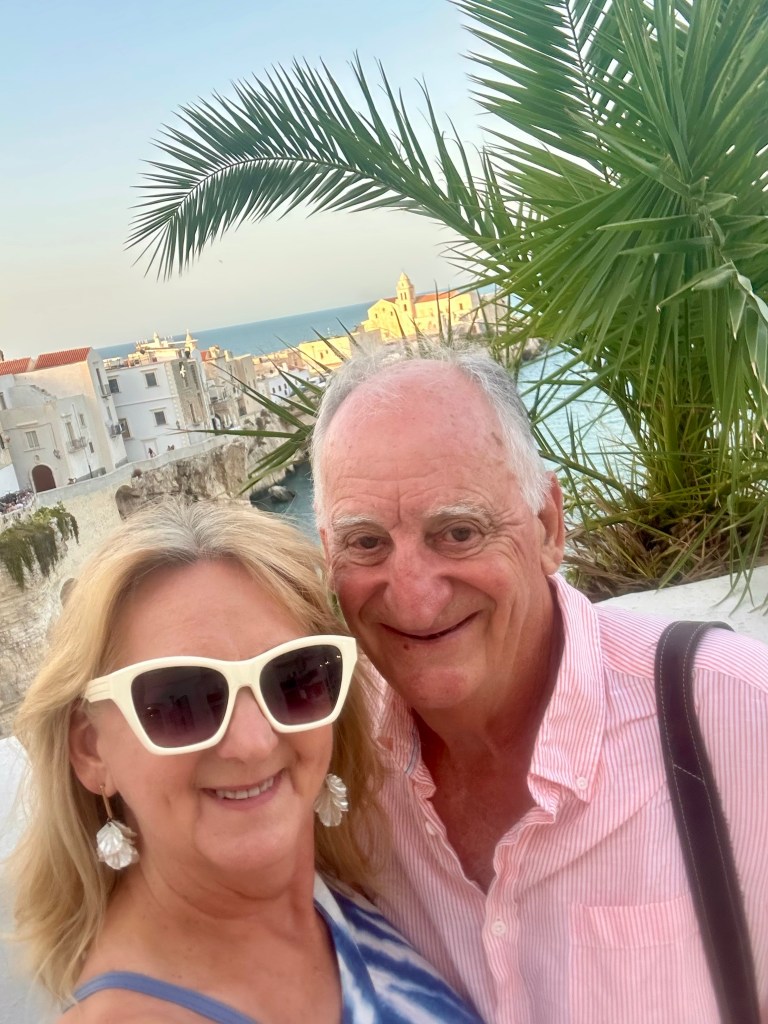
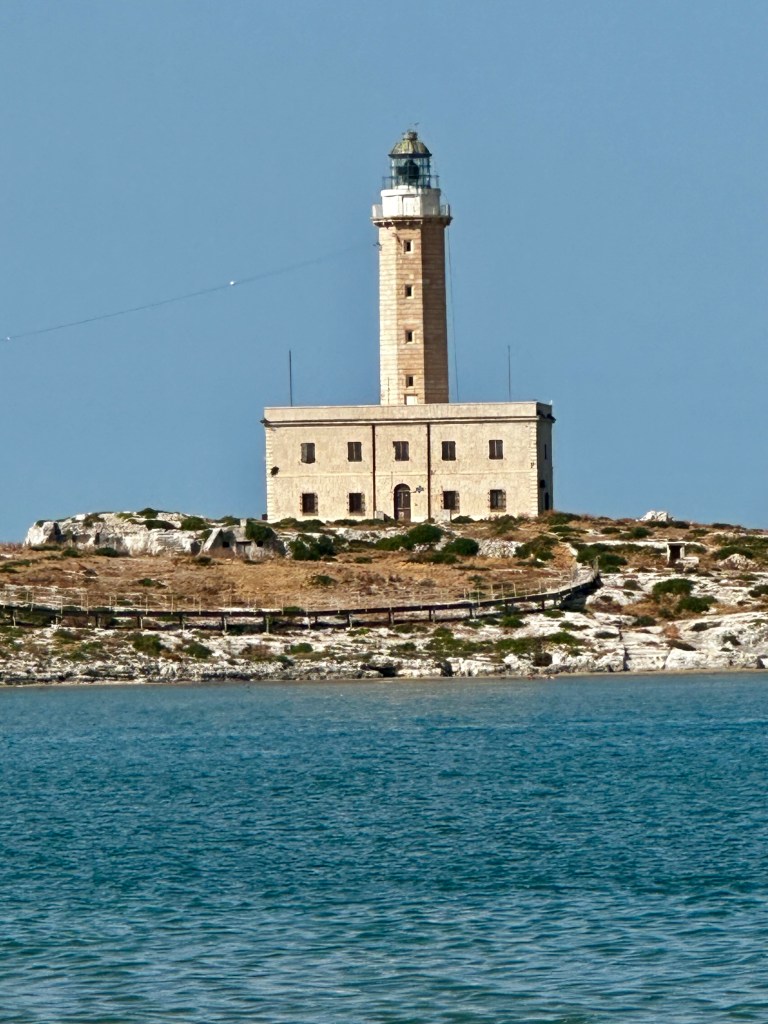
Vieste Lighthouse dating back to 1867 and still operating today,
the Vieste Castle,
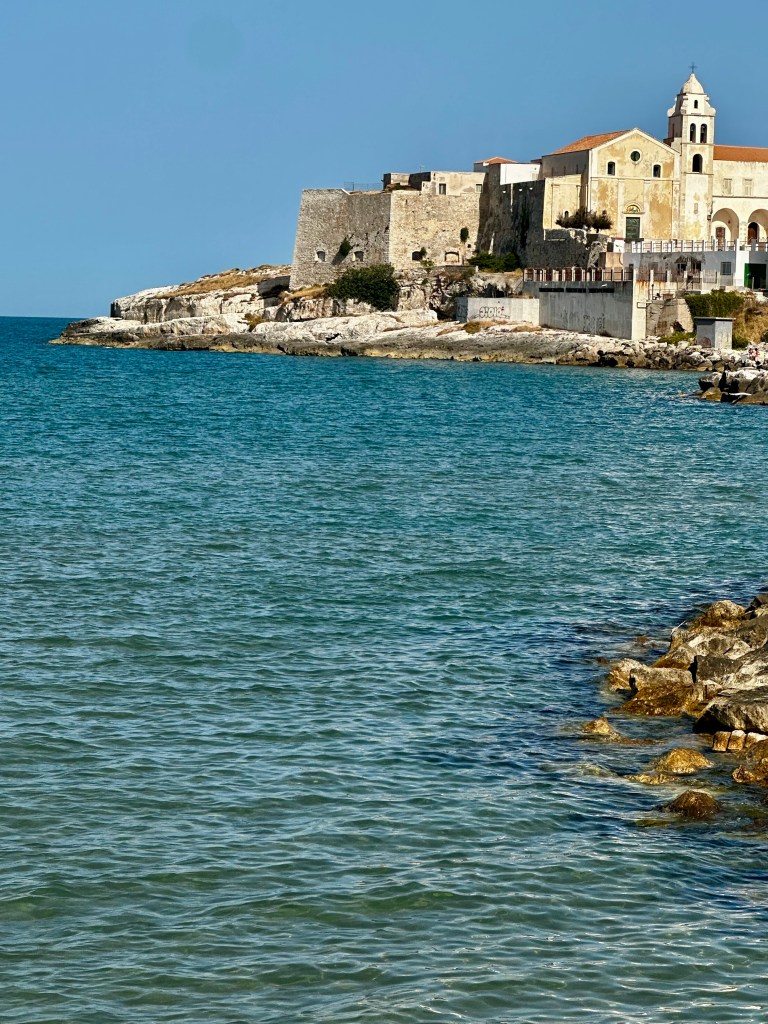
and the typical trabocchi which are old ancient fishing machines that sit out from the rugged coastline.

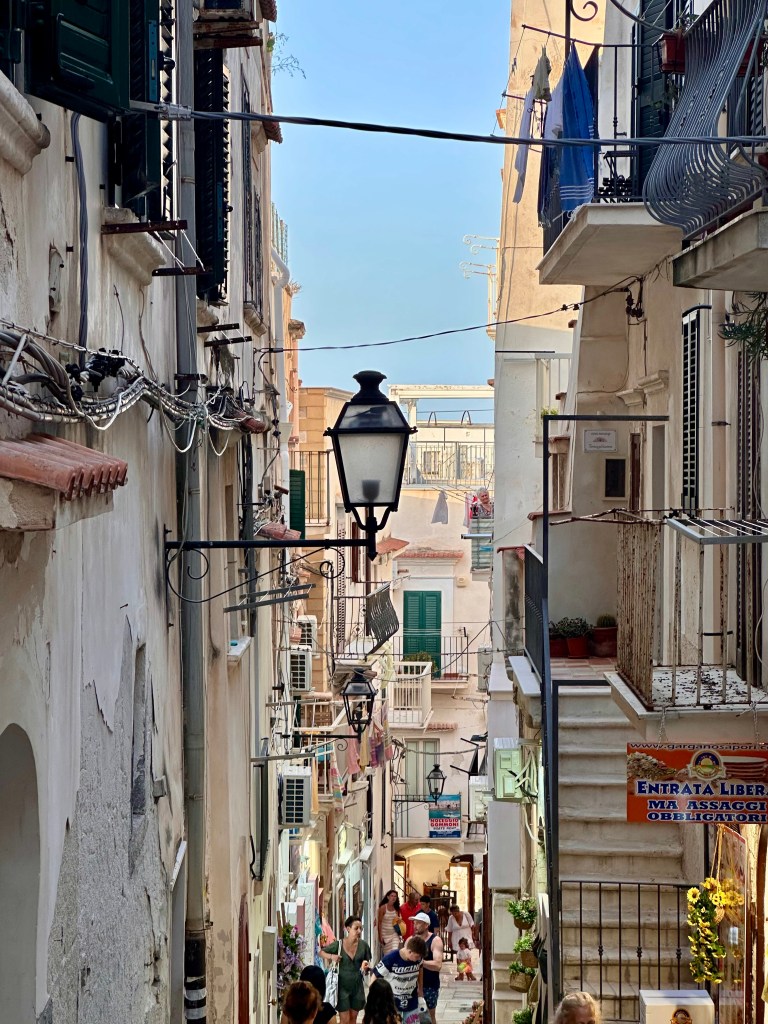

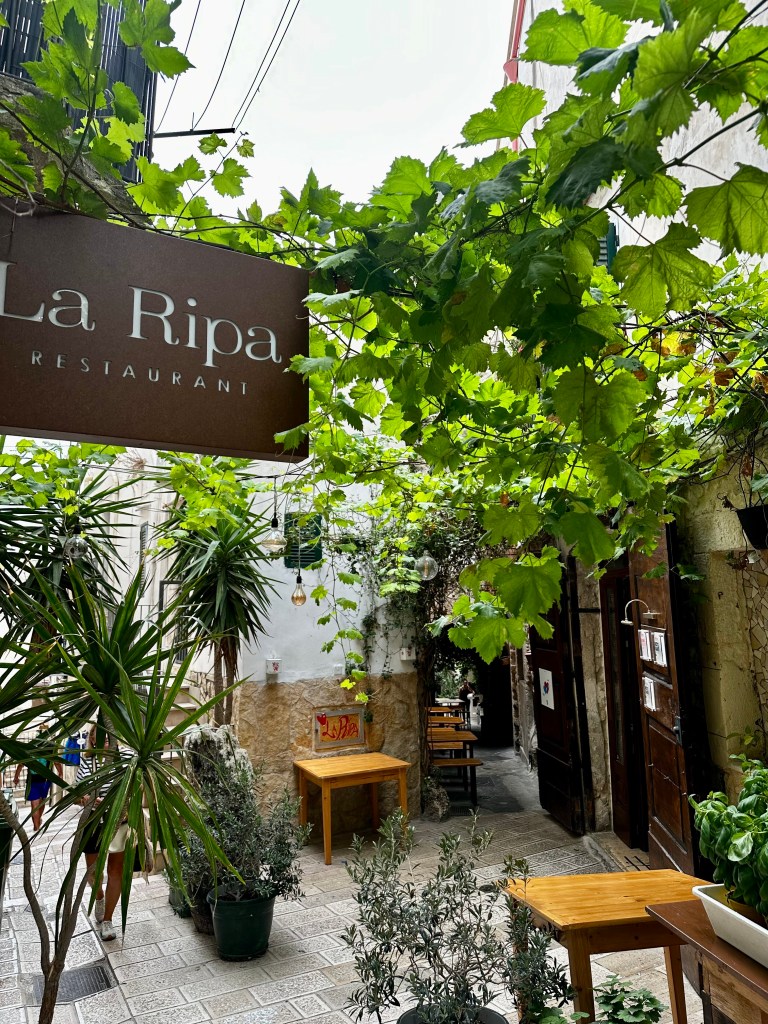
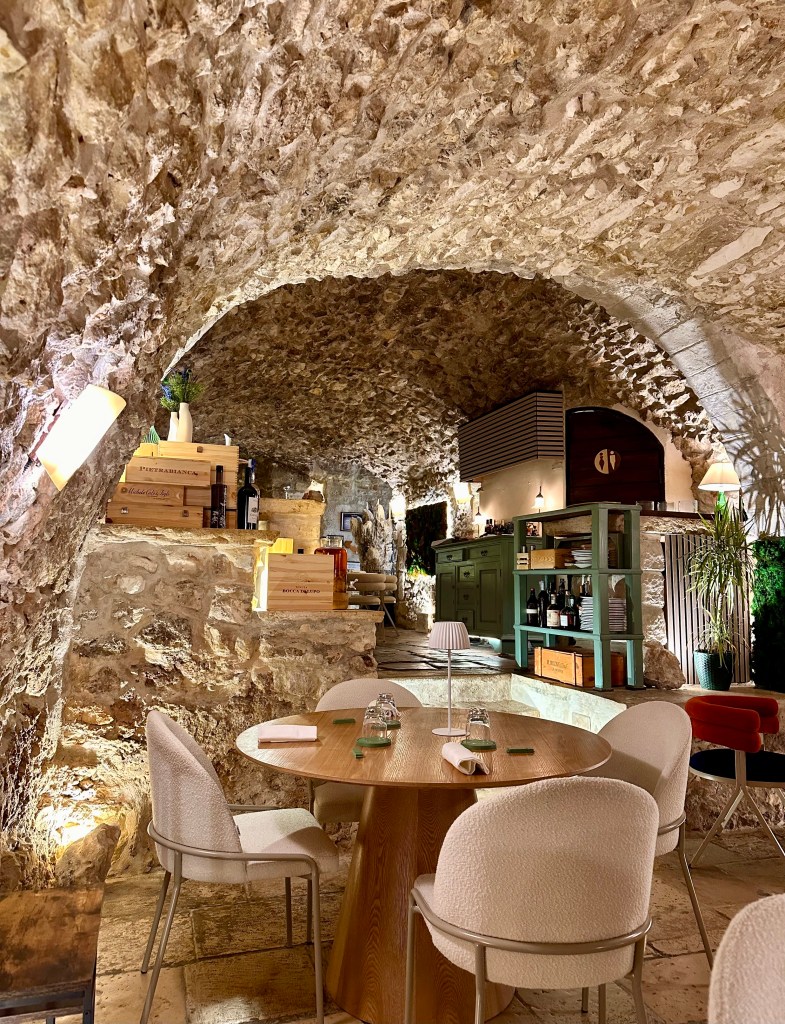
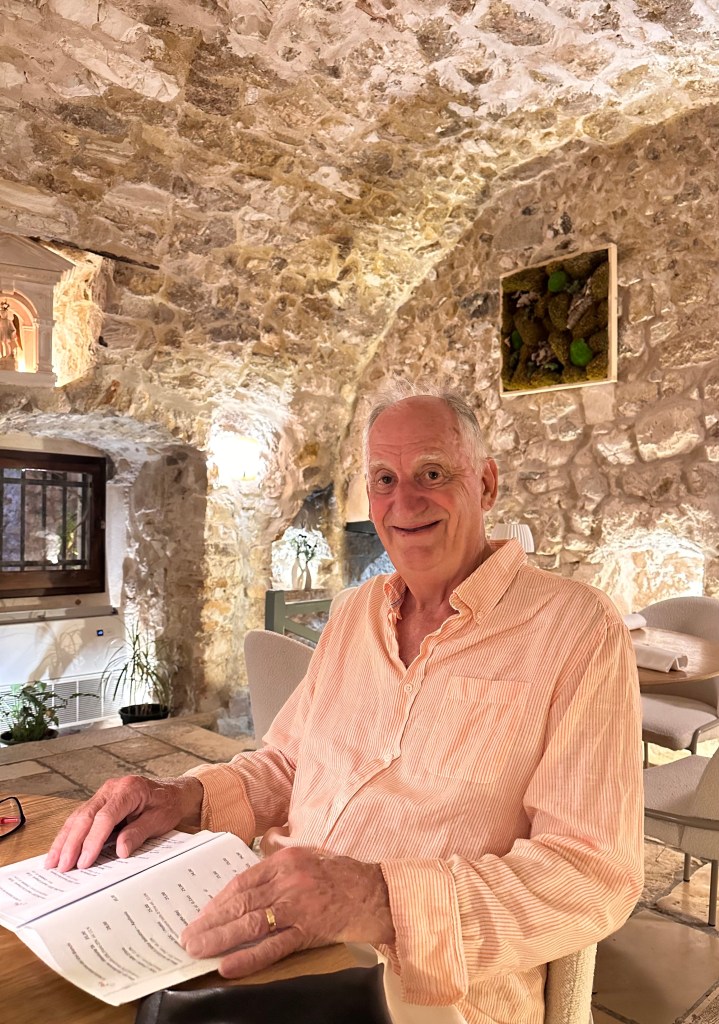
Our host organised bookings at three of his favourite restaurants due to the language difficulties and while we enjoyed every one of them our standout was La Ripa. The restaurant was built into a limestone cave, and the ambience and food were just superb. We had a memorable evening with our waitress coming from Ireland (via Ukraine) and wanting to visit Australia.
Interestingly, we found throughout this trip that many of the young staff at the hotels and restaurants wanted to visit Australia but were concerned about the dangerous insects, animals, marine life, snakes etc that they had seen on social media. We had many conversations explaining the reality to them and hopefully managed to encourage them to still visit.

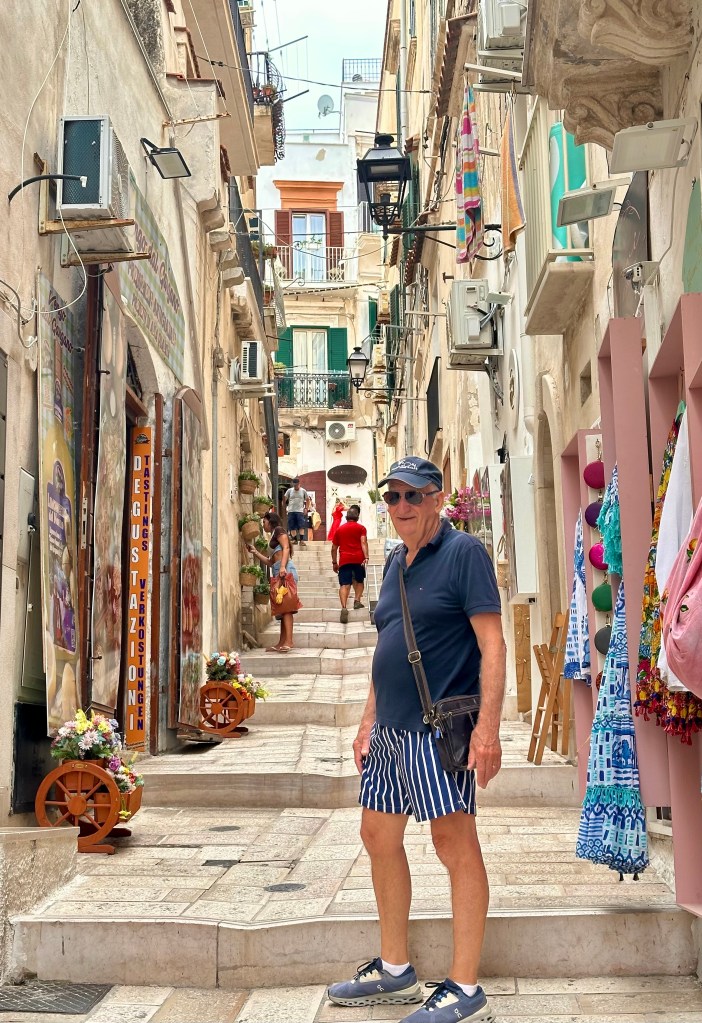
Unlike many towns throughout Italy when walking around Vieste you seamlessly walk between the Old Town and the new with unique things to see up every cobblestone laneway and along the beachfront.

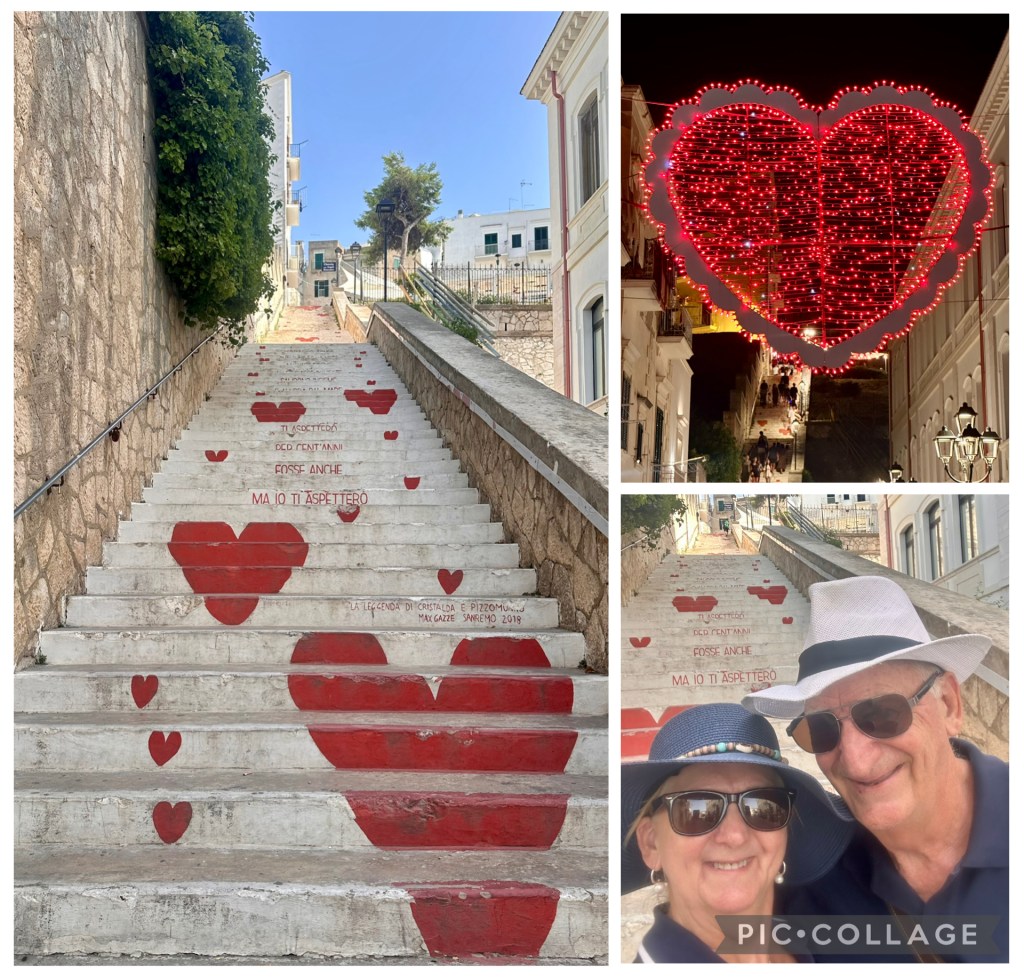
One of the most notable newer landmarks, although located in part of the Old Town is the Scalinata dell’Amore or Stairway of Love. The staircase is decorated with red hearts and the lyrics of the song “La leggenda di Pizzomunno e Cristaldi by Max Gazze. The song and stairway are based on Pizzomunno, a young fisherman who was transformed into a a monolith on the beach after his love, Cristald was taken by sirens. Legend has it that couples who walk up it hand-in-hnad will be forever united. It dates back to the first Vieste in Love festival back in 2019 when it was painted by local students resulting in the city getting the tag “the city of Love”.

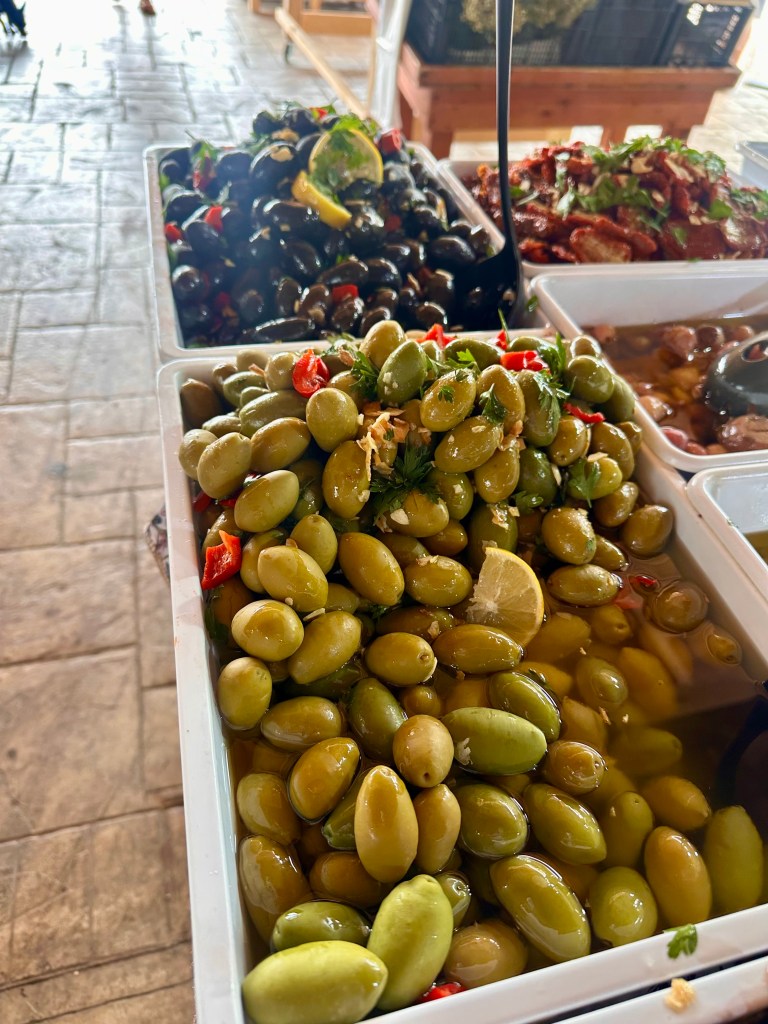
We also visited the local daily market which had a vast array of fresh produce, most notably bags of Puglian bread snacks called Tarallo that you cannot have enough of and a vast array of very large olives that you certainly would be hard to find in Australia.
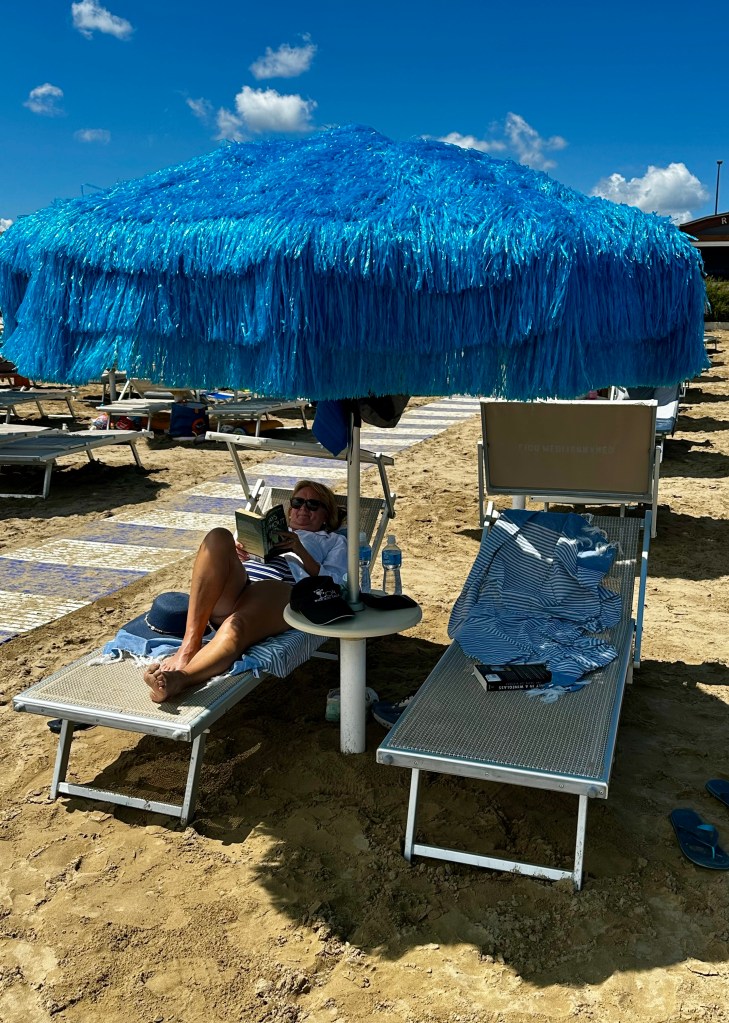
On our last day we walked down to one of the many beaches around Vieste, Spiaggia di Castello and selected one of the numerous lidos that stretched the length of the beach. We had a great day lazing around on the deckchairs, reading and drinking Aperols,
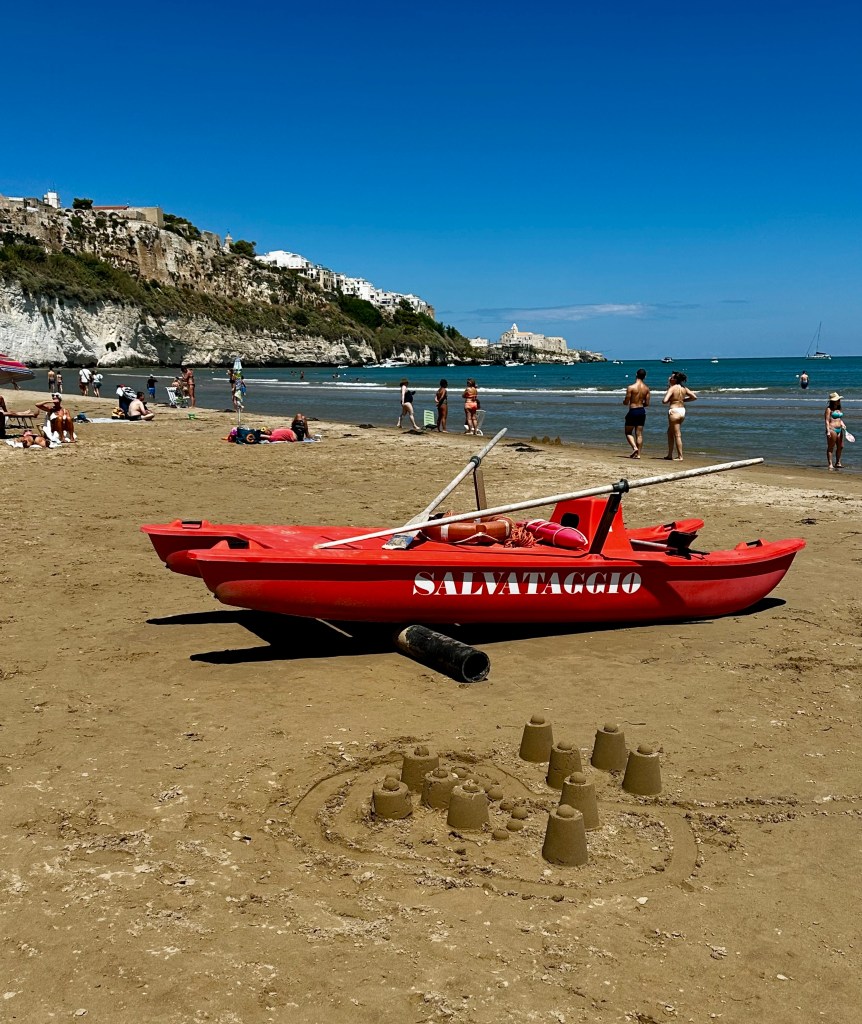
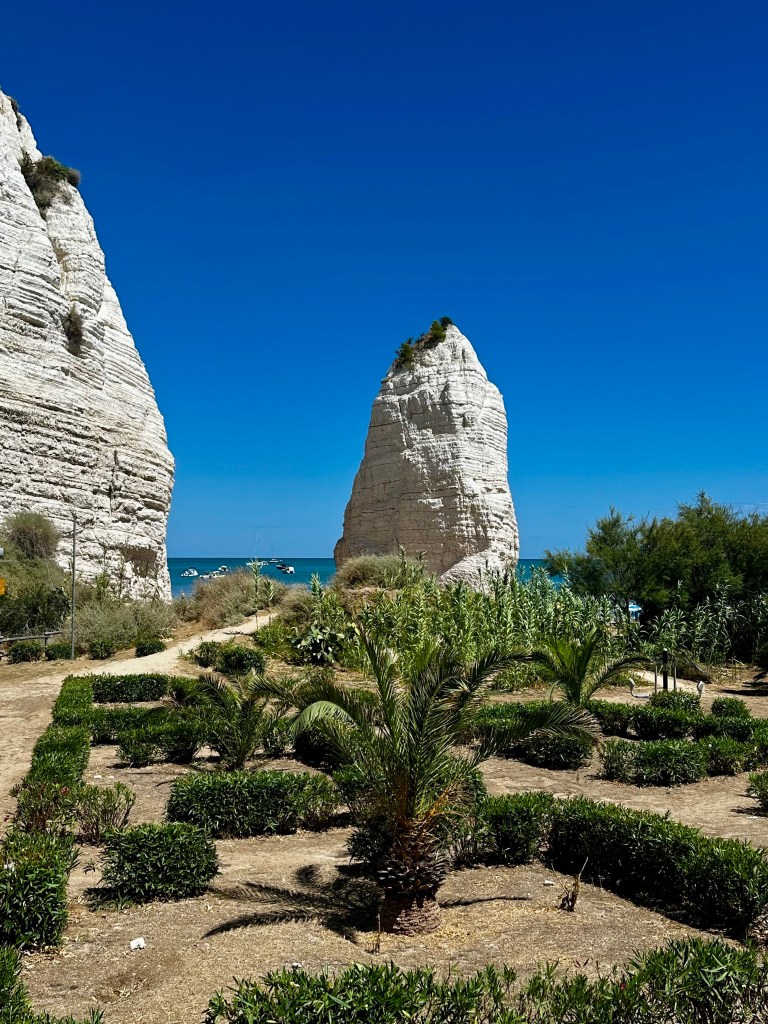
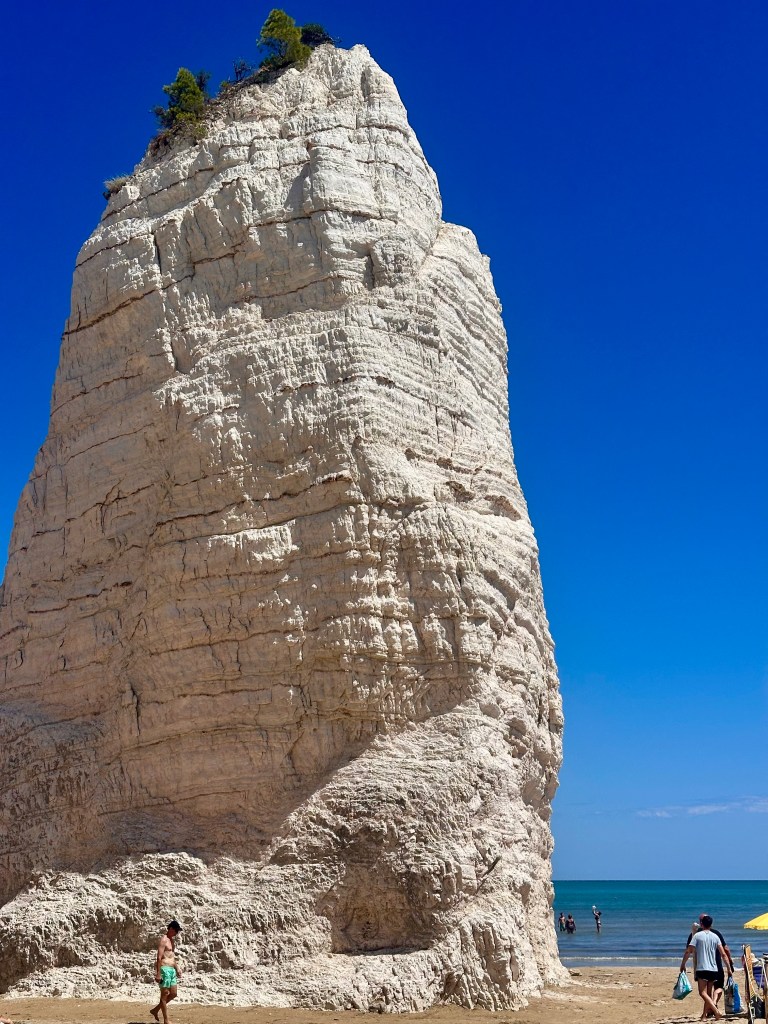
before checking out the famous white limestone monolith Pizzomunno located at the northern end of the beach which stands proudly out from the sand below the fort and is what the Old Town is built on.
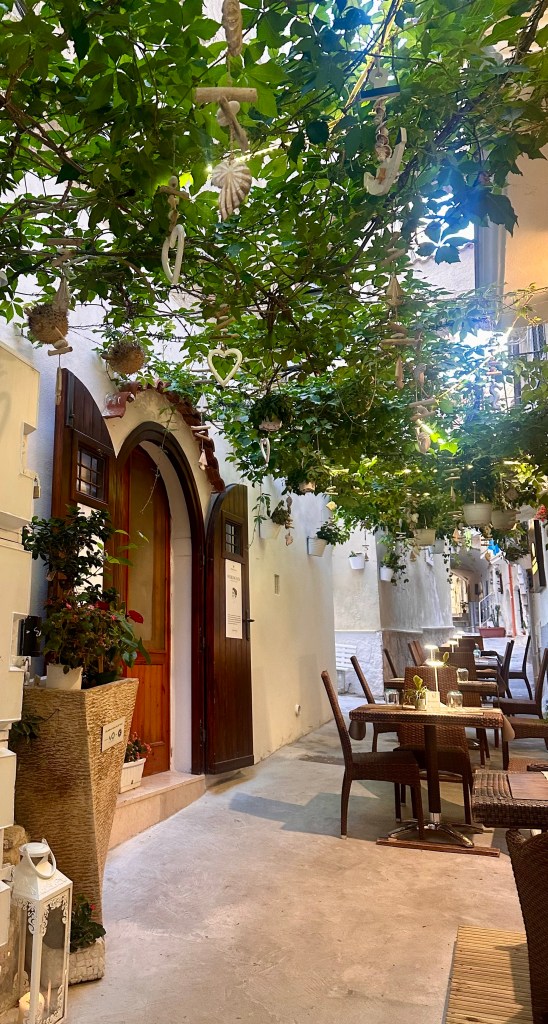
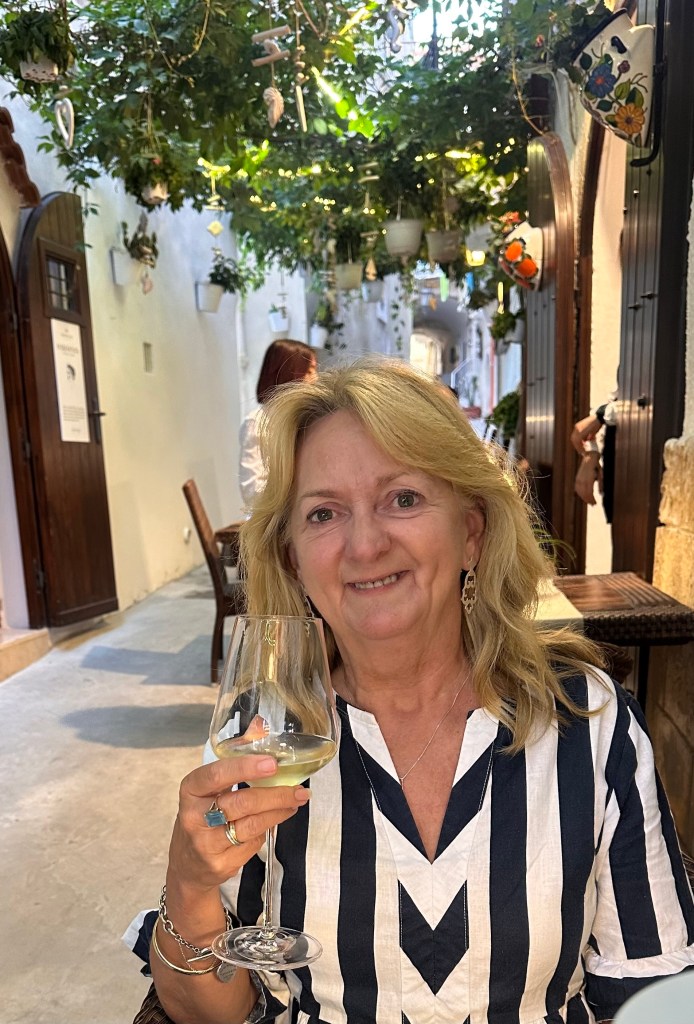
On our last night in Vieste we went to the third of the restaurants that our host had recommended, Padre Pio located around the corner from our apartment. It was set up in a laneway with grapevines hanging from trellises all across – a fantastic setting for our last evening in this great unique Puglian town.
While we had 3 nights in Vieste we would have liked another day for a boat trip along the coast to visit the array of limestone caves that are like those we had explored off Polignano a Mare back in 2023 but that will have to be a future trip. It was time to turn south and head along the coastline area of the Gargano National Park and back towards Bari before turning west to our next stop, Matera.
It was a long day on the road to Matera but as we approached Bari on the motorway an alarm went off in the car which immediately caused concern. Thinking the car had a serious mechanical issue I slowed the car to try and determine what the issue was and the meaning of the flashing symbol on the dashboard. Fortunately, a service centre came into view, and we pulled in.
The flashing symbol on the dash was a coffee cup and as there was no user manual in the car Pauline went searching on the net to find out what it meant. To our surprise the warning light was telling us that we had driven too far and needed to have a break – we had never seen this before and with our stress levels now subsided we soon had a laugh about it and carried on our way to Matera without further incident – in subsequent hire cars we drove we would wait for the alarm to go off but we discovered it is not installed in all new car makes. Another thing to remember when hiring a car.
Join us next time as we explore the unbelievable city of Matera, the third oldest continuous civilisation in the world – until then take care.
Bruce & Pauline

 When Wine Calls
Leave a comment