

Welcome back to When Wine Calls – “2025 Wine Afficionados Tour”.
We had not been to Ireland since early 1990 when our son was very young and then only for a short visit to see some family friends and a brief, albeit failed attempt to see the Cliffs of Moher in County Clare. This time we planned to travel around the coastline counterclockwise from Dublin and embrace this fascinating part of the world and make another attempt on sighting the cliffs.
The start of this part of our tour did not go according to plan. While it was only a short flight from Bristol to Dublin a technical issue with the plane prior to take-off resulted in all passengers having to offload the plane from a parking bay near the end of the runway and head back to the terminal and wait for a substitute plane to arrive to continue our journey. The short flight across the Irish Sea ended up being a very long day but we eventually arrived in Dublin safely which is the most important outcome.
In Dublin we had arranged to stay in a hotel in the city centre, Hotel Riu Plaza, The Gresham and while it was busy, particularly with tourist coach travellers it meant we did not need to hire a rental car until we were leaving the city to head north in a few days’ time.
Having not been to Dublin for so many years we booked a free walking tour the next day to re-acquaint ourselves with the city but had not planned that the 3-hour tour would be in pouring rain. It was, nevertheless, great to visit areas we had not previously seen off the main tourist trail and absorb some of the city’s historical past, but we also welcomed the halfway break at a local pub to dry out and have a Guinness – one of many as it would turn out on our Ireland adventure.
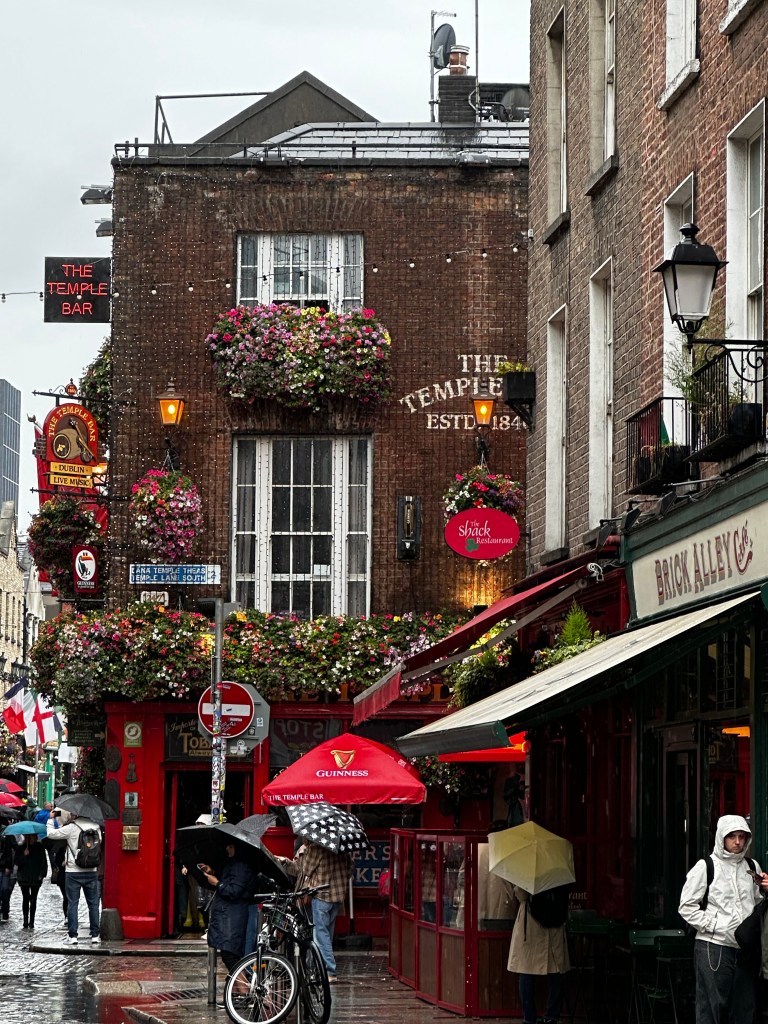
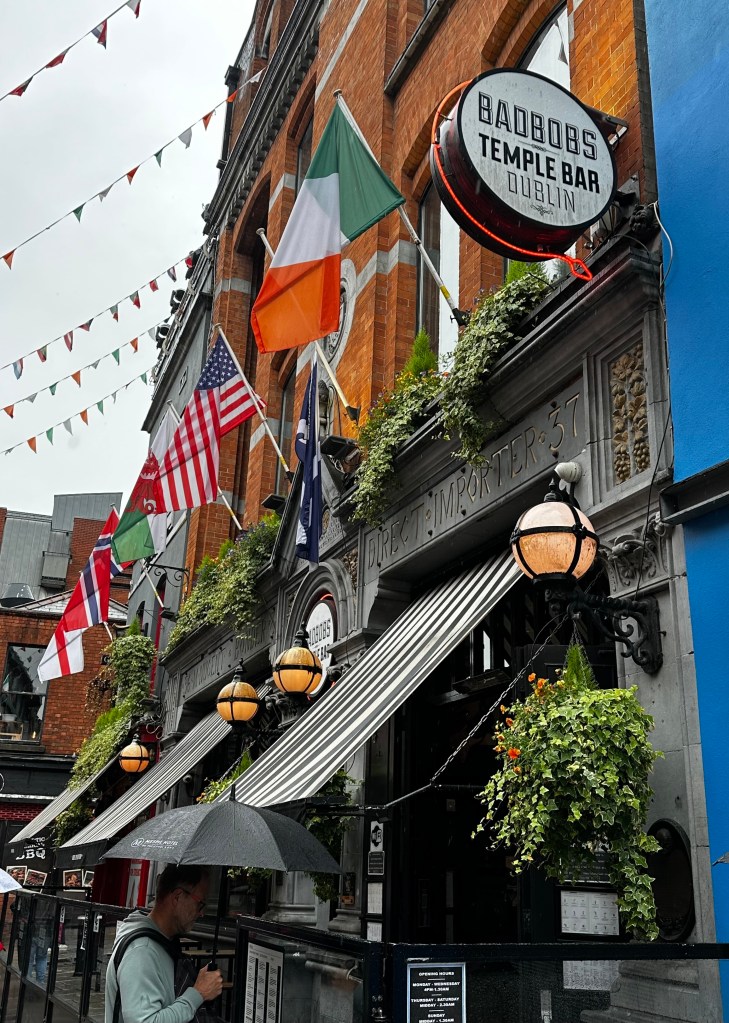
Some of the interesting places we visited on the tour included the Temple Bar entertainment quadrant,
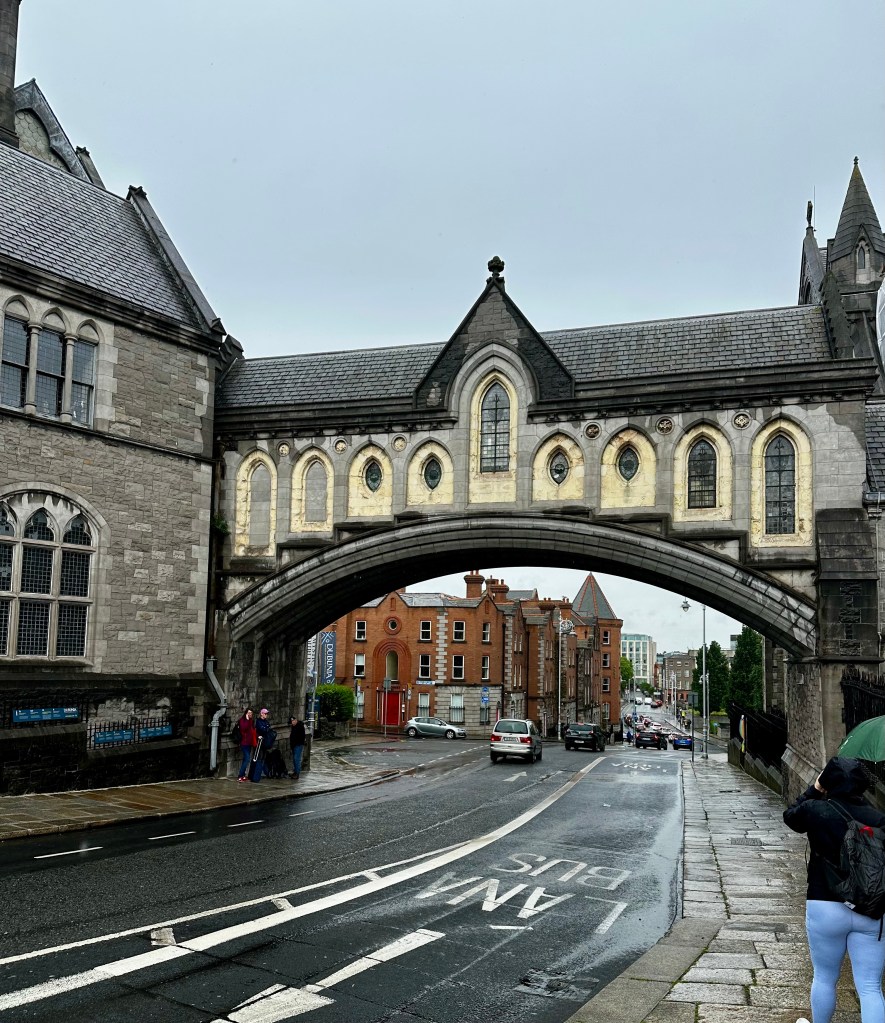
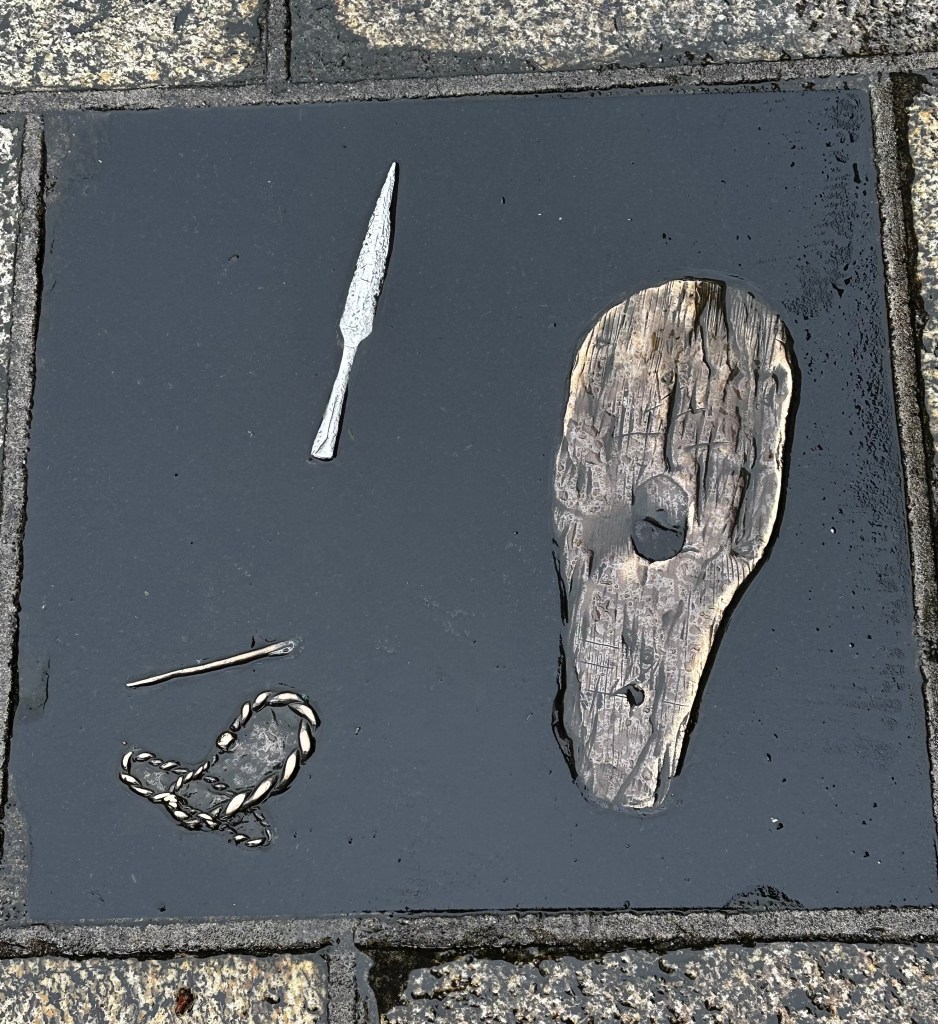
the Viking District,

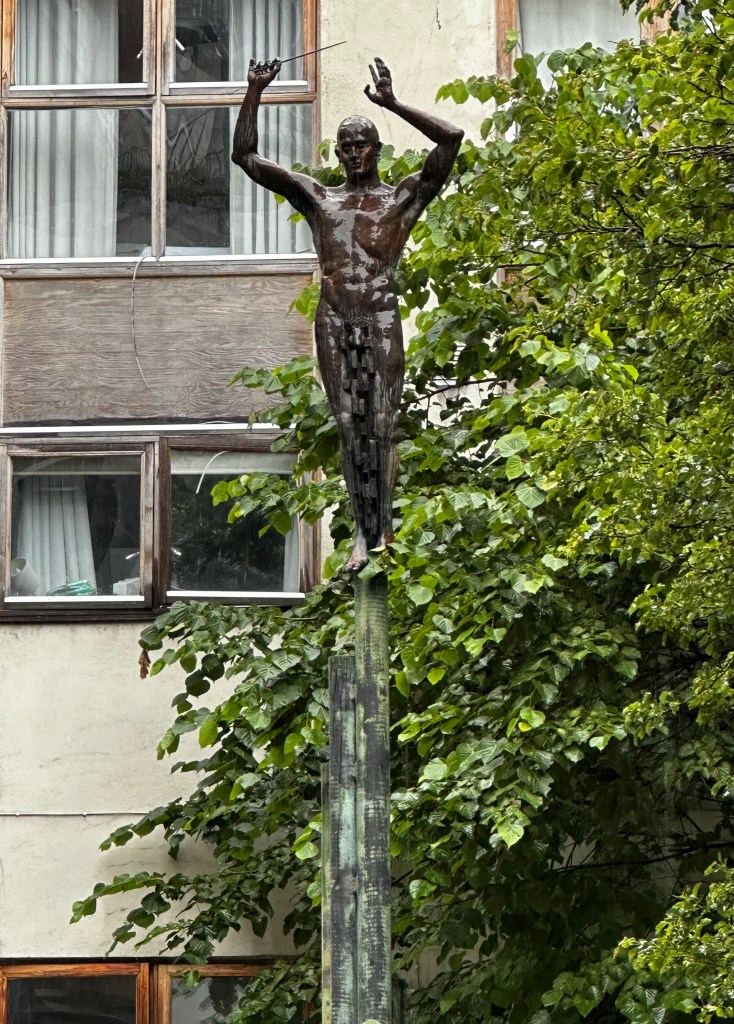
Handel’s statue (situated in the courtyard of an apartment block),
Dublin Castle,

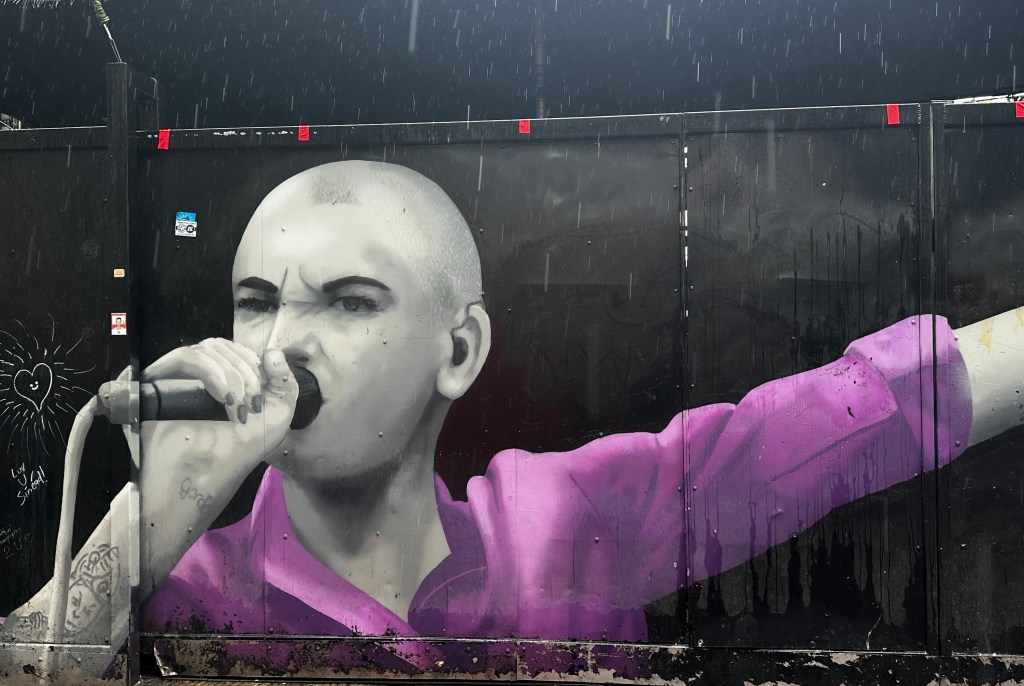
the mural in honour of the renowned Sinead O’Connor,
the renowned Sick and Incident Roomkeepers Building dating back to 1790,
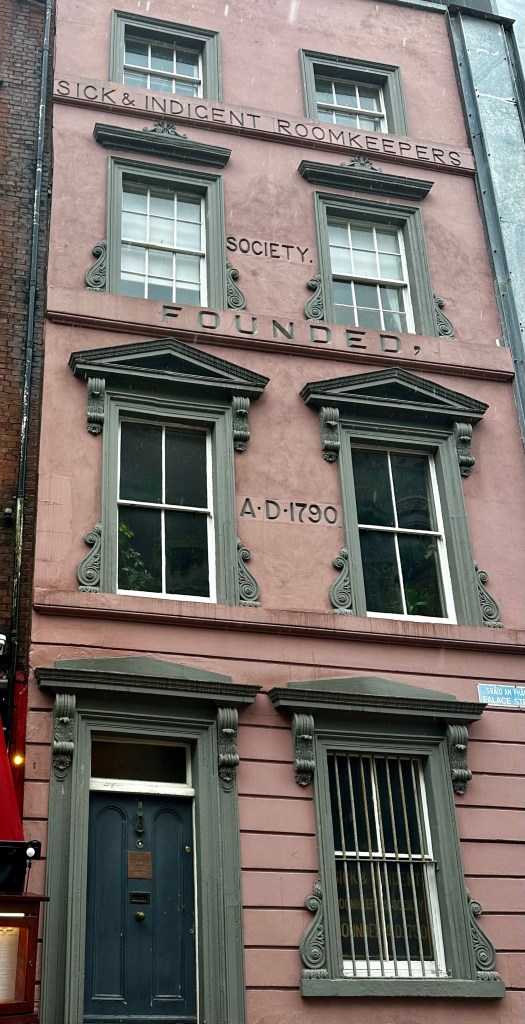
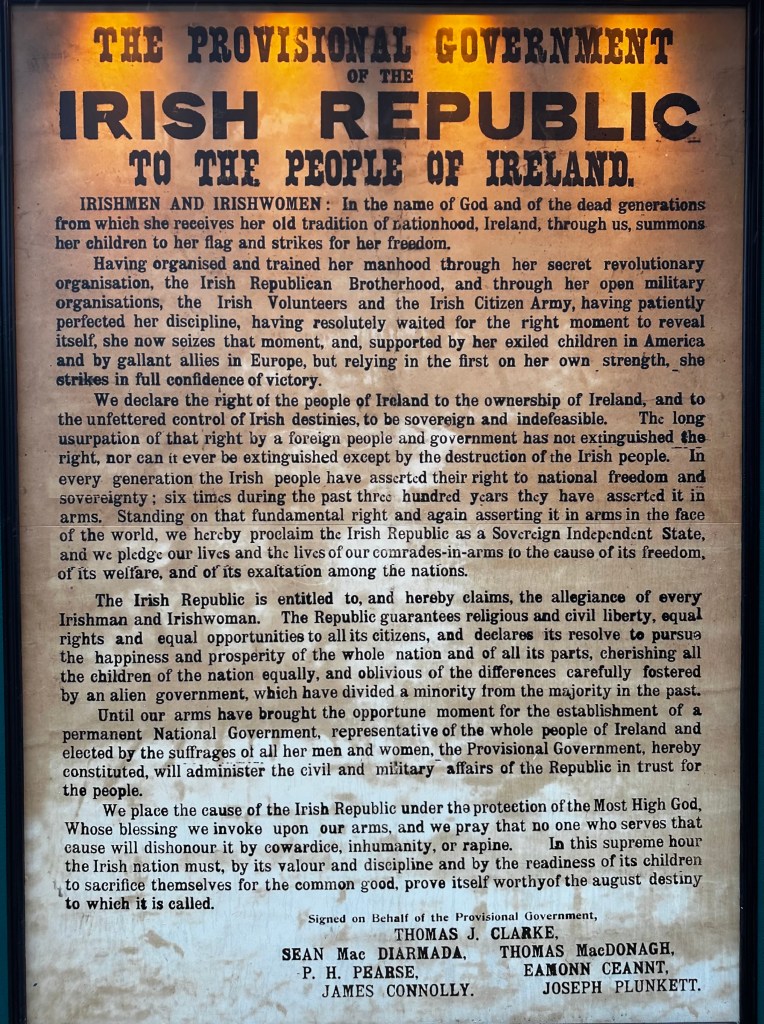
and the historical proclamation of the Provisional Government of the Irish Republic;
finishing off at Trinity College where the famous Book of Kells is on display.
In the afternoon it was off for a visit to the Guinness Storehouse:
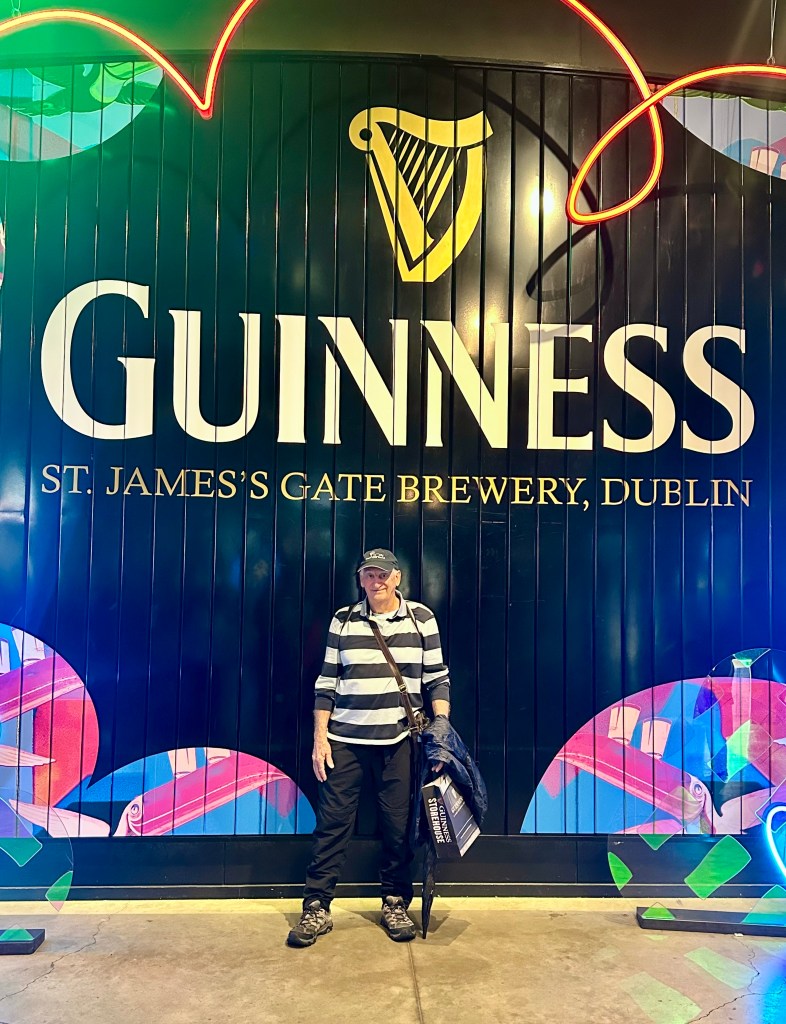
and on arrival we were pleased that we had booked a set entrance time as there were people lined up for hundreds of metres wanting to enter without a timed booking. The tour was self-guided covering the history of the making of Guinness from the location where it all started.

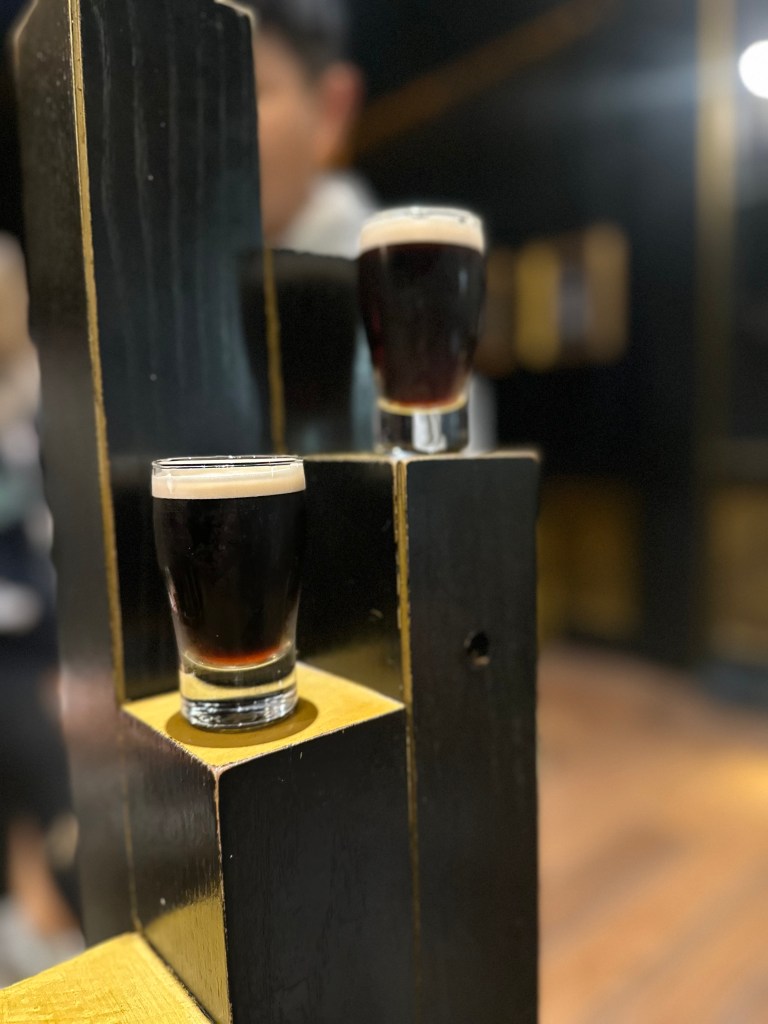
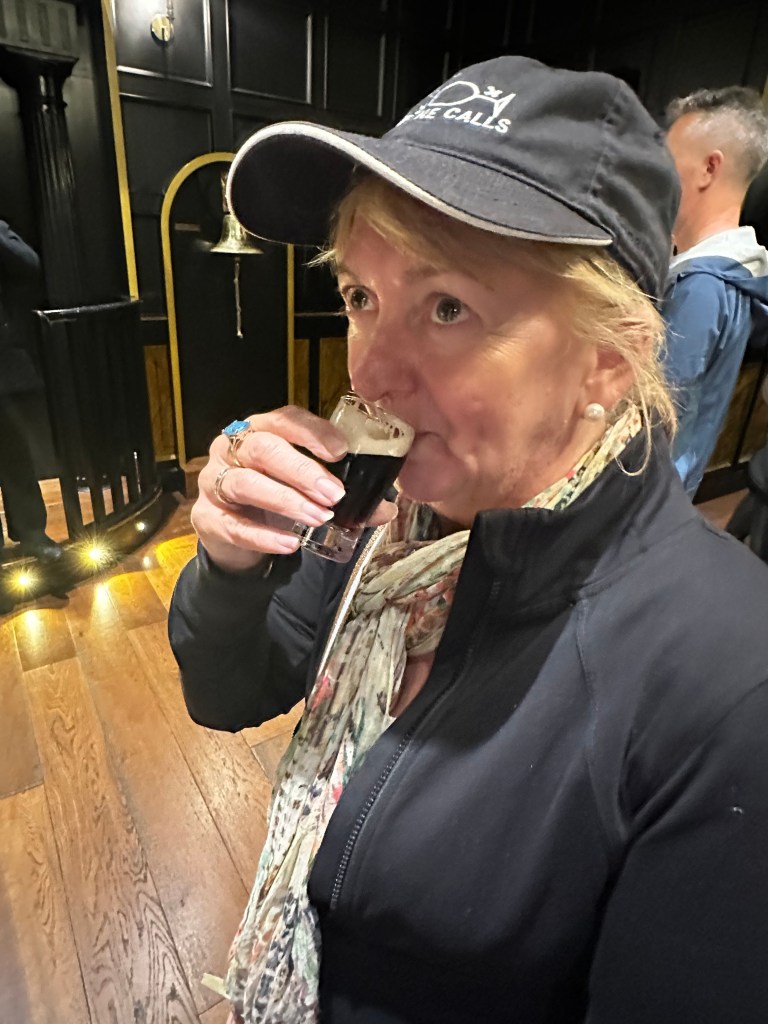
as well as an official “how to drink Guinness” taste session.
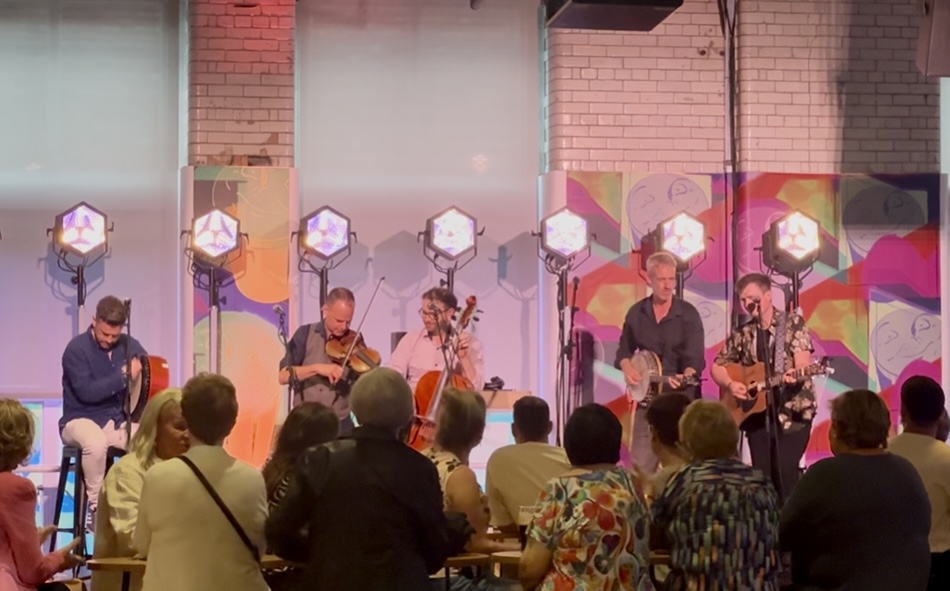
There were also Irish musicians playing and singing wonderful lively Irish music including Irish dancers that you could sit and watch for hours.
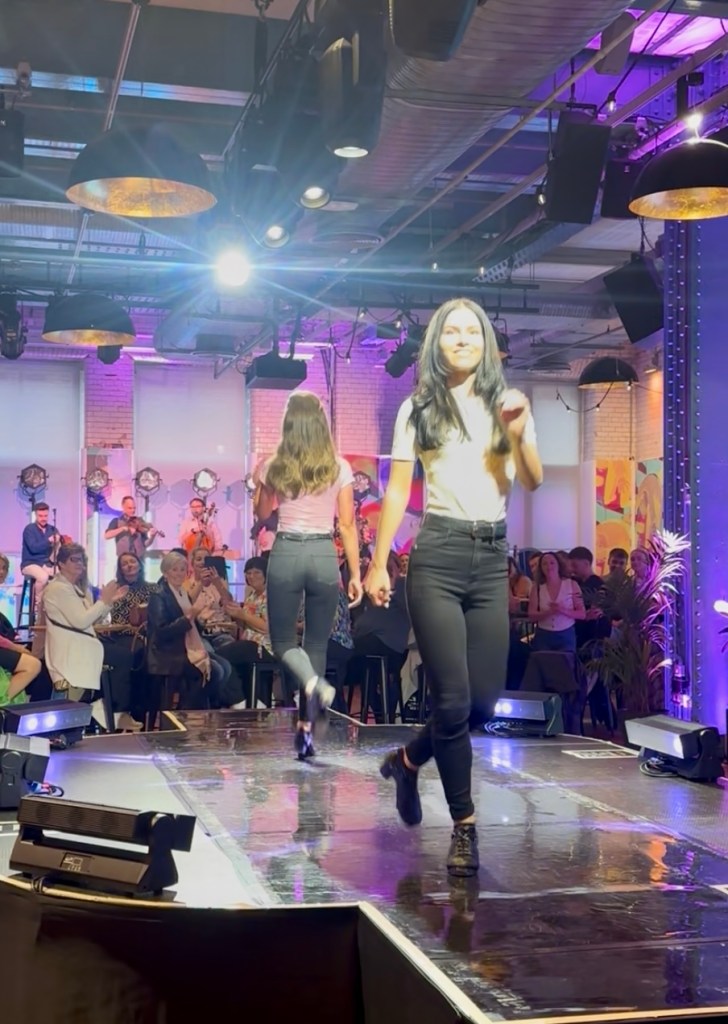
There was also a Waterford crystal Guinness harp that Pauline was excited to see


The experience concluded with a pint of Guinness included in your ticket on the rooftop with a view over the city.
Pauline is not a lover of Guinness (even though she did give it a go in the tasting session) so she looked around the room and sourced out a fellow Aussie traveller from Perth and gave him her drink voucher, so it wasn’t wasted. If it had been later in the day, I may have used the second voucher myself.I had pre-organised online to have a Guinness pint glass engraved with a suitable variation on When Wine Calls and picked it up to bring home – a good memento of our visit.
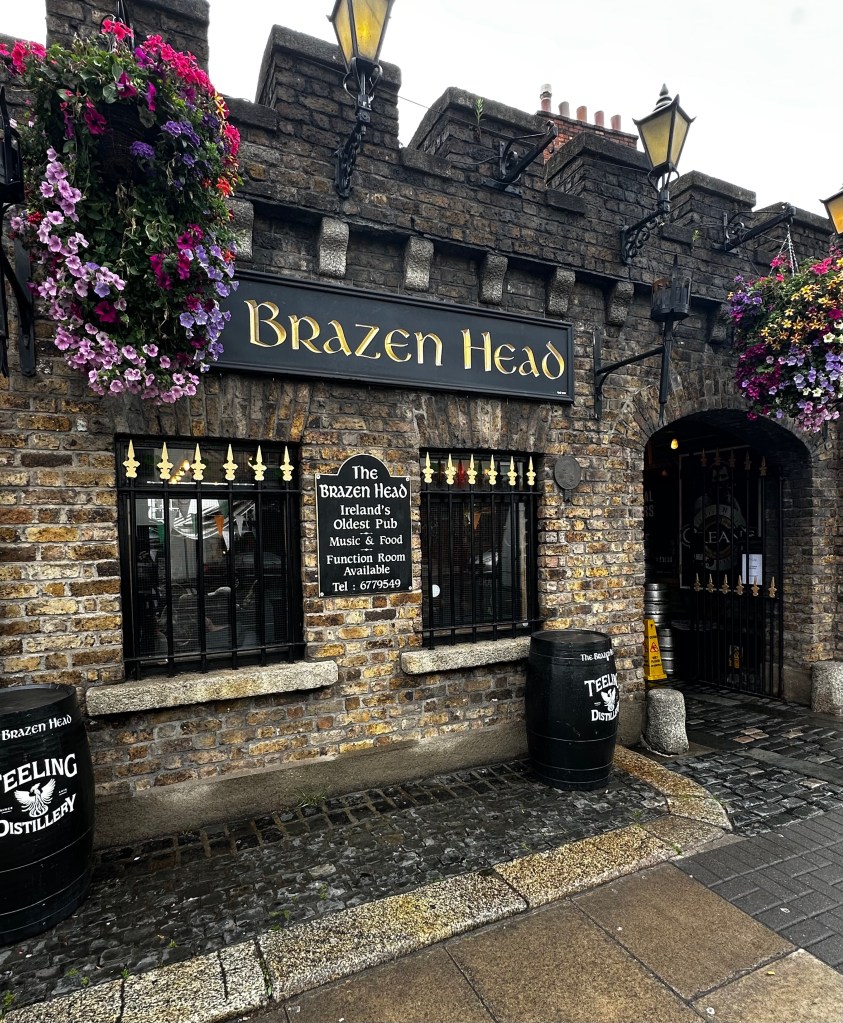
On the way back to our hotel we stumbled on the Brazen Head, purportedly Ireland’s Oldest Pub.
The next day we had arranged to go out to one of the southern suburbs of Dublin to have lunch with the family friends we visited all those years ago. We decided the easiest way to get there was to catch a local bus due to the distance from the centre of Dublin and understood from our research that the buses accepted credit card payments – that turned out not to be the case (they are apparently working on launching this service). Pauline did try to pay him with the coin we had but did not realise it was sterling not euros, at this point the bus driver simply laughed, said “don’t worry about it!” and very graciously allowed us to travel without payment. I am sure this is not the first time he has encountered this situation, and no doubt says to himself “stupid tourists” on each occasion.

We had a great lunch catching up with Alan (aged almost 97 years) who was a close working colleague of Pauline’s late father and is now writing books, having published 18 books to date. He presented us with a copy of his last book and graciously autographed it to take back as a memento of our visit. Alan’s wife, Maureen and their eldest daughter Emma (who had flown back from Cyprus where her and husband Michael are currently working) and their son and partner also joined us
Emma drove us back to our hotel via a fantastic sightseeing tour around the coastal area of Dun Laoghaire.
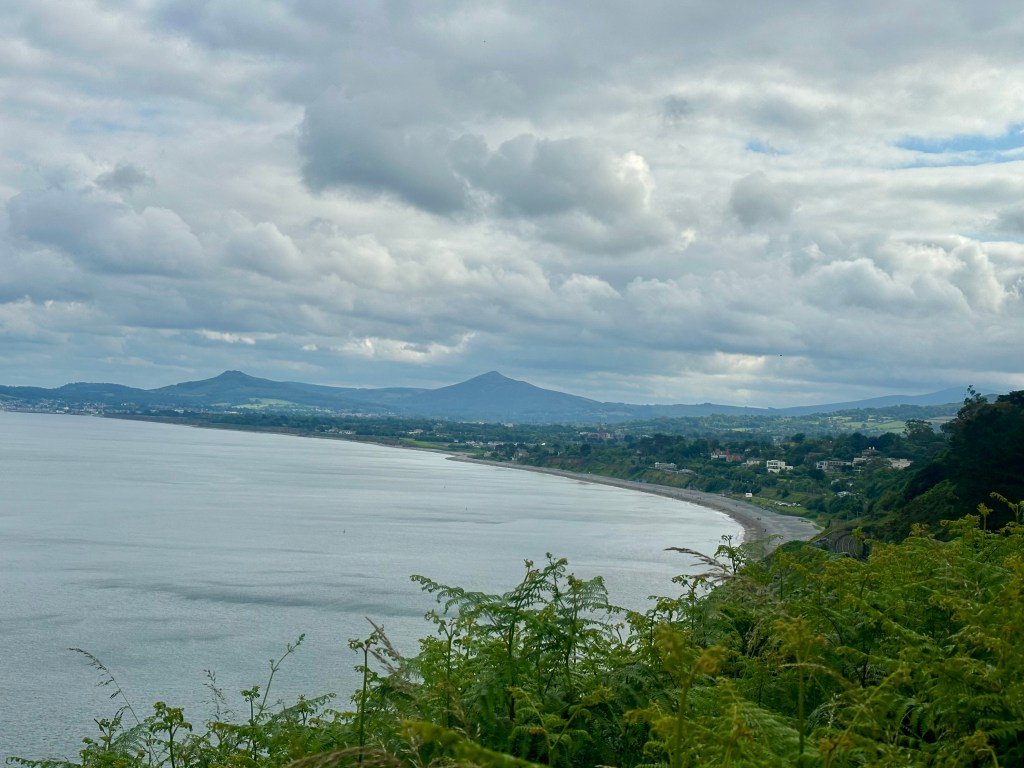
Our time in Dublin was short but we enjoyed seeing the city again. The next day we headed a short distance from the city centre to pick up the hire car rather than travel back to the airport and headed north for a one-night stopover in Kells. Kells is one of Ireland’s most important medieval monastic towns containing examples of medieval Christian architecture. The religious settlement (also known as Ceanannas Mor) was initially established in 550AD.
Along the way we called in at some local landmarks such as Trim Castle (the largest Anglo-Norman fortification in Ireland and used in the film Braveheart)

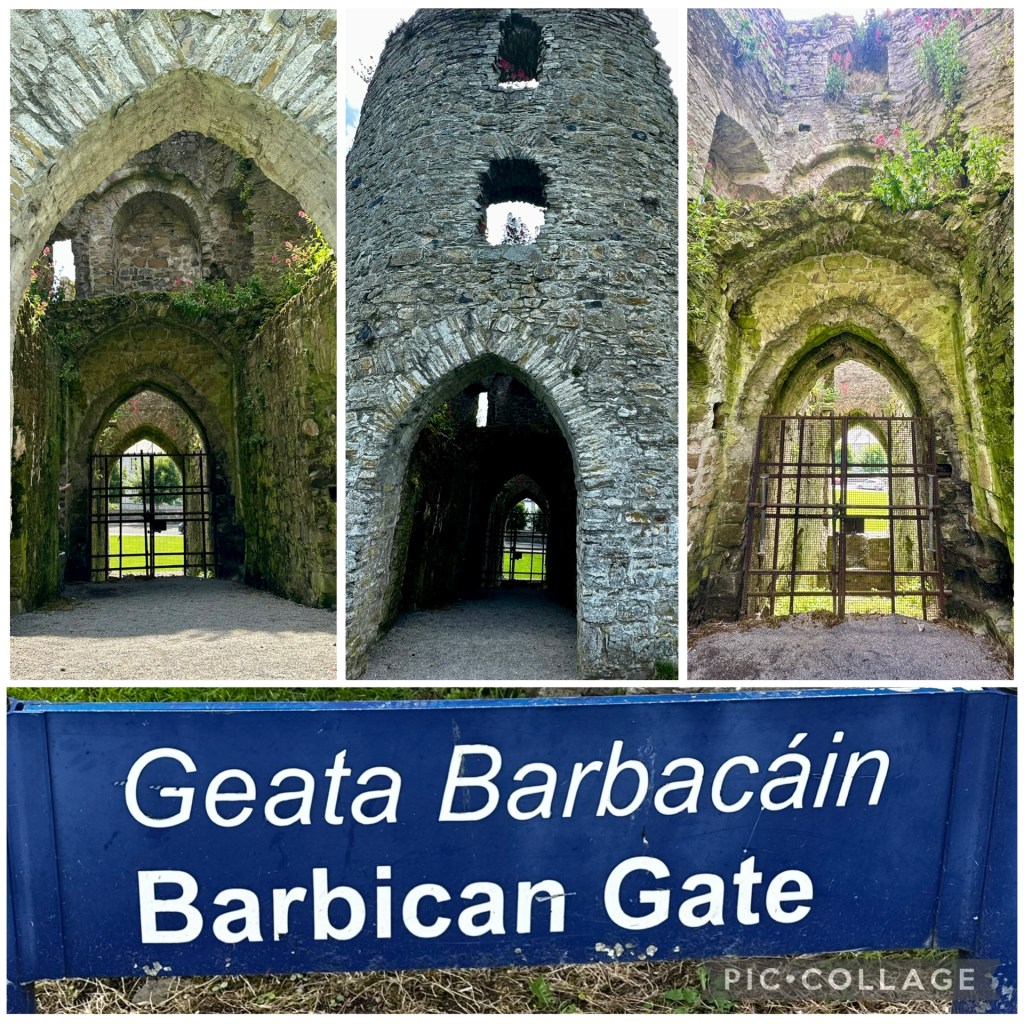

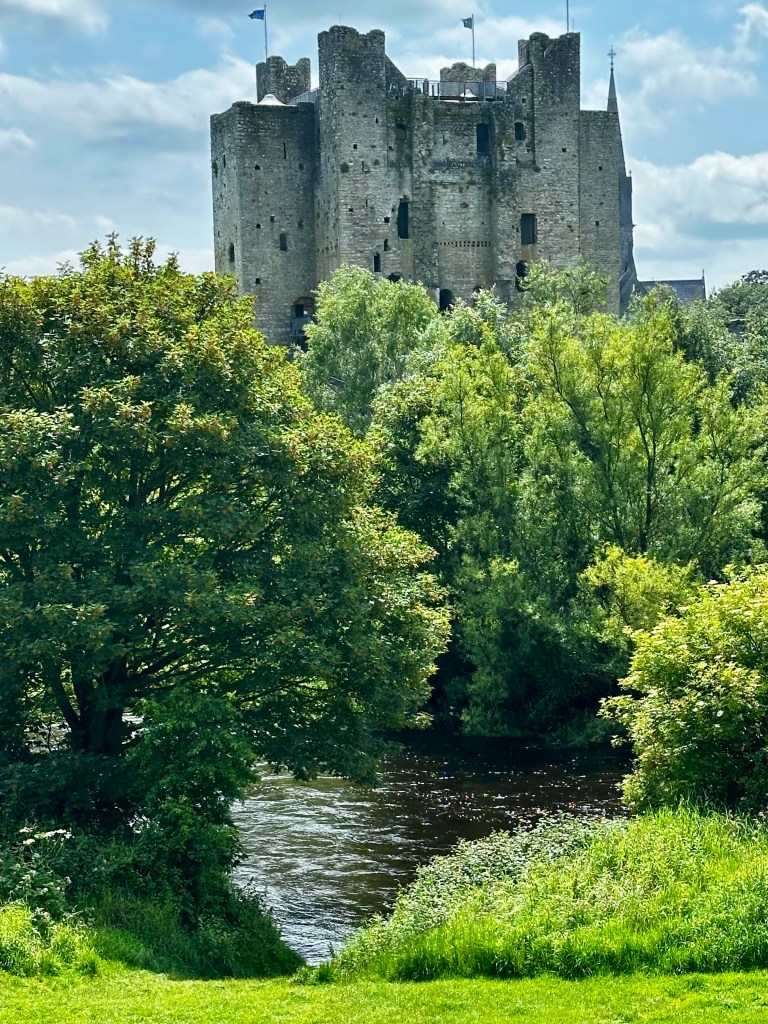
and the Hill of Tara (important since the late Stone Age and even more significant in the Iron Age (600 BC to 400 AD) and into the early Christian Period when it was the seat of the high kings of Ireland.

The Hill of Tara’s palaces have now disappeared and only earthworks remain including the Lia Fail or Stone of Destiny (believed to be the coronation stone for the High Kings of Ireland and one of the four legendary treasures of Tuatha De Danann)
and the Mound of the Hostages, a 5000-year-old passage tomb.
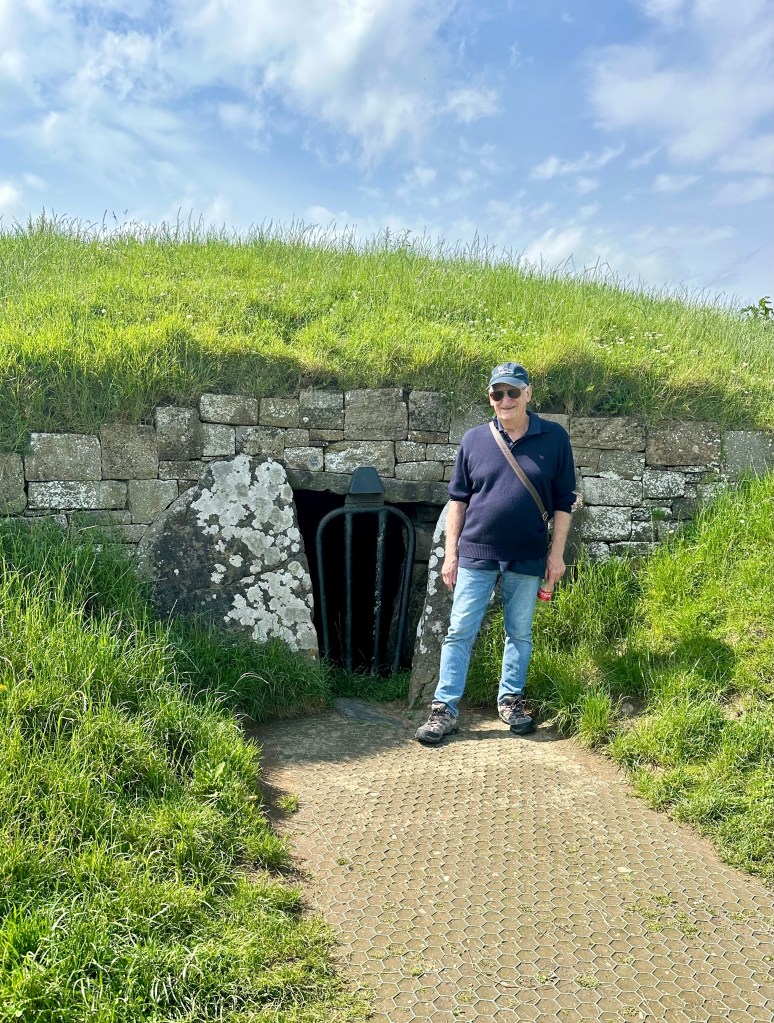
Since we were only going to be at Kells one night we left our large suitcase in the boot of the car and when I went to retrieve some items from it after dinner, the key would not open the car with the battery appearing to be flat. With assistance from AA (like our Royal Automobile Clubs in Australia) over the phone we accessed the car manually with them logging a call to come out the next morning to have a look.
In the morning a great fun guy from AA arrived after travelling over an hour to get here and outlined that the hybrid car we were driving has two batteries and the smaller one had not charged during the drive yesterday up from Dublin for some reason. After driving it around the carpark and up and down the main street for a while he managed to get all the various alarm lights on the dash eliminated and we were ready to continue our adventure. This was certainly the first time I have had a problem of that type with a hire car on our travels over the years and the service provided by AA was fantastic.

Leaving Kells we continued our journey north into Northern Ireland and onto Belfast, We were not sure what to expect at the border crossing but the only way you know you have arrived is the speed signs change from kms to mph which provides an initial challenge as your speedo in the car obviously does not adjust and you therefore start get flashing excess speed warnings on your dashboard making you reliant on the GPS screen for your speed notifications. However, in our car there was a considerable deviation between the speedo reading and that on the GPS screen to add to the uncertainty.
The other notable change is when you are in Northern Ireland the currency is Sterling rather than Euros. In both parts you drive on the left side of the road like Australia and the UK which is fantastic.
In Belfast we had arranged accommodation at The Fitzwilliam Hotel in the city centre, but the parking was concierge parking with a sit-down point on a main road for you to park and drop off the bags. Unfortunately, when we arrived a tourist coach was in the space and so we had to drive around the city for 20 minutes waiting for the bus to leave. Having never been to Belfast and not knowing the city at all I was very concerned about driving through a restricted traffic zone, but we finally made it back outside the hotel with the concierge taking over, organising moving the car, we checked in and were in our upgraded room without any issues.
After settling in we popped down to the concierge, picked up a map of the city and went off exploring this fascinating city.
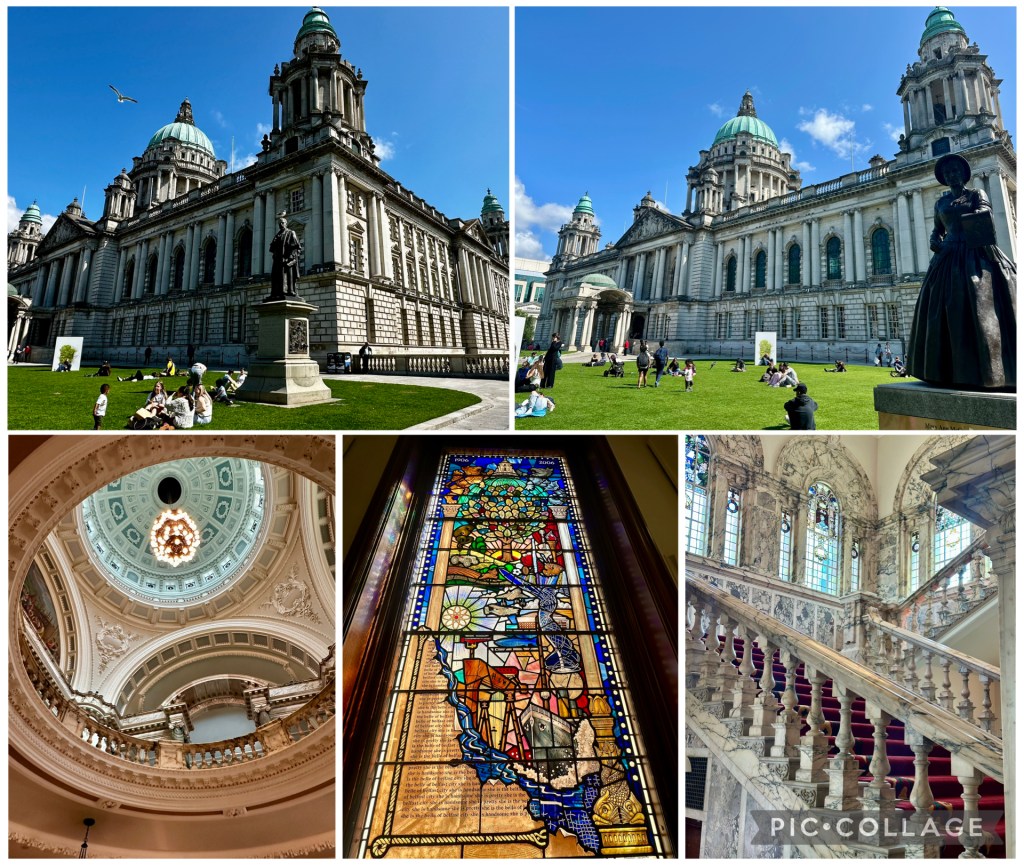
First stop was the Belfast City Hall, a magnificent building completed in 1906 and renovated in 2009 which had a very interesting exhibition over 16 rooms showcasing the city’s history and vibrant culture from past to present which provided a good introduction to the city.
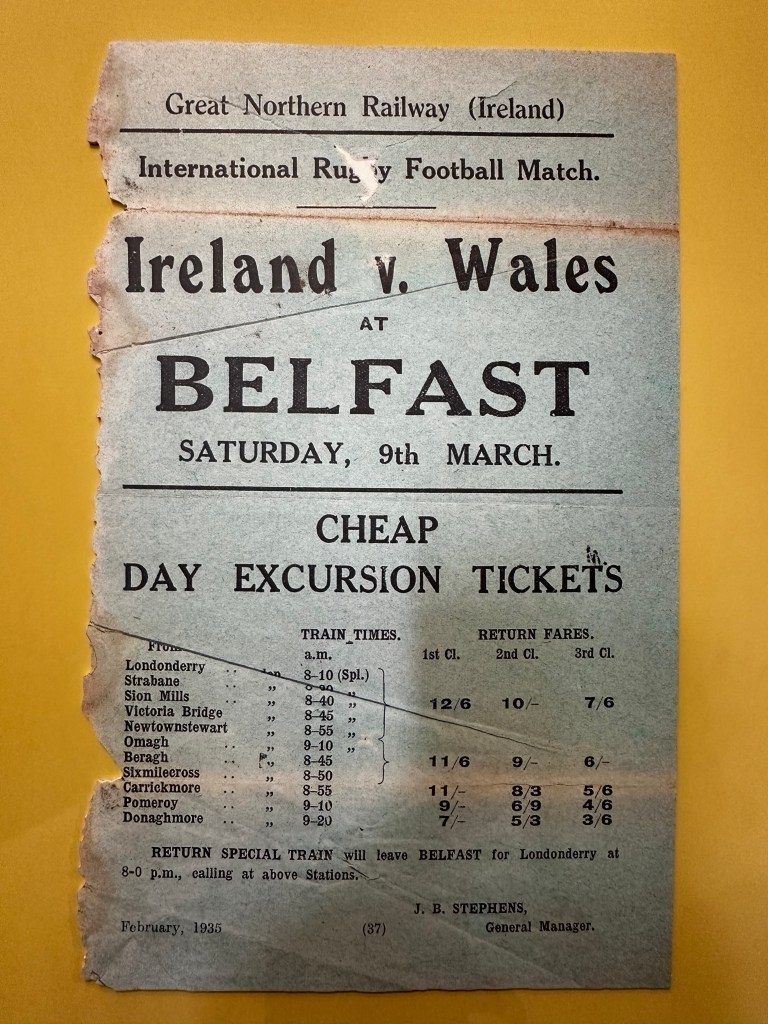
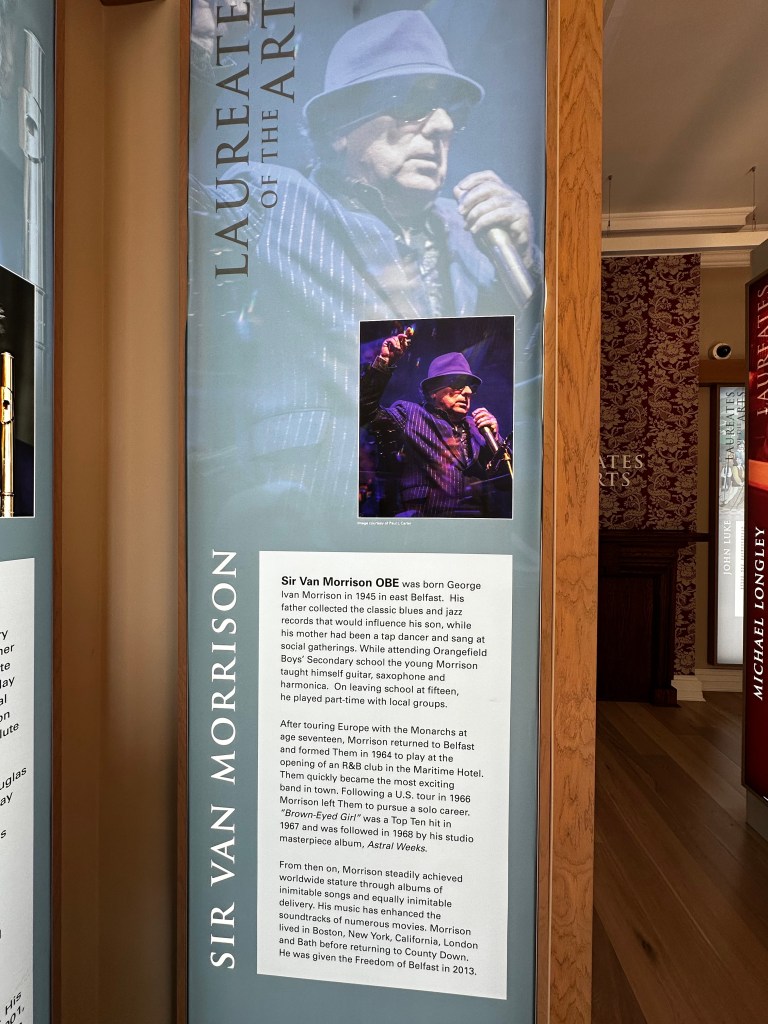

Other places visited during our walk included the unusually flat iron shaped pub named Bittles Bar
and Albert Clock which was erected in 1865 to commemorate Queen Victoria’s consort, Prince Albert.

The clock was built on reclaimed land from the River Lagan on wooden piles causing a characteristic list and has given it the title as Belfast’s own leaning tower.
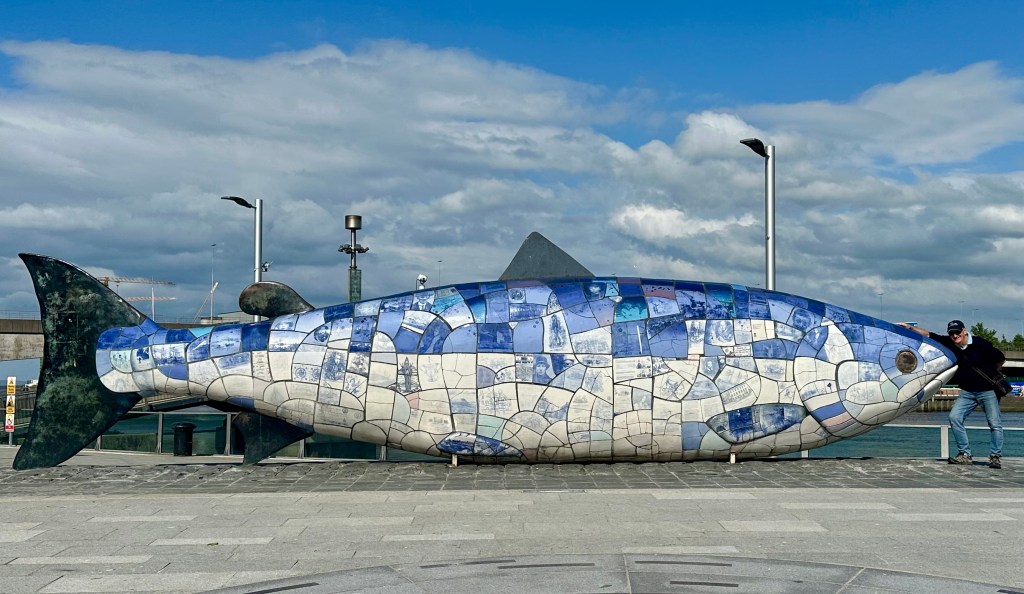
We also visited the Big Fish (apparently also known as the Salmon of Knowledge) which is 10 metre long and constructed on Donegal Quay in 1999 to celebrate the return of fish to the River Lagan. According to local folklore kissing the fish evokes wisdom.
Along the river is also the 15-metre sculpture “The Beacon of Hope”, Harmony of Belfast constructed in 2007 which was based on the original in Thanksgiving Square in Dallas, Texas.

Belfast proved to be a very walkable city, and we enjoyed getting acquainted with its landmarks.
The next day we had booked a private Black Taxi tour and were not sure what to expect but it certainly turned out to be more confronting and compelling than we could have imaged as we travelled through local communities not far from the city centre and experienced the troubled history of this city

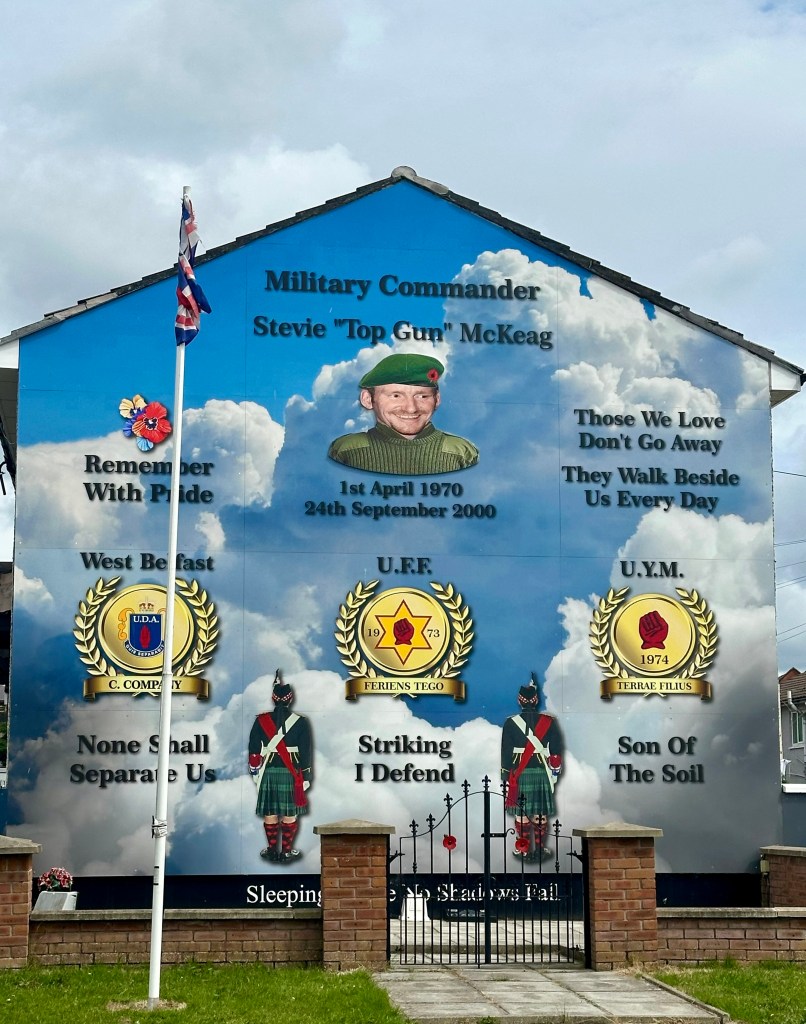
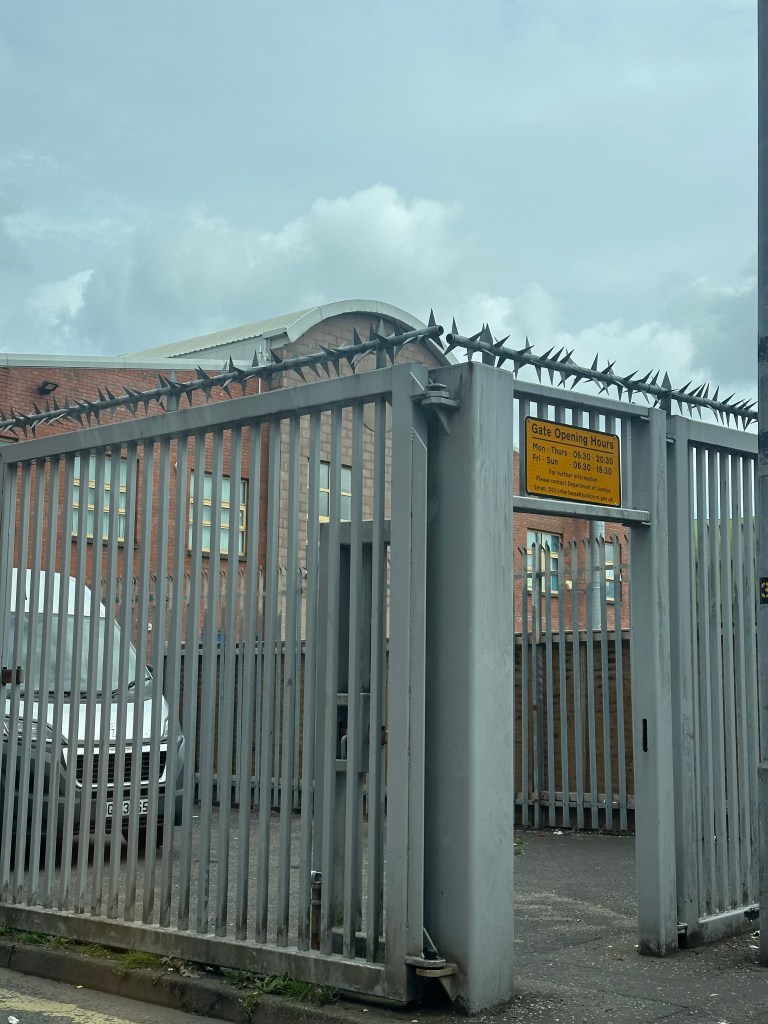
While the tour was only relatively short the memories of what we saw will stay with us for much longer and leaves you with a deep appreciation of the struggles that have endured here and the attempts being made to realise a brighter future. It really is difficult to capture the conflicting feelings you are left with from visiting Belfast, but we are nevertheless so pleased that we came.
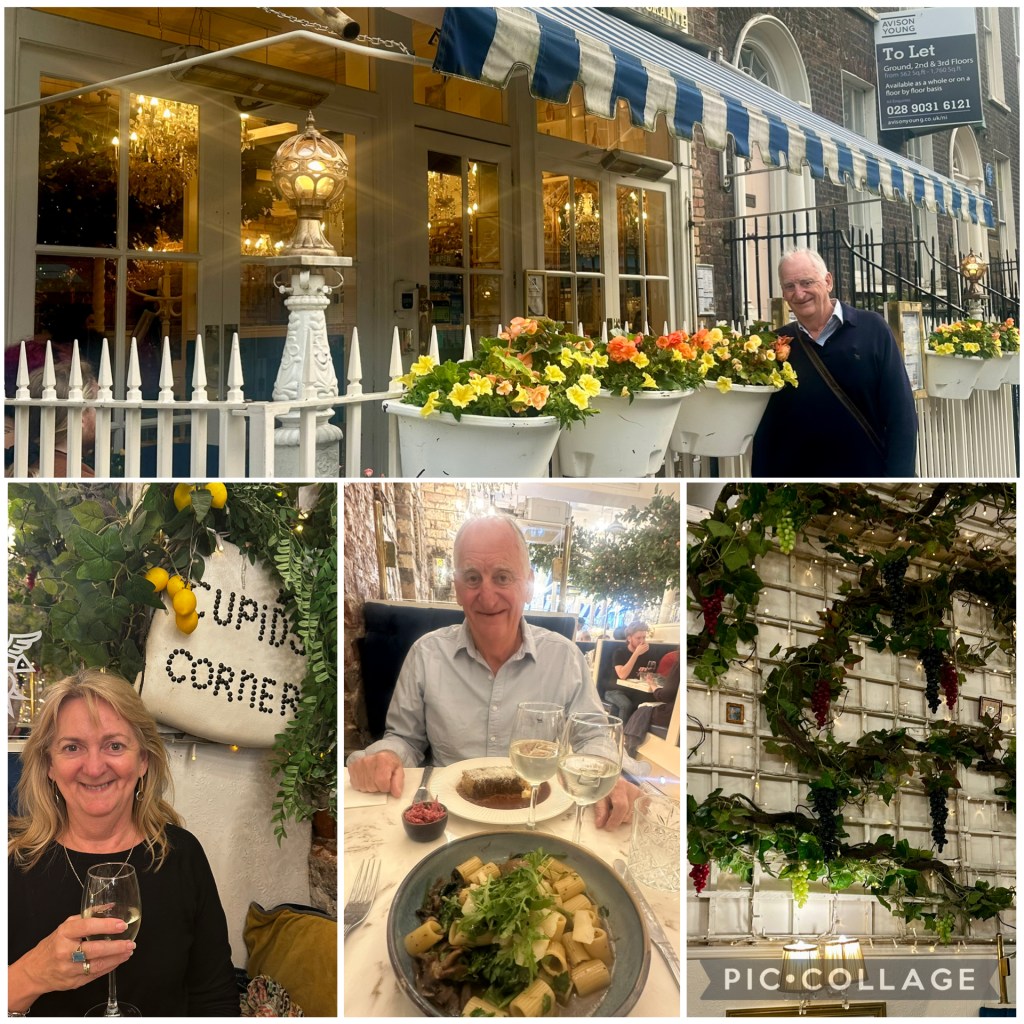
That night we decided that Italian was the dinner choice, so we booked into a quaint restaurant, The Chubby Cherub (great name) that we had seen during our walks around the city.
For some reason they gave us a table called “Cupids Corner” which was fun with the food and wine being spectacular.
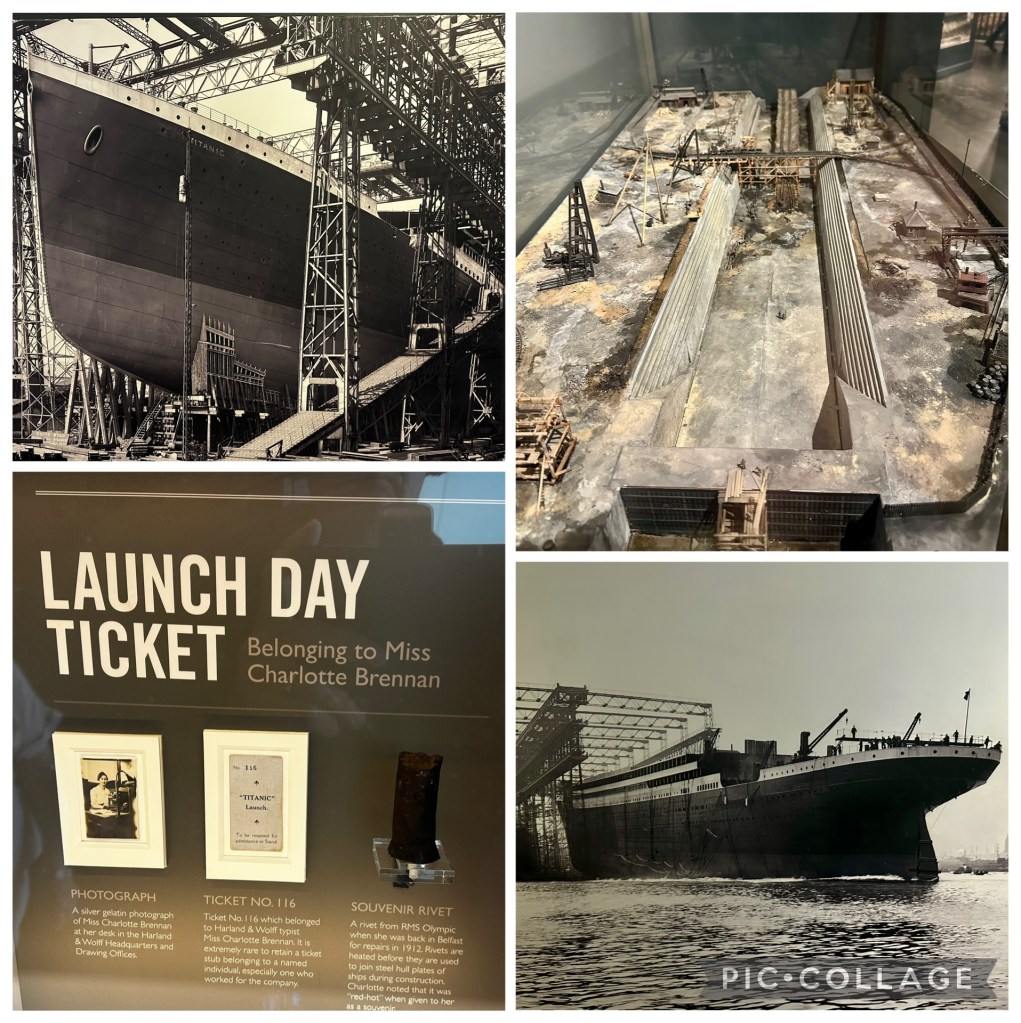
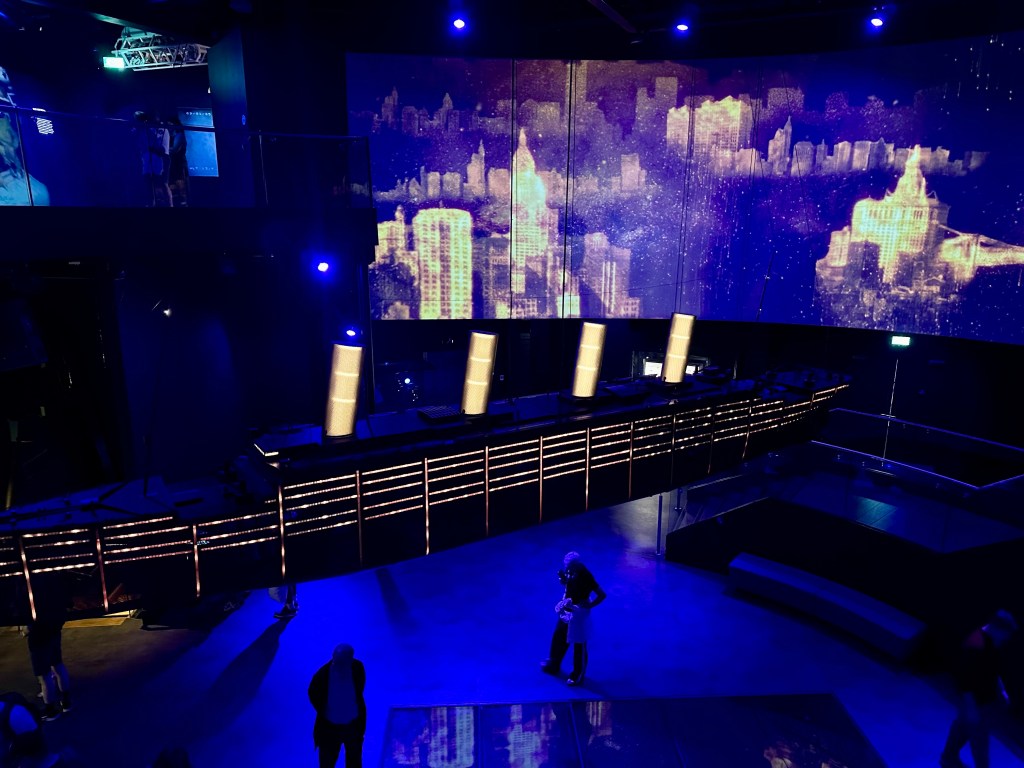
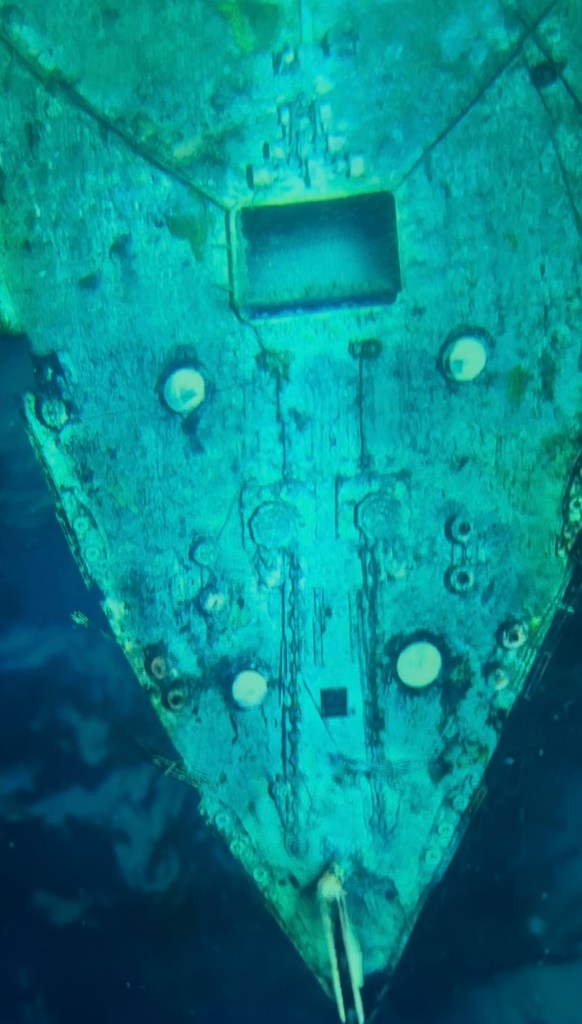
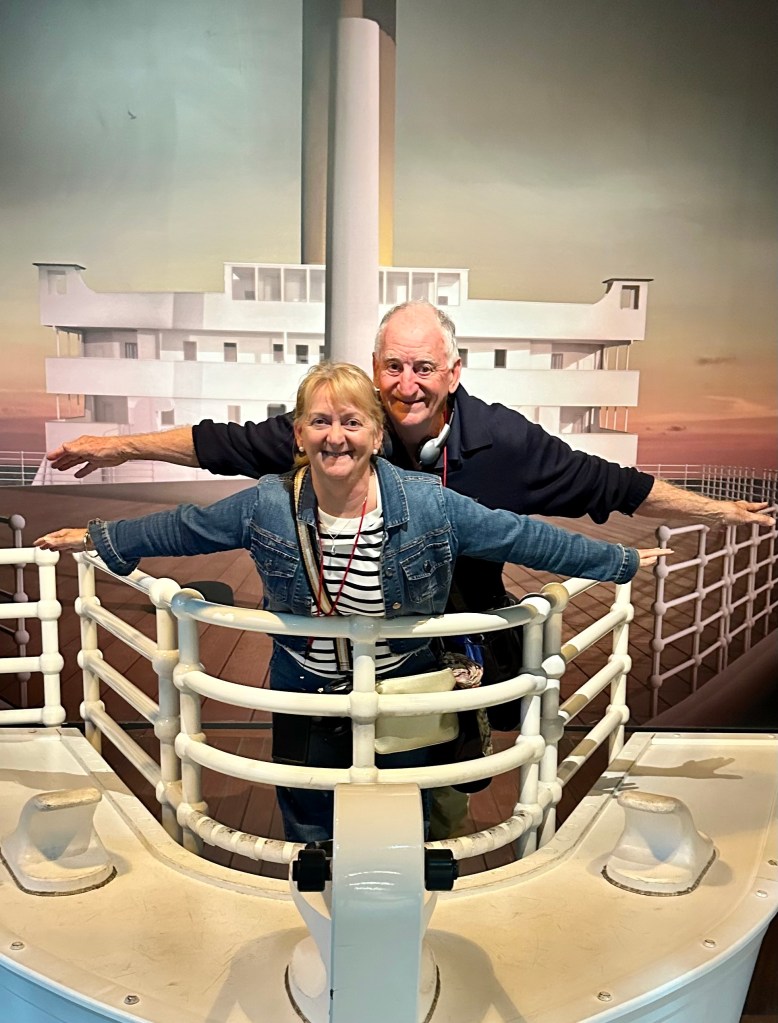
One of the items on our bucket list was to visit Titanic Belfast and it did not disappoint. This would have to be one of the best interactive historical museums anywhere in the world and a must do if you visit Belfast, even if you have no interest in the Titanic story.
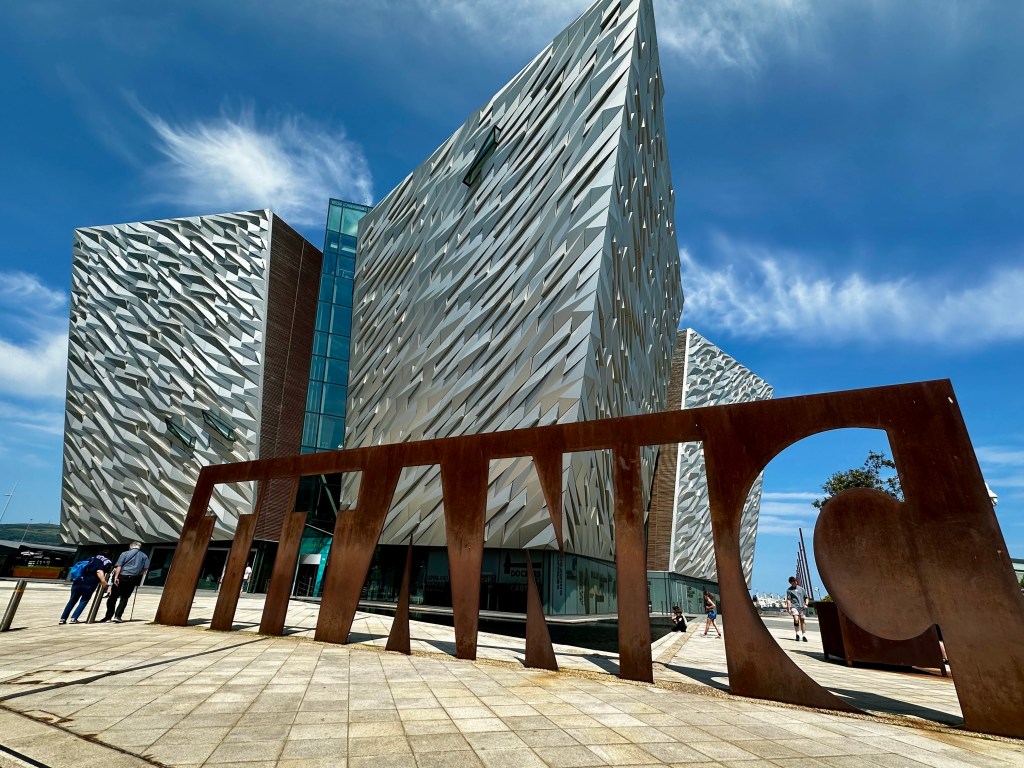
We had scheduled about 3 hours going through the Titanic Experience followed by another hour on the Discovery Tour. It wasn’t enough time, and we ended up having to rush through the end of the Experience, so we didn’t miss the next tour. It is not possible to capture the Experience in pictures so a collage of some of the exhibits is below to provide a glimpse into this amazing place.
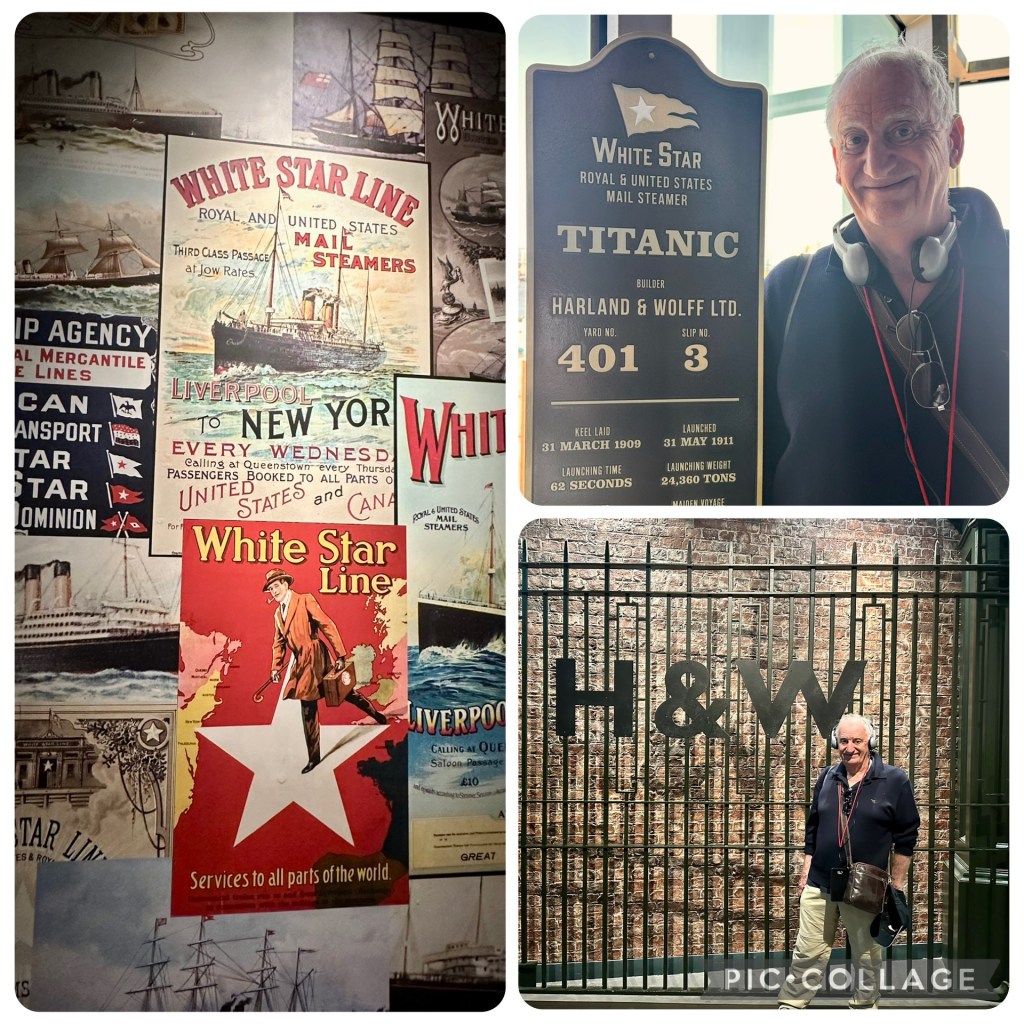

After the Experience we went on the Discovery Tour and while some aspects on the tour had already been covered off during The Experience tour the highlights were a walk through the Titanic Hotel over the road

which was the original H & V Building where the management and designers of Titanic worked with these rooms beautifully restored as part of a working hotel.

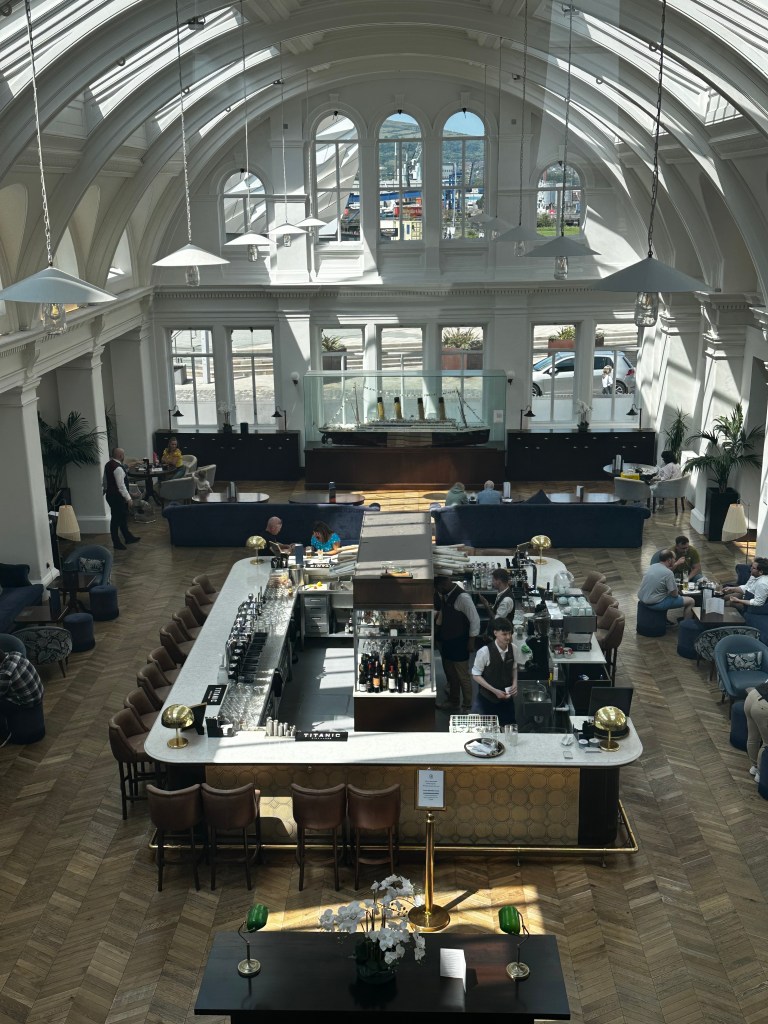


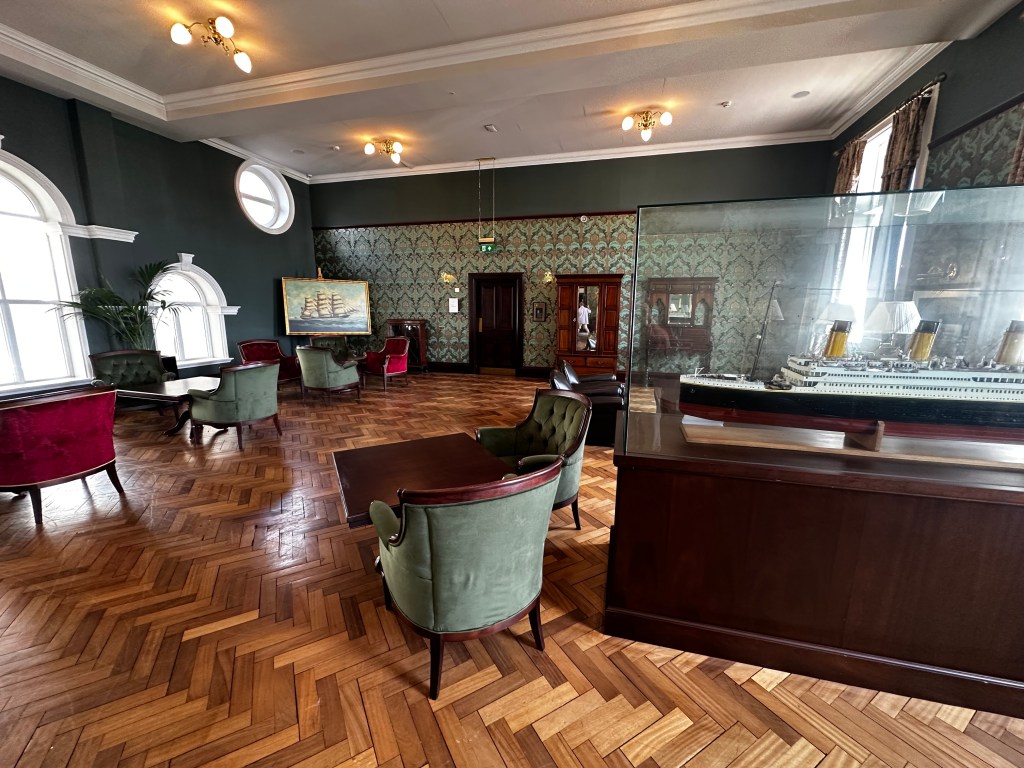
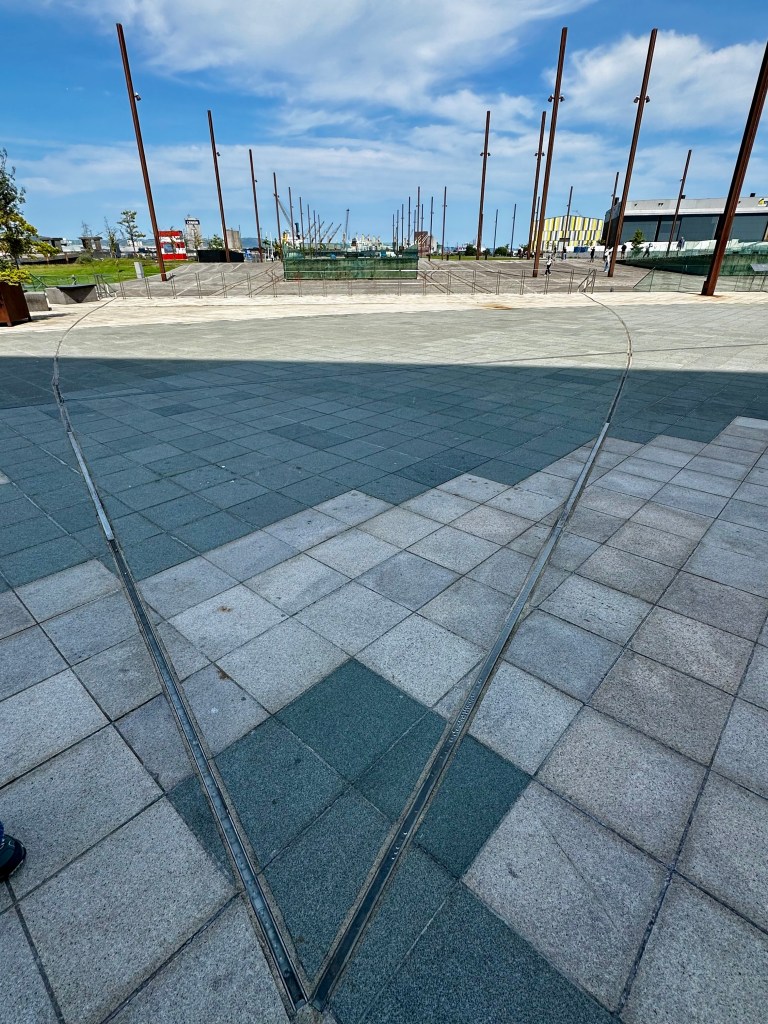
The tour was then followed by a walk out to the dock where the Titanic and her sister ship Olympic were built side by side under a giant gantry with the outline of these majestic ships laid out on the dock floor to provide you with an indication of their size.
Also nearby was the SS Nomadic, the world’s last remaining White Star Line Vessel which is on display in Belfast’s historic Hamilton Dock. SS Nomadic was a former tender built in 1911 to transfer passengers and mail to and from both RMS Olympic and RMS Titanic.

The visit to Titanic Belfast was such a tremendous and memorable day.
Our time in Belfast was over and we really needed more time to explore this unbelievable city so I am sure we will come back again to capture even more memories.
The next day we were off in the car for the drive to the famous Giant’s Causeway on Ireland’s northern coast.

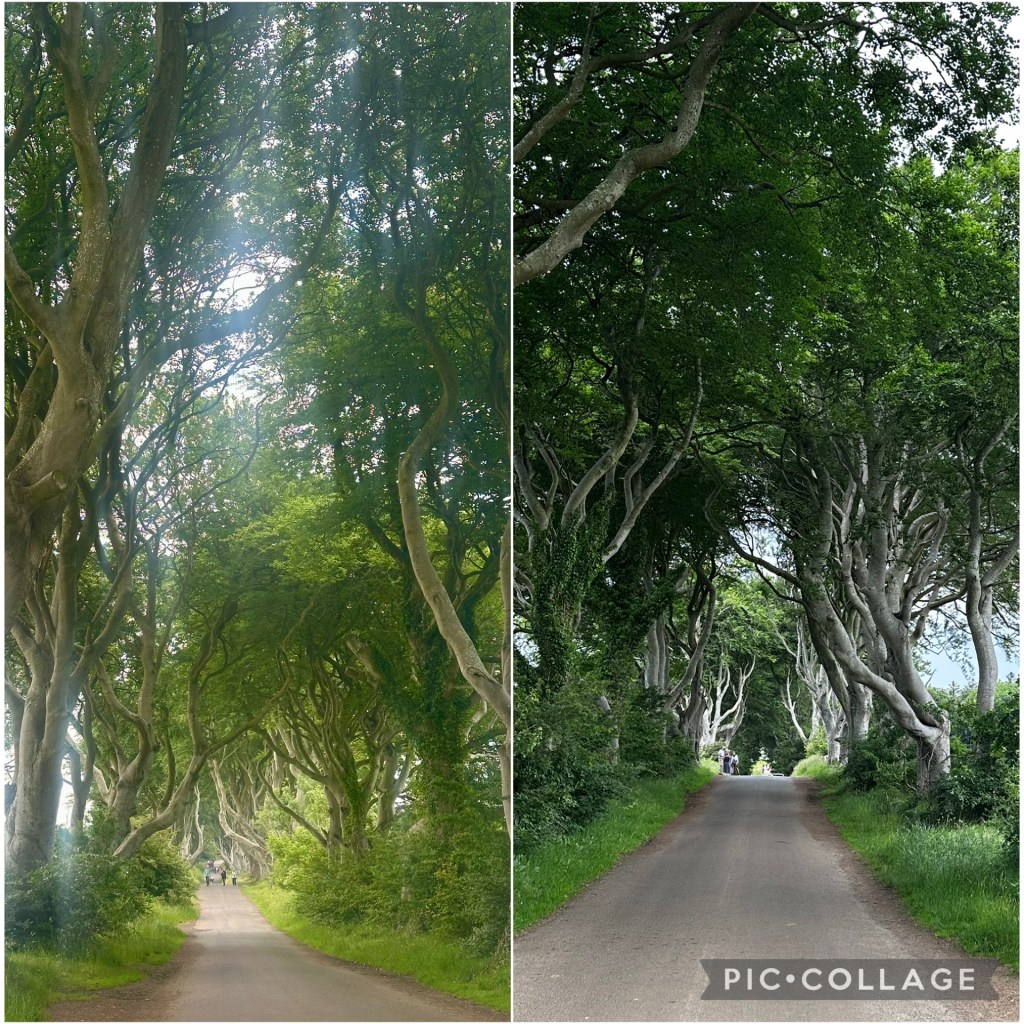
On the way we called in at The Dark Hedges, an avenue of 150 beech trees originally planted along the entrance to a Georgian estate (originally known as Gracehill House) built back in c.1775 to impress visitors.
More recently the beech trees were used as a filming location for the King’s Road in the HBO series Game of Thrones and now a popular tourist attraction.
We also called into a beautiful seaside village called Ballintoy which you access down a very tight windy road. This village and its stunning small harbour were once a hive of activity with schooners waiting to take away local products such as burned limestone and sett stones (quarried nearby) to ports such as Dublin and Liverpool.
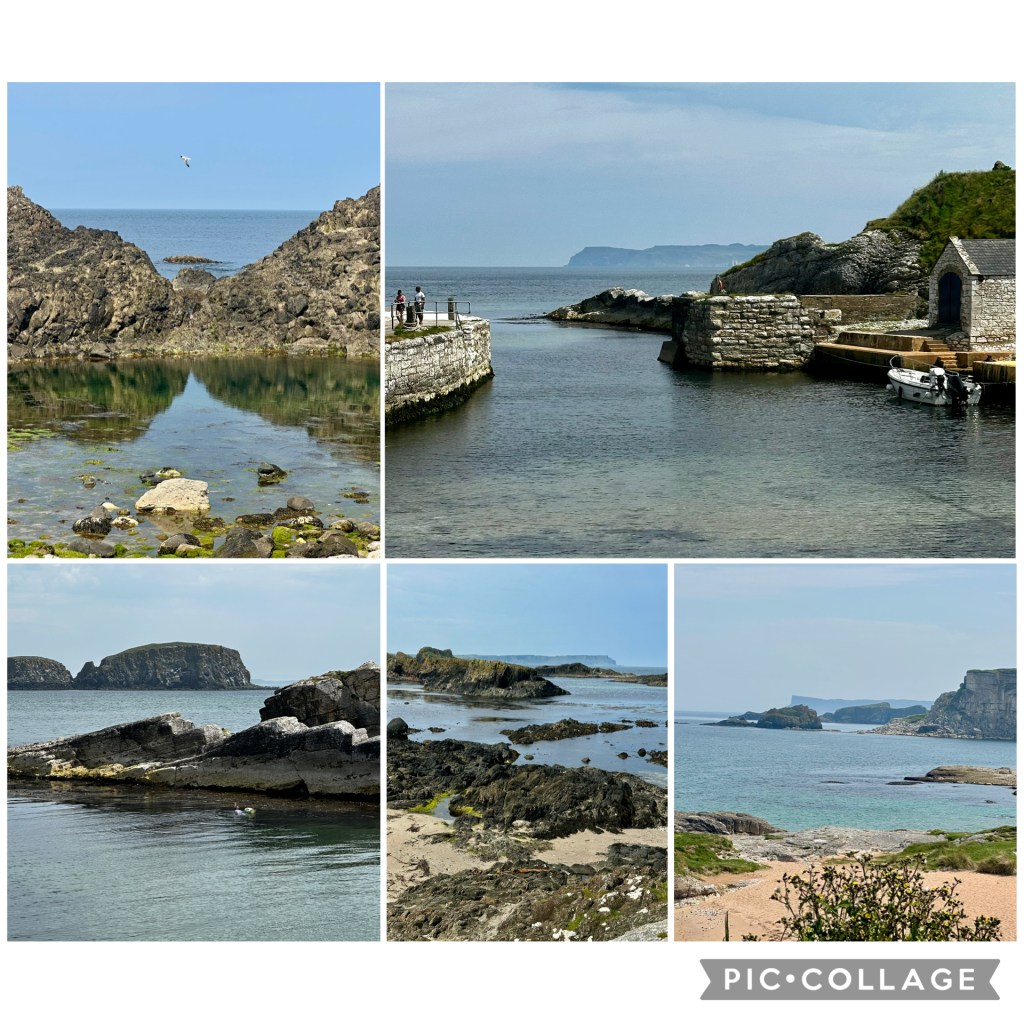
Today it is a sleepy village offering kayak tours of the dramatic coastline with Ballintoy Harbour also featured in Game of Thrones.
The scenery from the hilltop near the village was extremely picturesque as is all along this part of the coastline.
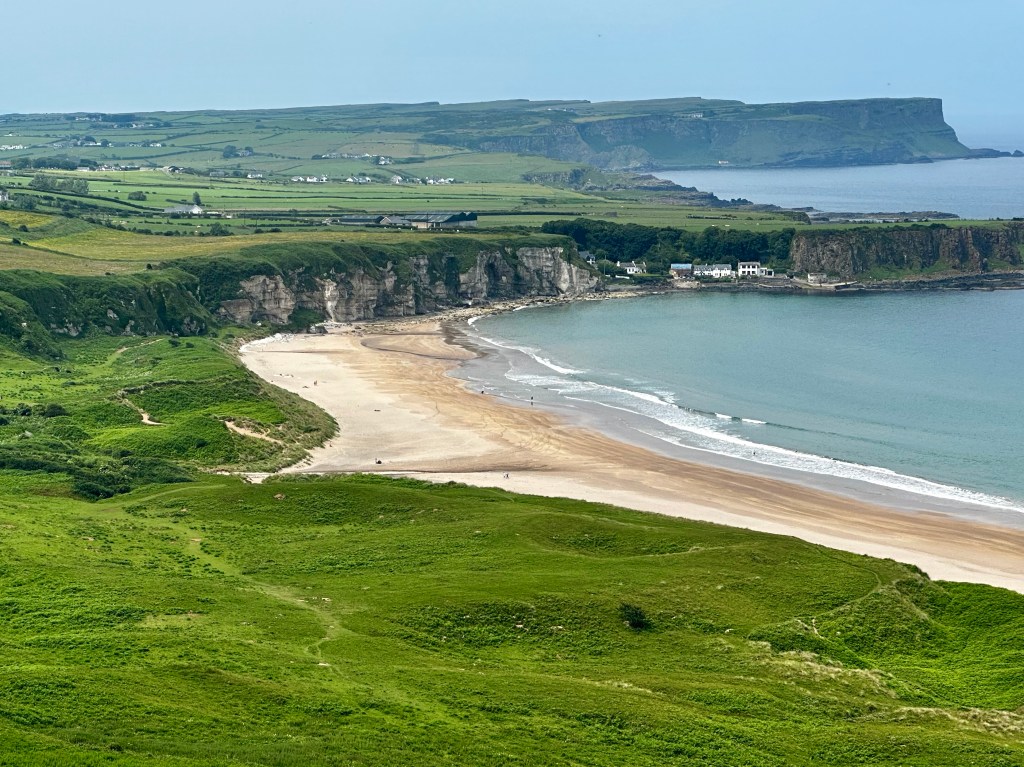
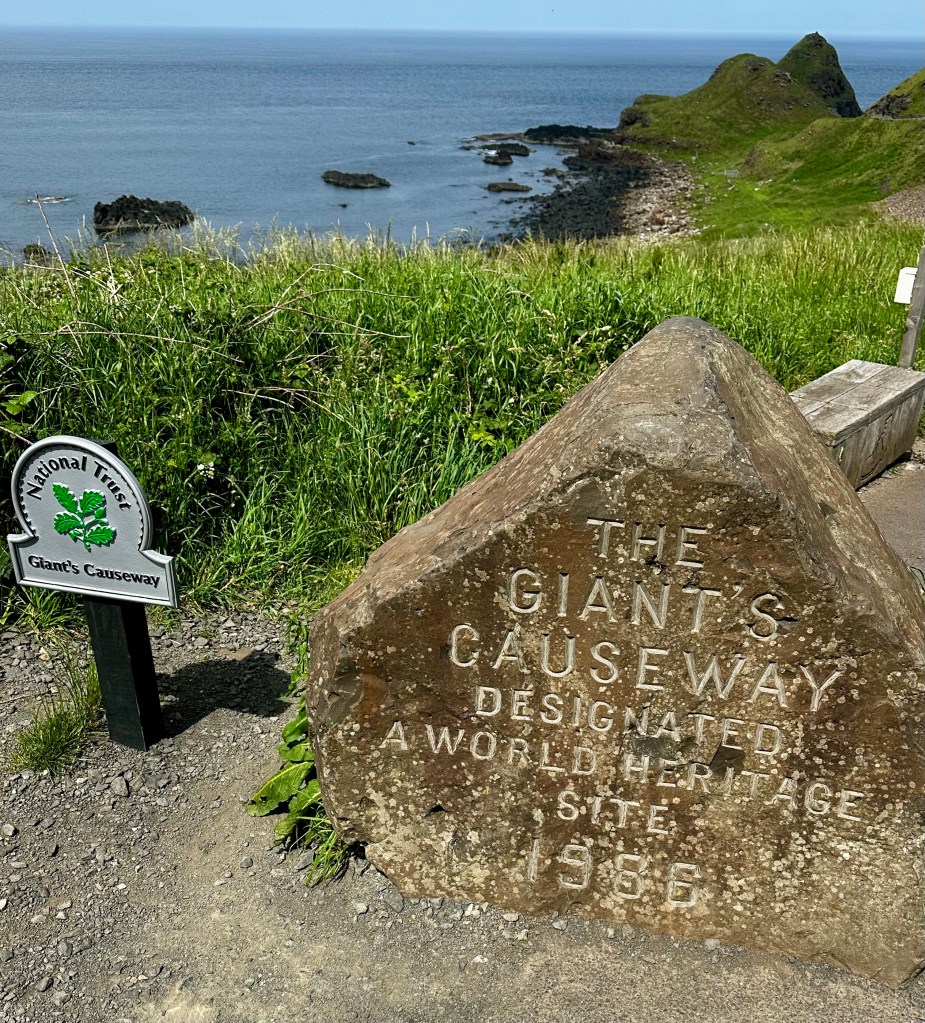
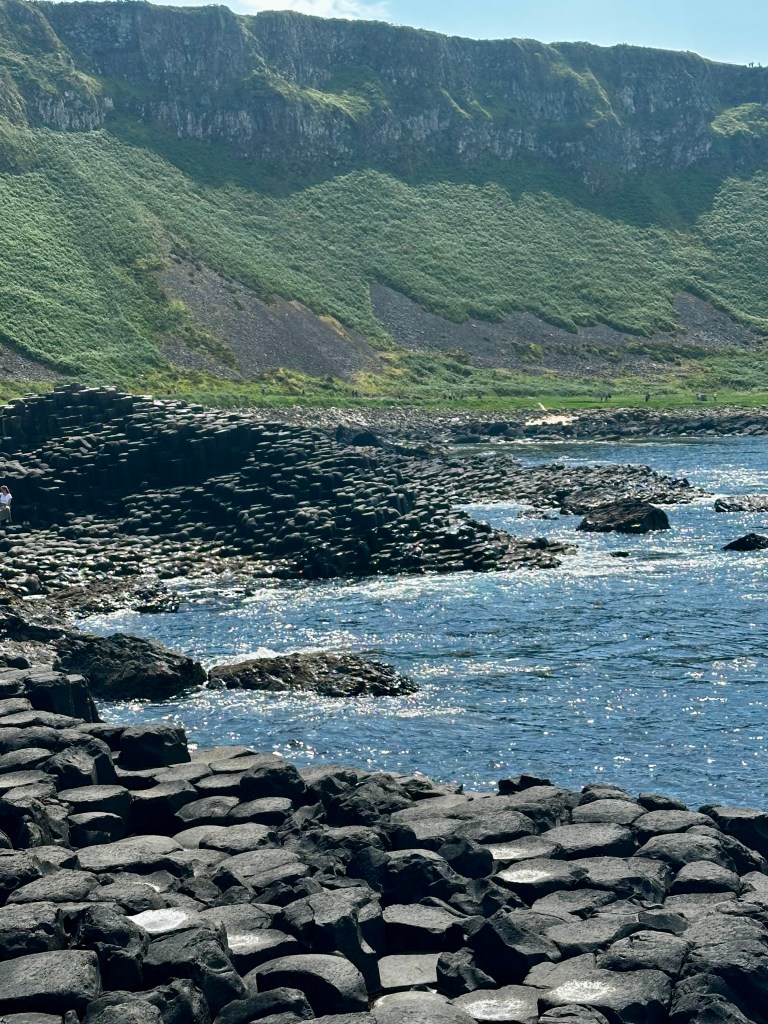
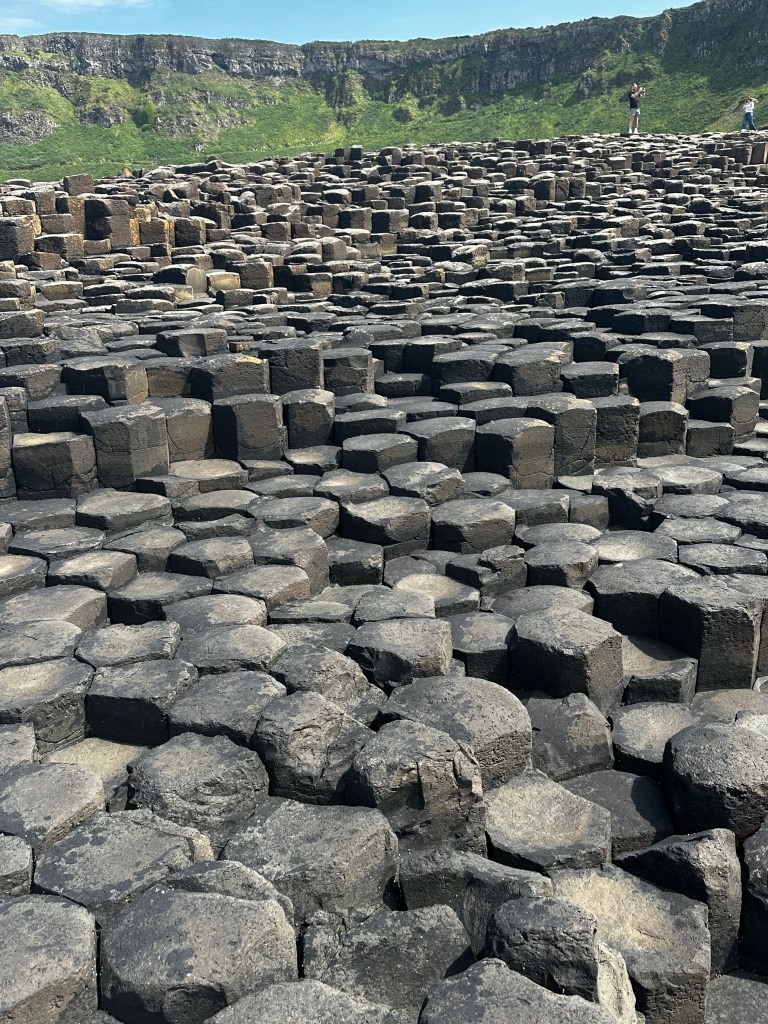
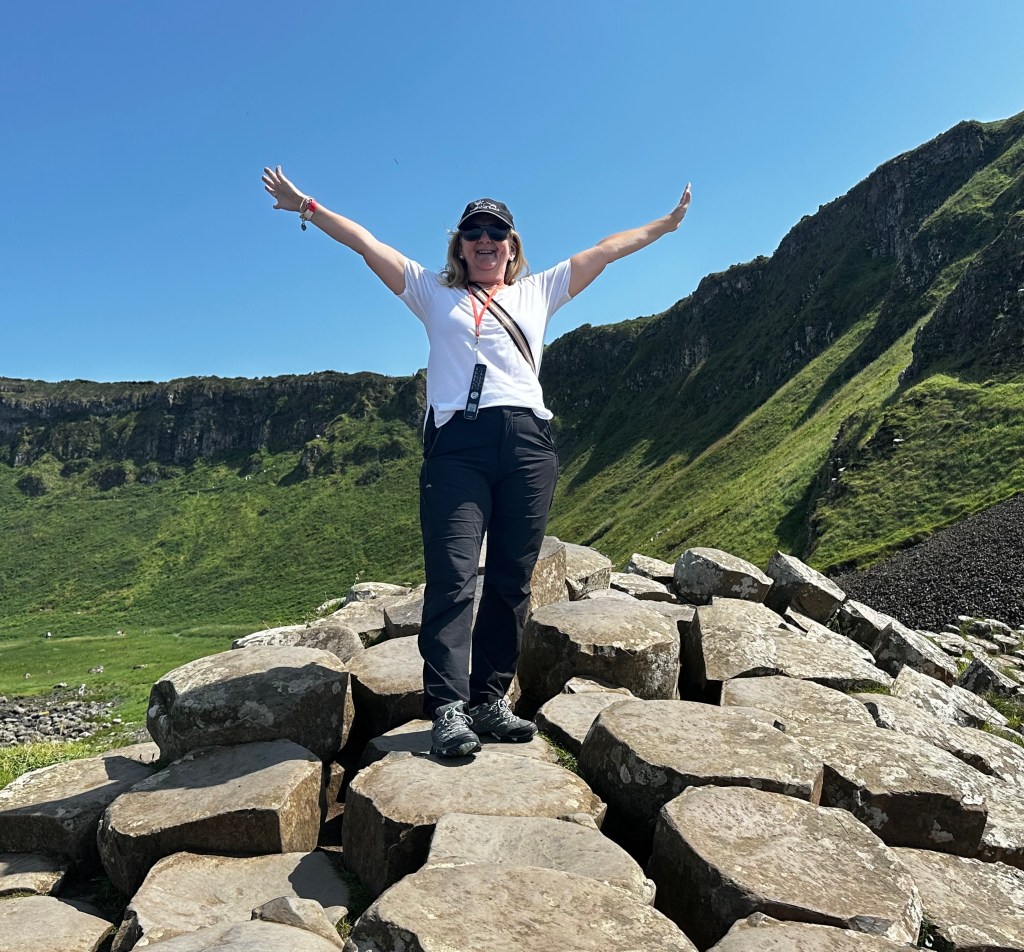
The weather was good for our visit to the Giant’s Causeway, in Irish terms at least, so we walked down from the Visitors Centre rather than catch the bus on offer to explore and get some amazing photos.
The Giant’s Causeway comprises 40,000 interlocking basalt columns, the result of an ancient volcanic fissure eruption and declared a World Heritage Site in 1986.
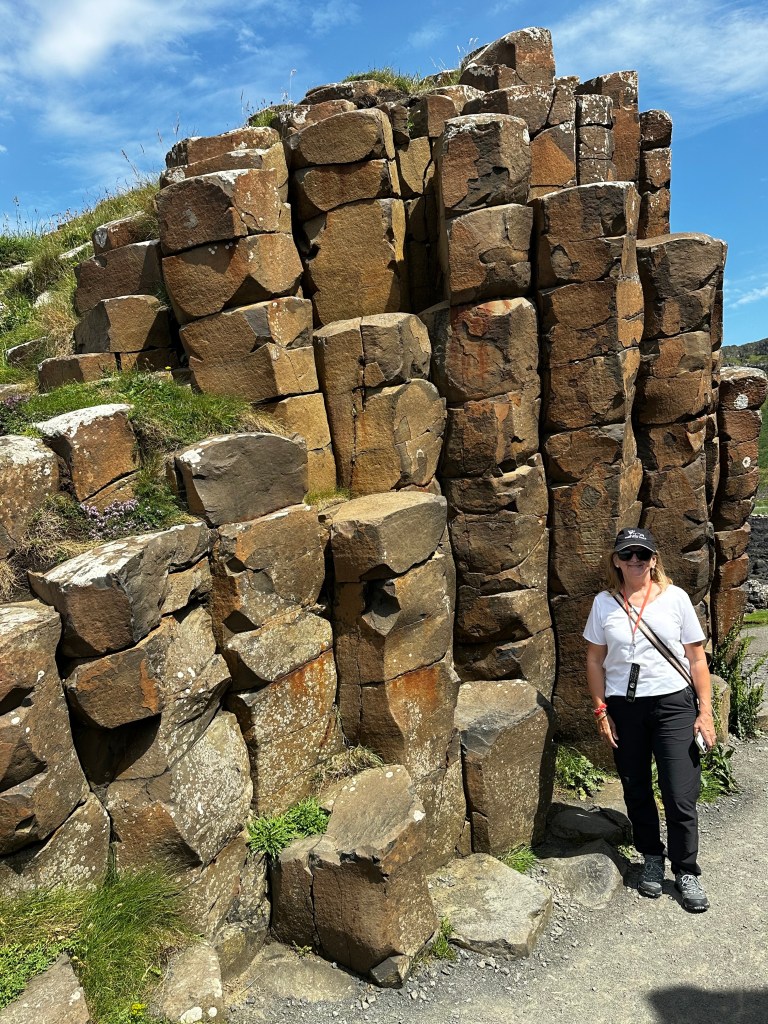

It is an incredible location if you do not mind sharing it with hordes of other tourists that descend on the site each day. There are some quiet spots, though, that allow you to escape the crowds to enjoy its natural wonder which is where we spent a lot of the day.
We then drove onto Derry still in Northern Ireland extending across both banks of the River Foyle and known as the Walled City.
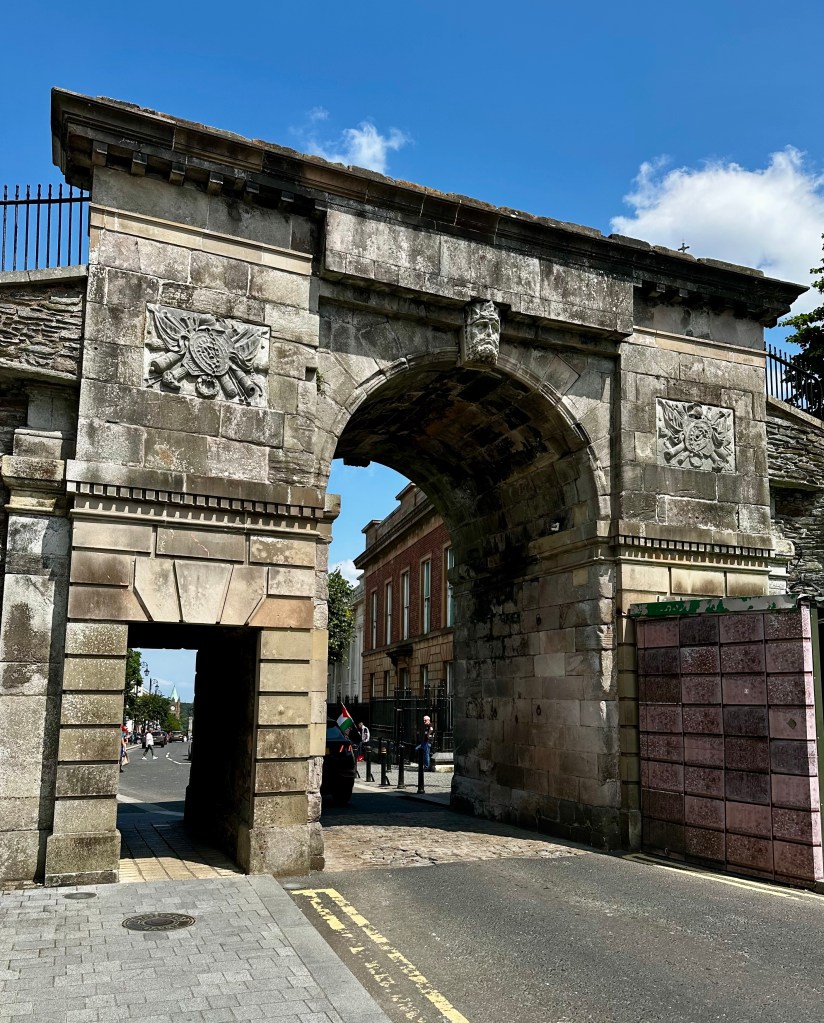
The completely intact walls were built between 1613 and 1618 and one of the best examples of walled cities in Europe. Our hotel, Bishop’s Gate Hotel was located inside this historical part of the city which proved very convenient for exploring the city.

Like Belfast we were not sure what we were going to experience in Derry but one of the things Pauline particularly wanted to see was the Derry Girls mural which proved a bit elusive at first but we eventually located it on the external wall of a pub during our walk through the city
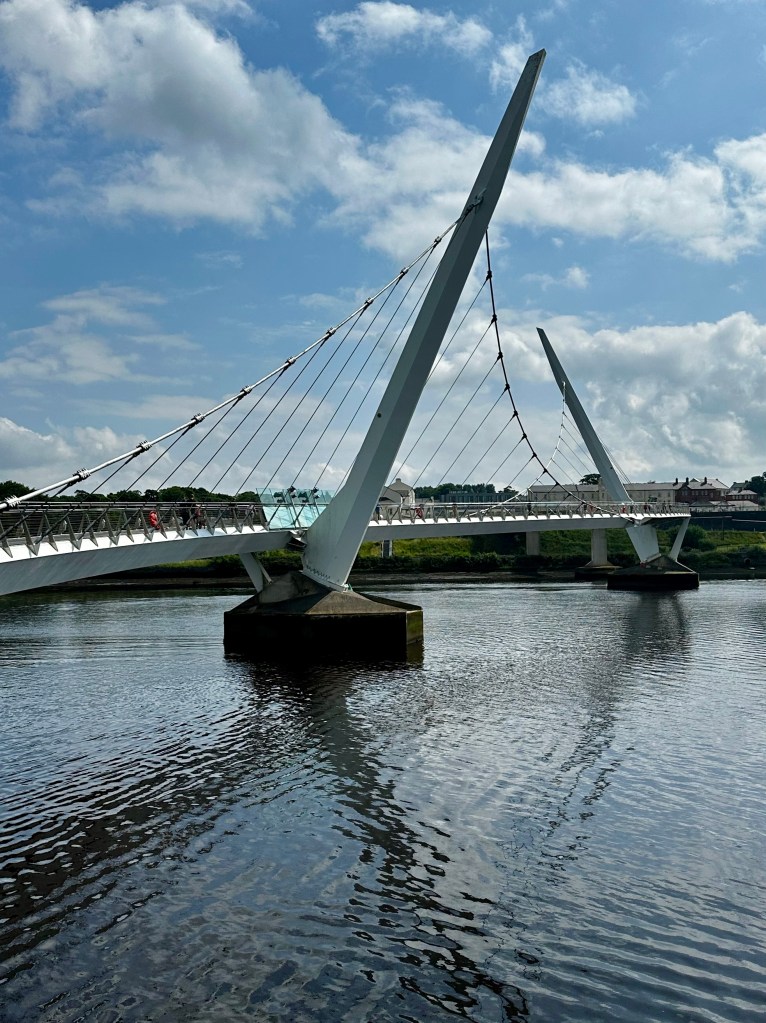
which also took in The Peace Bridge extending across the river,
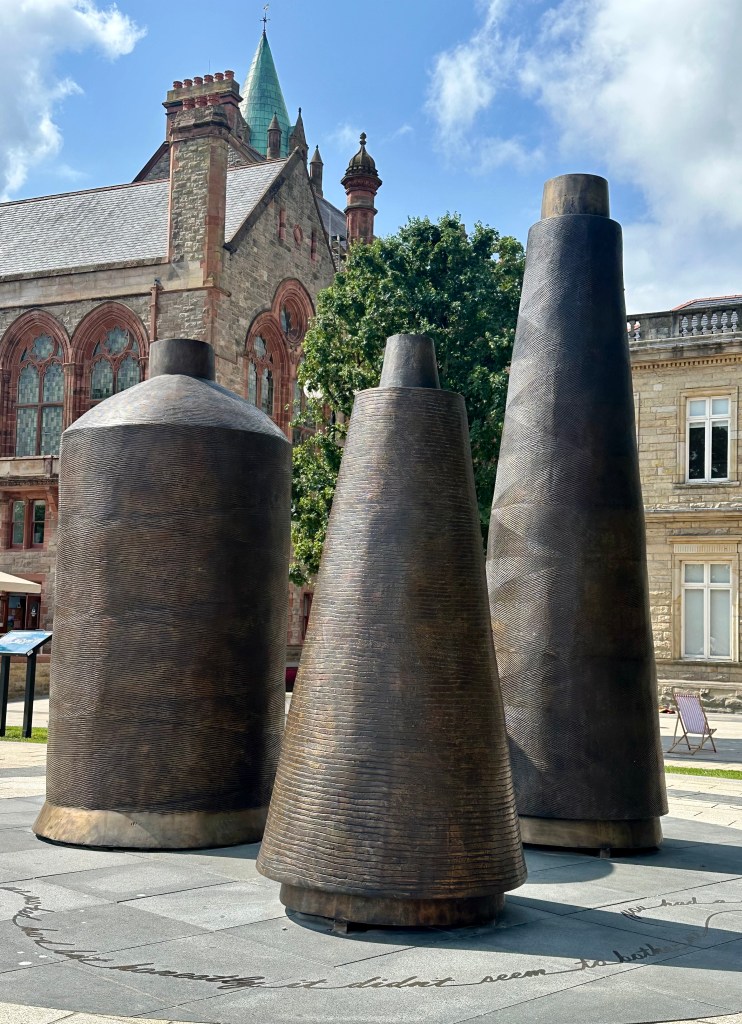
Memory Lines celebrating the shirt factory workers of its past history,
Derry Guildhall

and, of course, the Derry Walls.
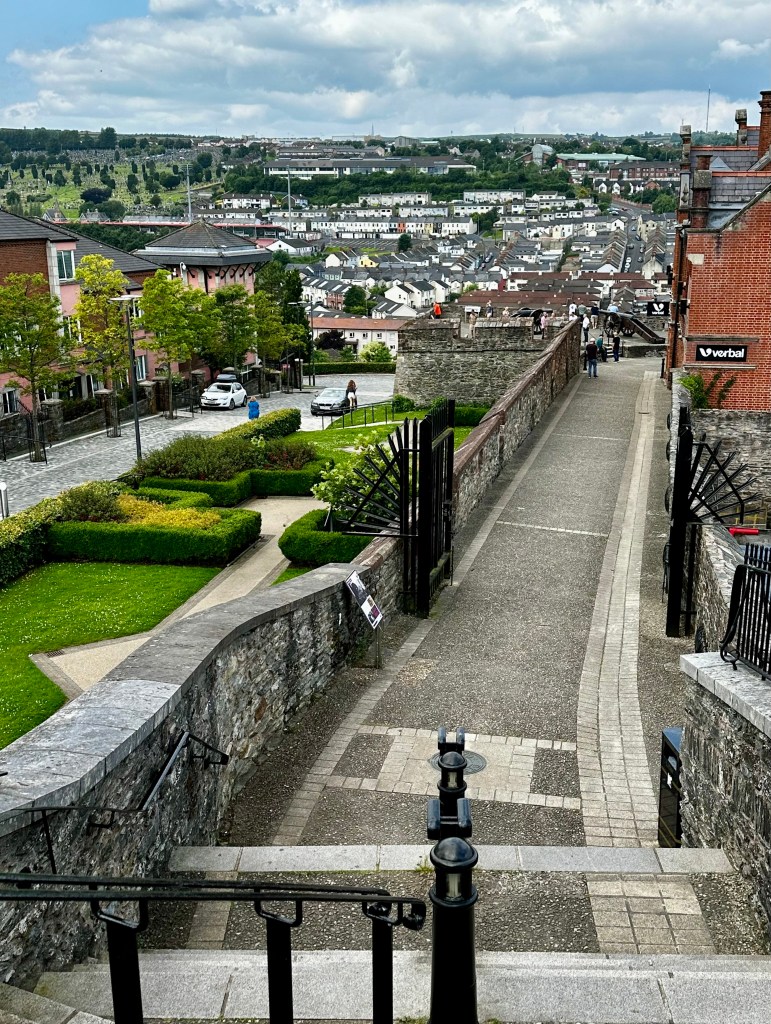
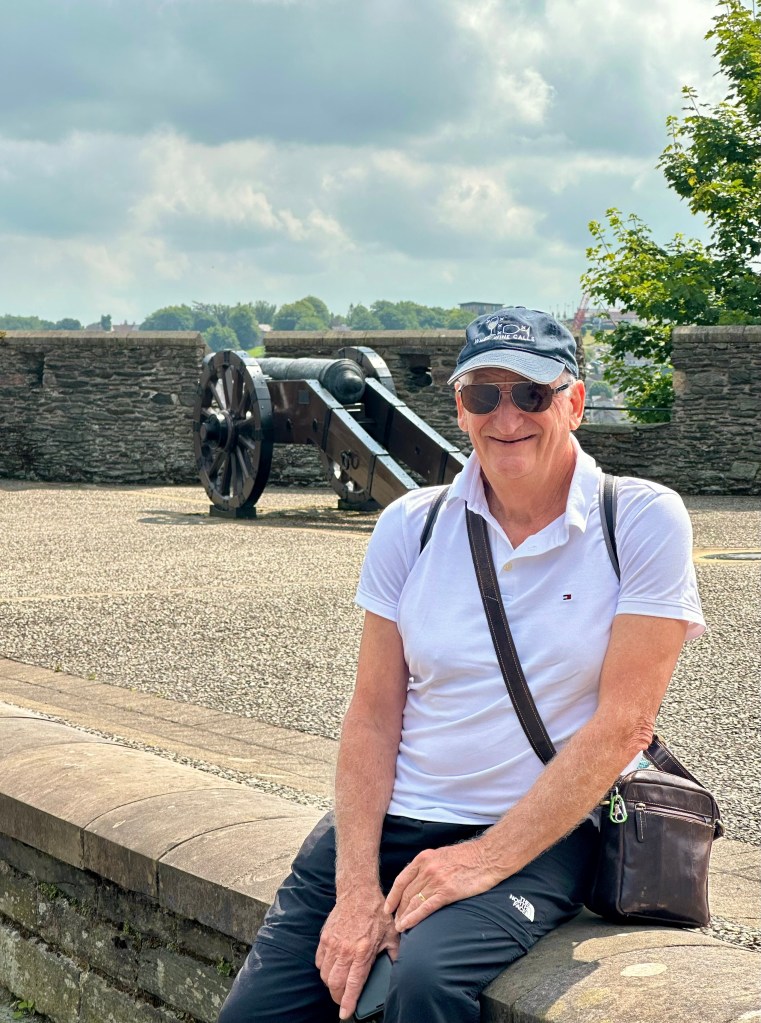
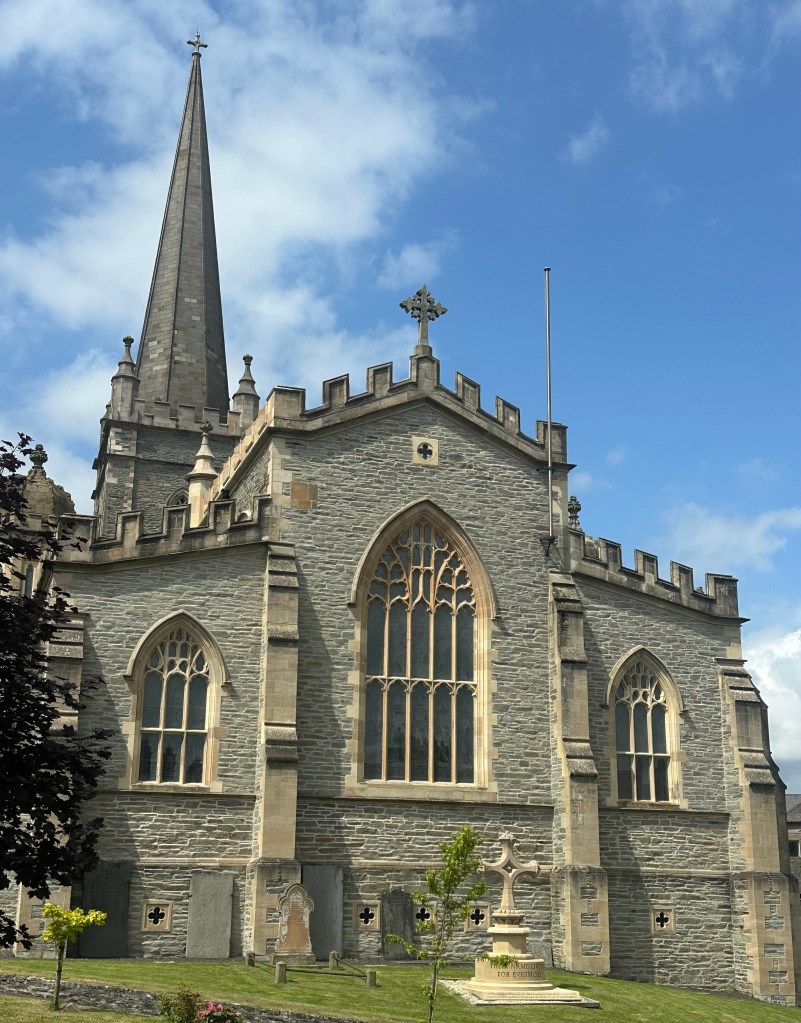
The next day we had arranged a walking tour which walked around the top of the wall showing the historical gun embattlements to protect the city.

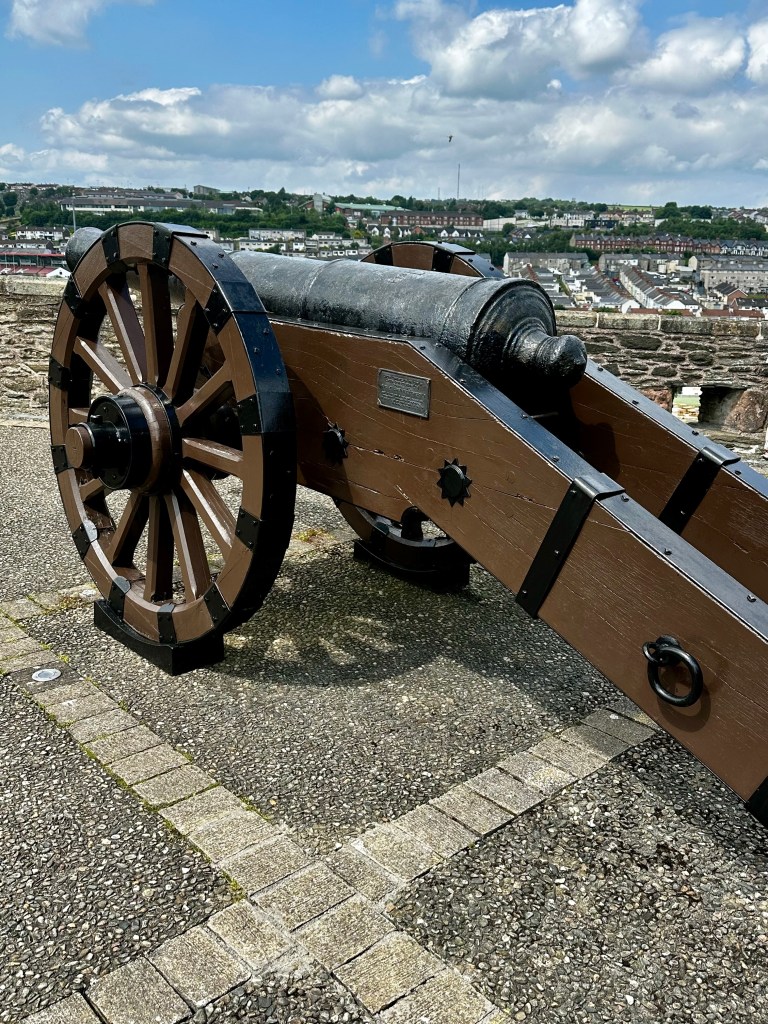
St Columbs Cathedral,
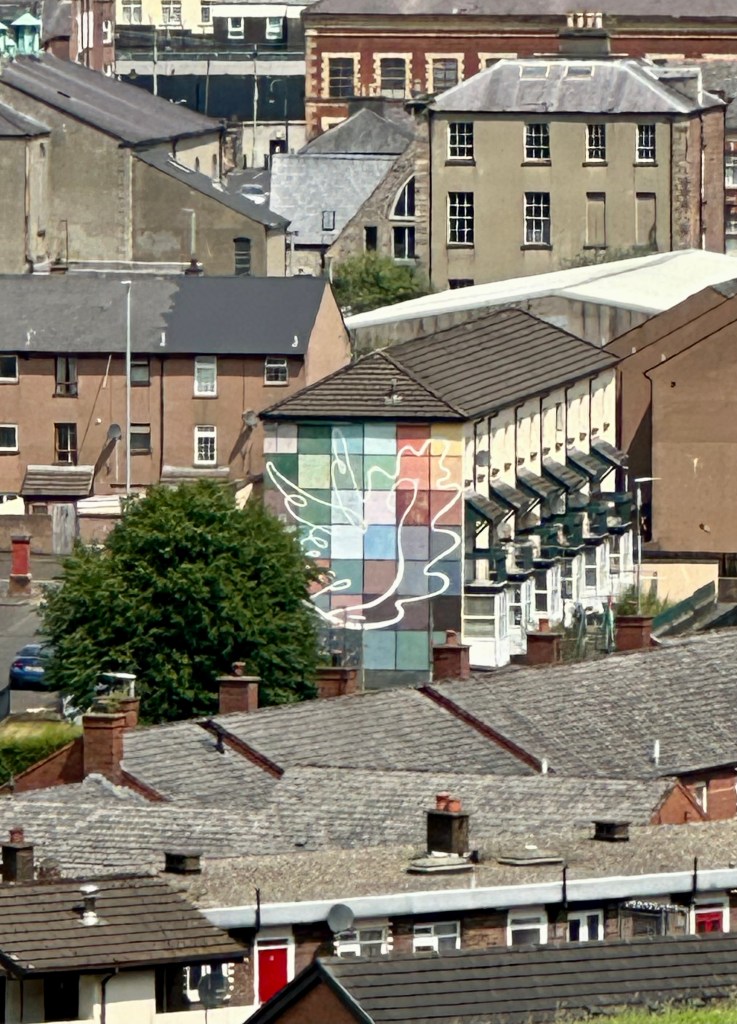
and overlooking a part of the city that have the famous wall murals and memorials.
After the tour ended, we walked down the hill from the city walls to walk through this area with the visuals being both compelling and confronting in a similar way to what we experienced in Belfast.


On the way back to our hotel we stumbled on “The Wee Bar” and just had to call in and have a Guinness – what an amazing, intimate pub with an array of bric and brac hanging from the ceilings and the golf from the US showing live on the TV – it was a great way to spend a few hours after such a full day.
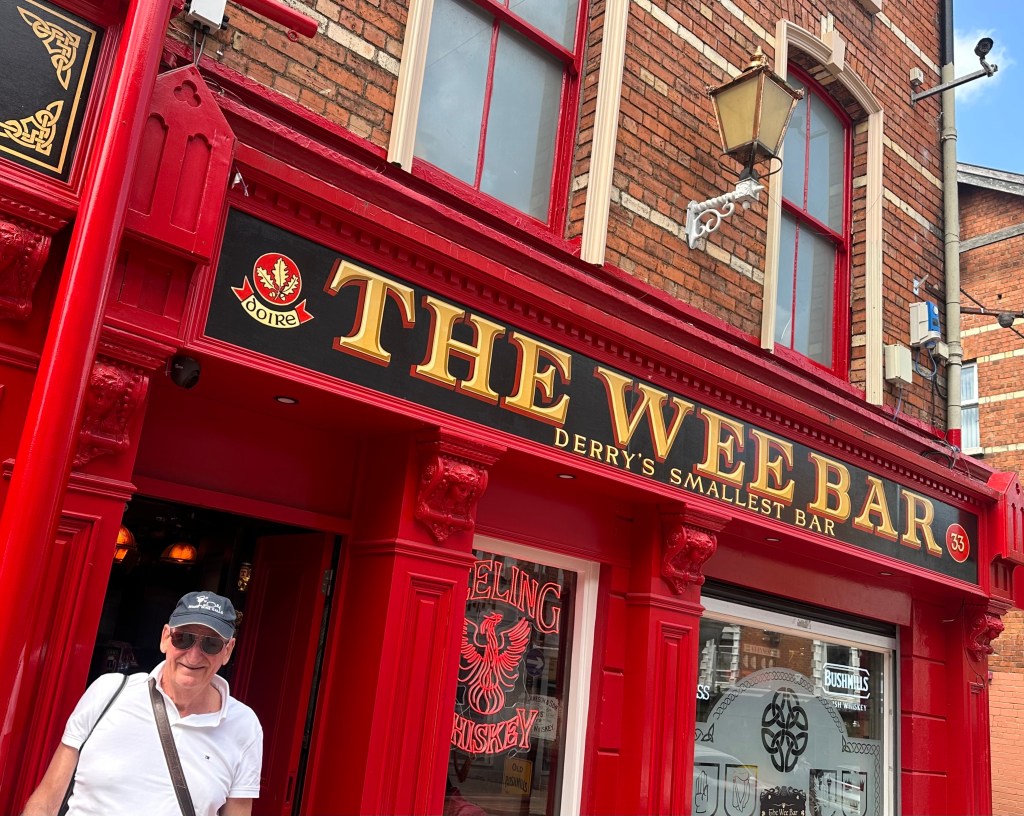

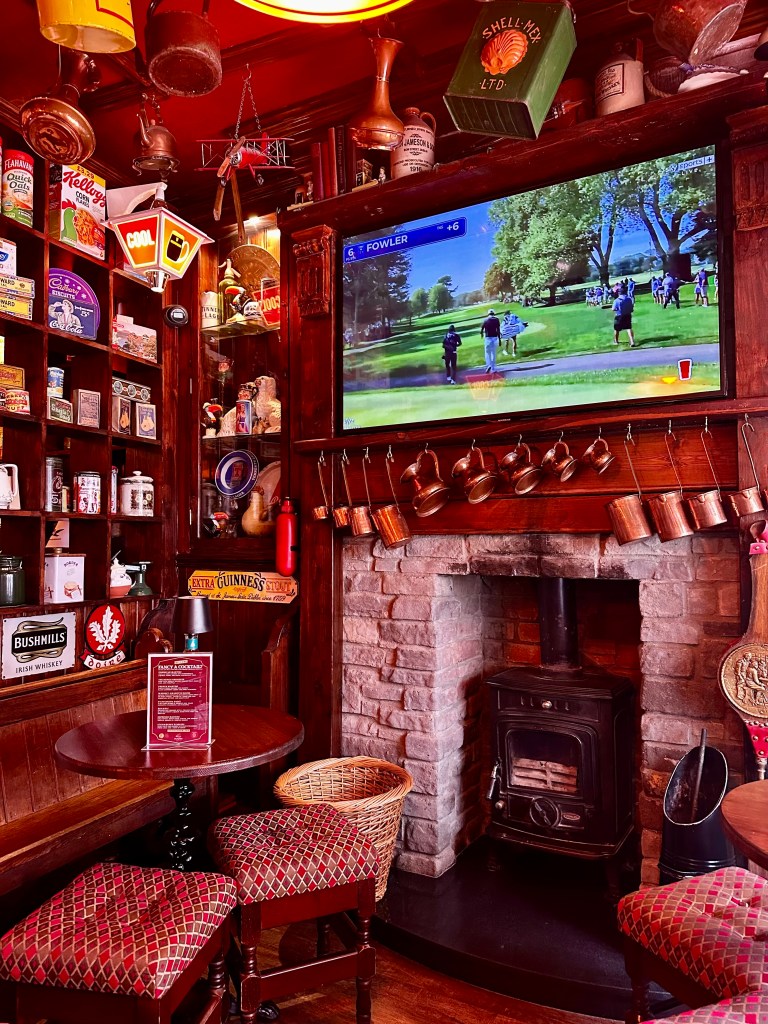
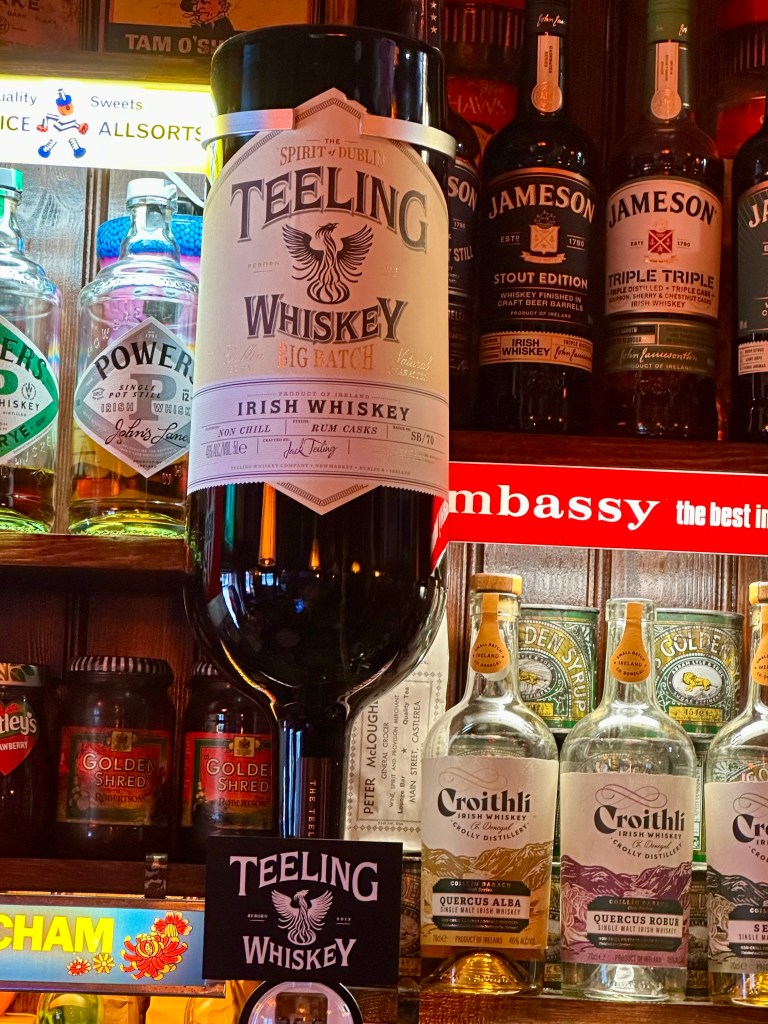
It was fascinating to see that in Irish pubs they have the most incredibly large bottles of Irish whisky hanging upside down for ease in pouring
as well as using whisky bottles as a base for a lamp shade..
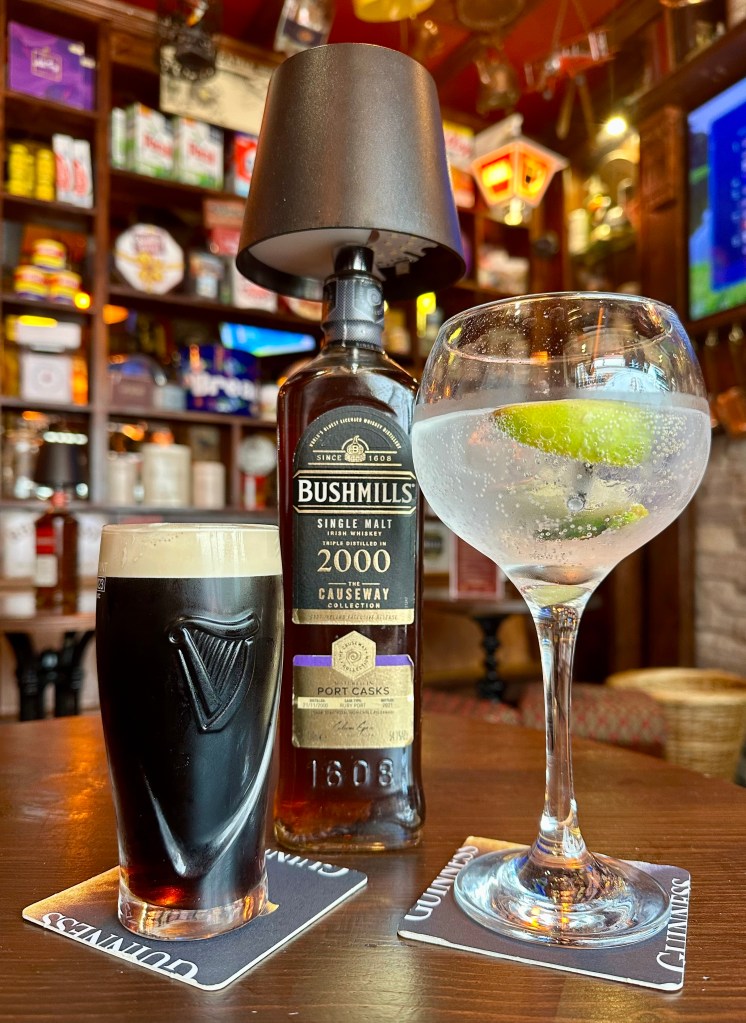
Our time in Northern Ireland had come to an end and it turned out to be a surprise package in so many ways as well as several bucket list items ticked off which all made the effort to travel here a wonderful experience.
The next day we continued west driving back into the Republic of Ireland, re-acquainting ourselves again with kilometres speed signs and Euros and started our drive along the famous “Wild Atlantic Way” with its rugged coastline, unpredictable weather and the rolling swells of the North Atlantic Ocean.
However, prior to signing off on this blog a sign outlining the Irish Philosophy for contemplation.
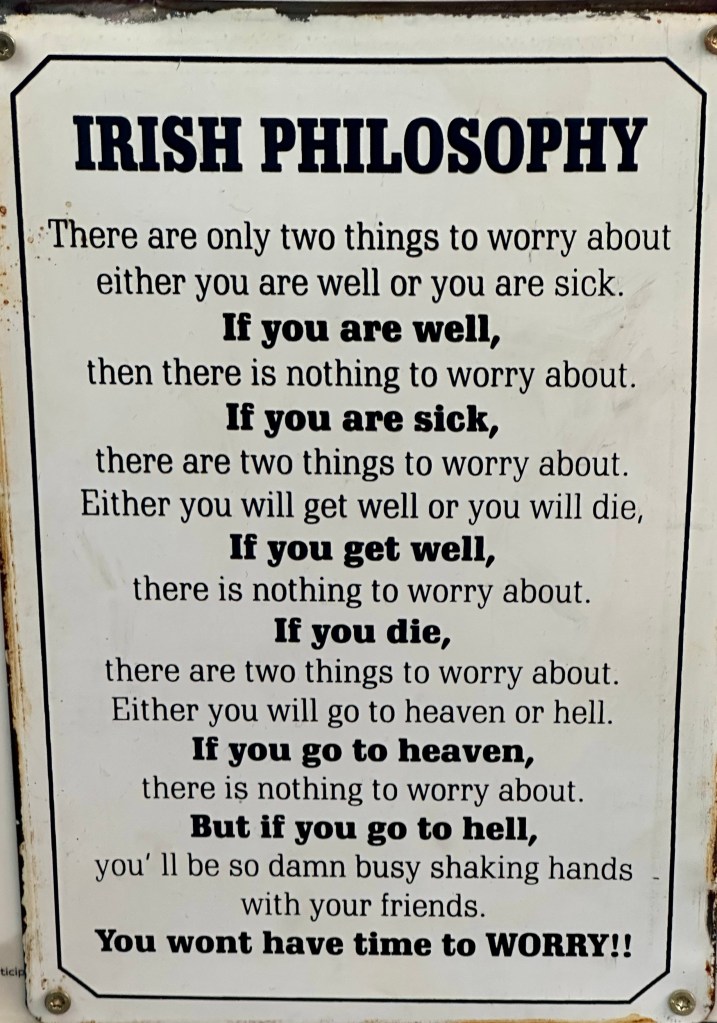
Join us next time as we explore Ireland’s amazing West Coast on our driving tour of Ireland – until then, take care.
Bruce & Pauline
 When Wine Calls
Leave a comment