
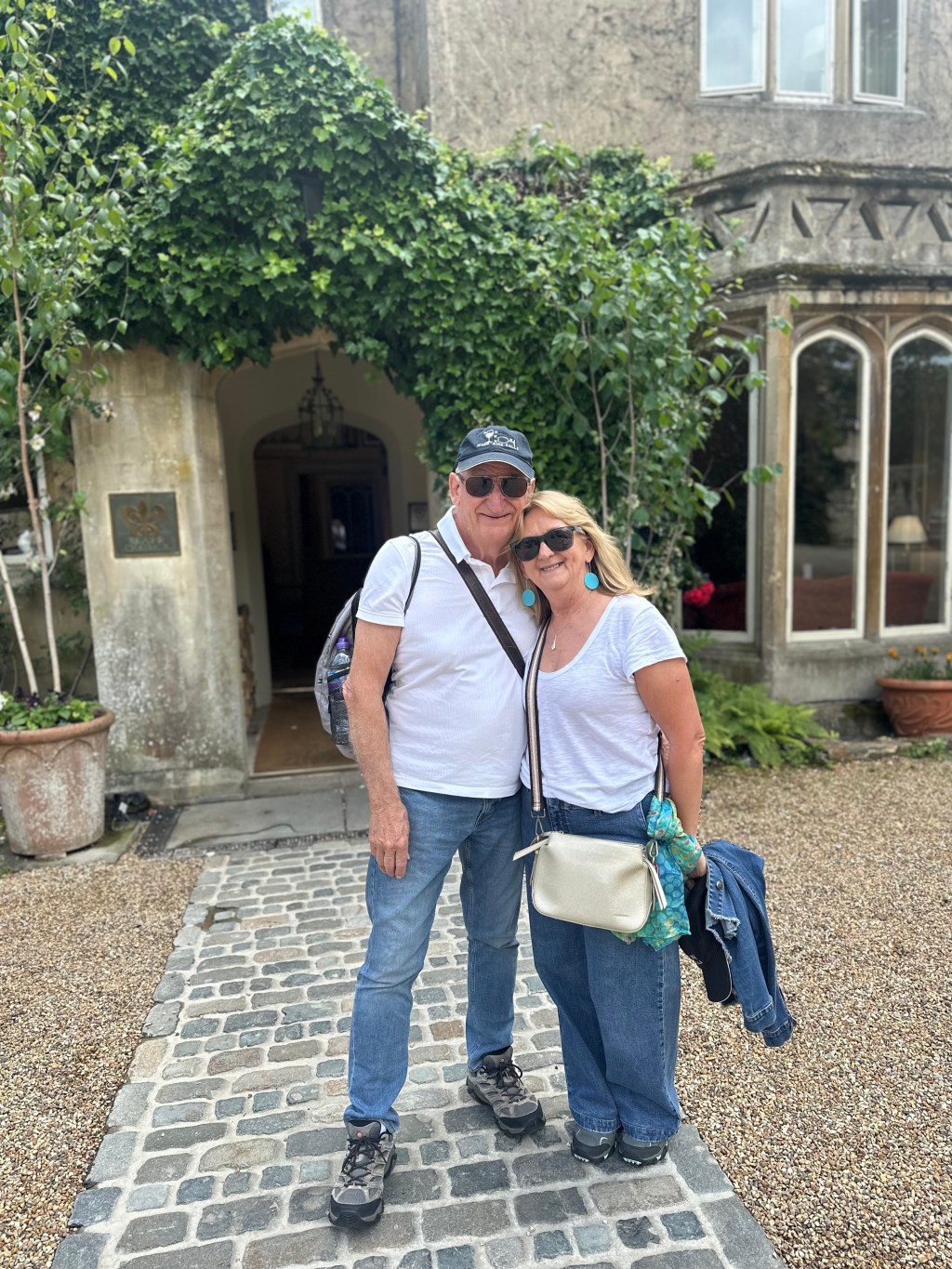
Welcome back to When Wine Calls – “2025 Wine Afficionados Tour”.
We love travelling into the English Countryside when we visit the UK and in particular staying in a traditional inn with their homely, quaint and warm atmosphere, welcoming staff as well as friendly other guests. It is this feeling of relaxation and the opportunity to meet the locals in their own daily environment that appeals to us compared to staying in a city hotel.
The Exmoor White House Inn was exactly this type of inn, and we relished the few days we spent there inside the Exmoor National Park. We had the same feelings when we stayed at Stones House in Hawes in the Yorkshire Dales during our 2023 The Winter Grape Tour and the memories of these places stay with you long after you have moved on.

Our plan on this leg of the trip is to drive through Somerset into Cornwall along the northern coastal road ending up at Lands’ End then along the south coast through Devon ending back in Bristol where we would drop the hire car off and leave from Bristol Airport.
We had a few days at Exford and the owner provided us with a fantastic driving itinerary that would take us on a circular route through the Exmoor National Park over to the coast and then back to the hotel.
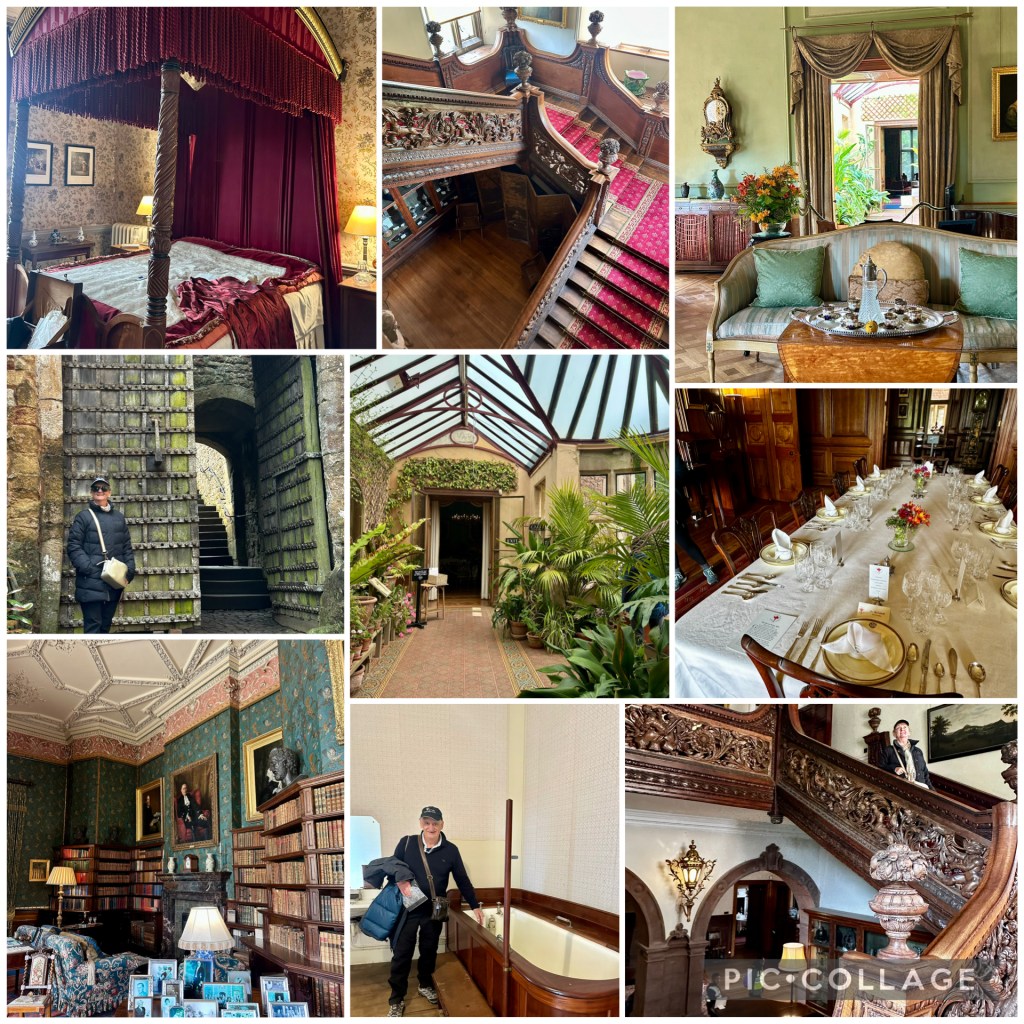
The route included a visit to Dunster Castle and Gardens
which included a working watermill where they make their own flour,
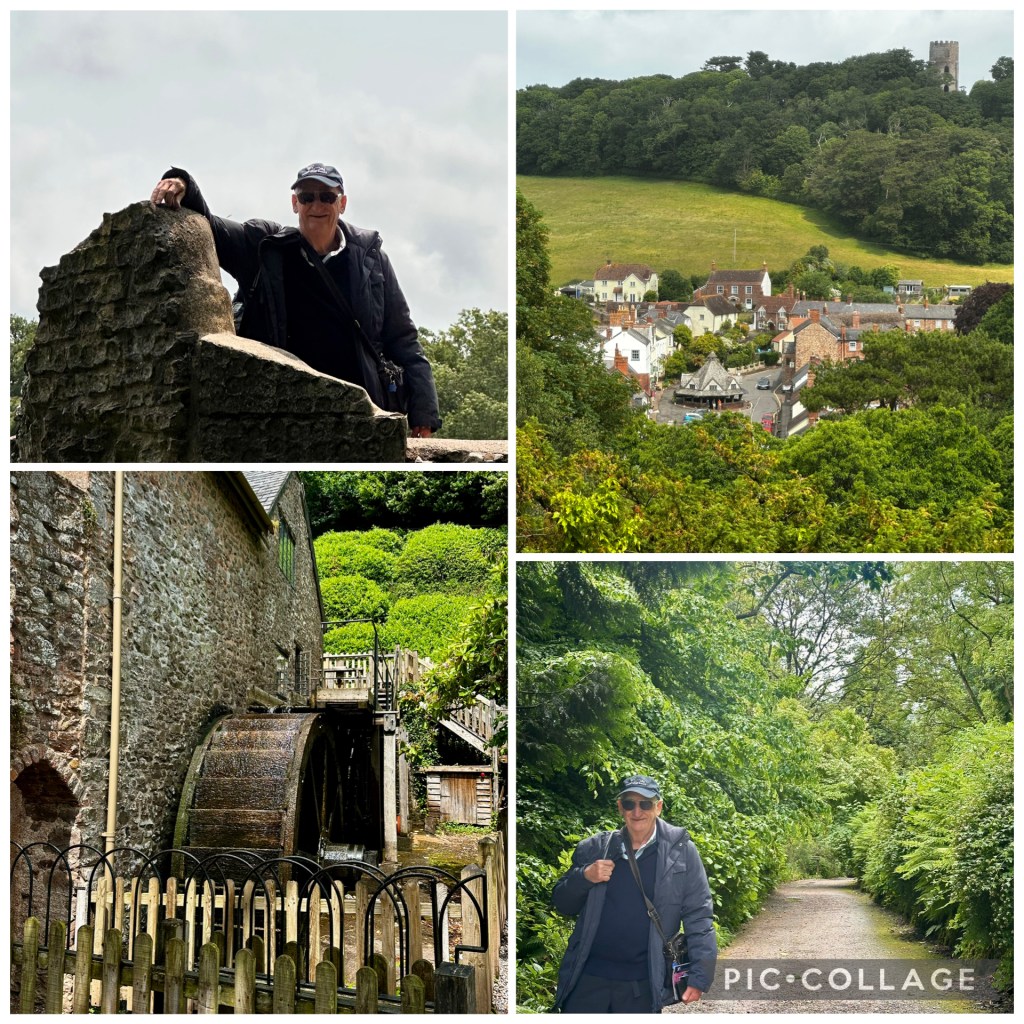
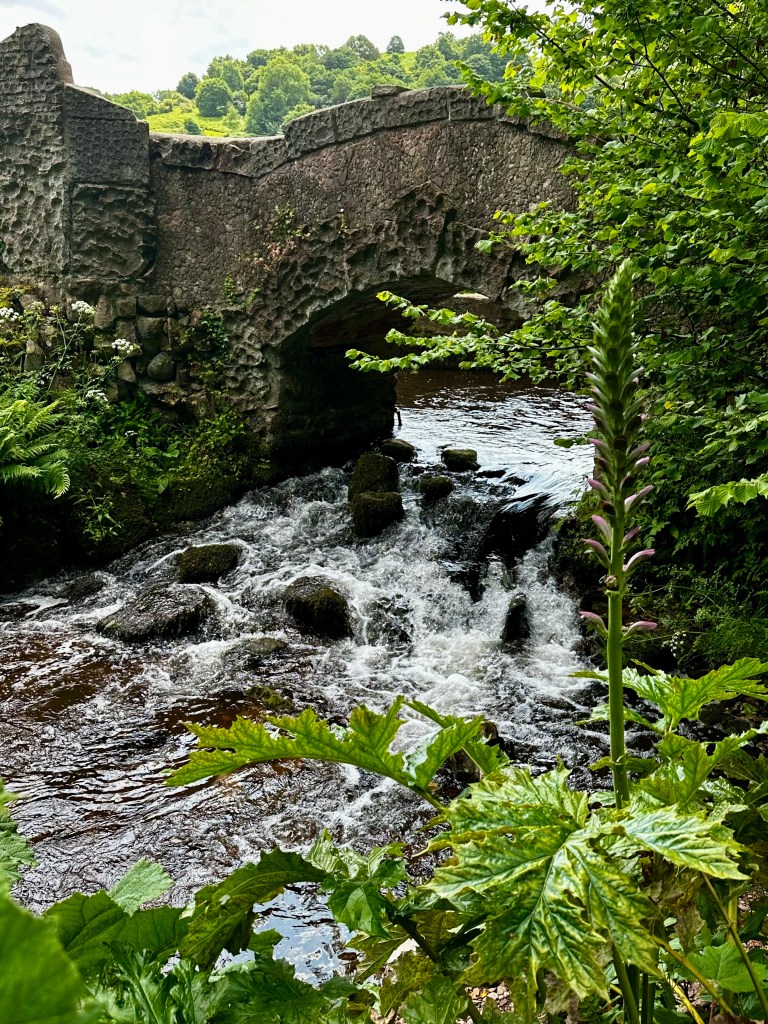
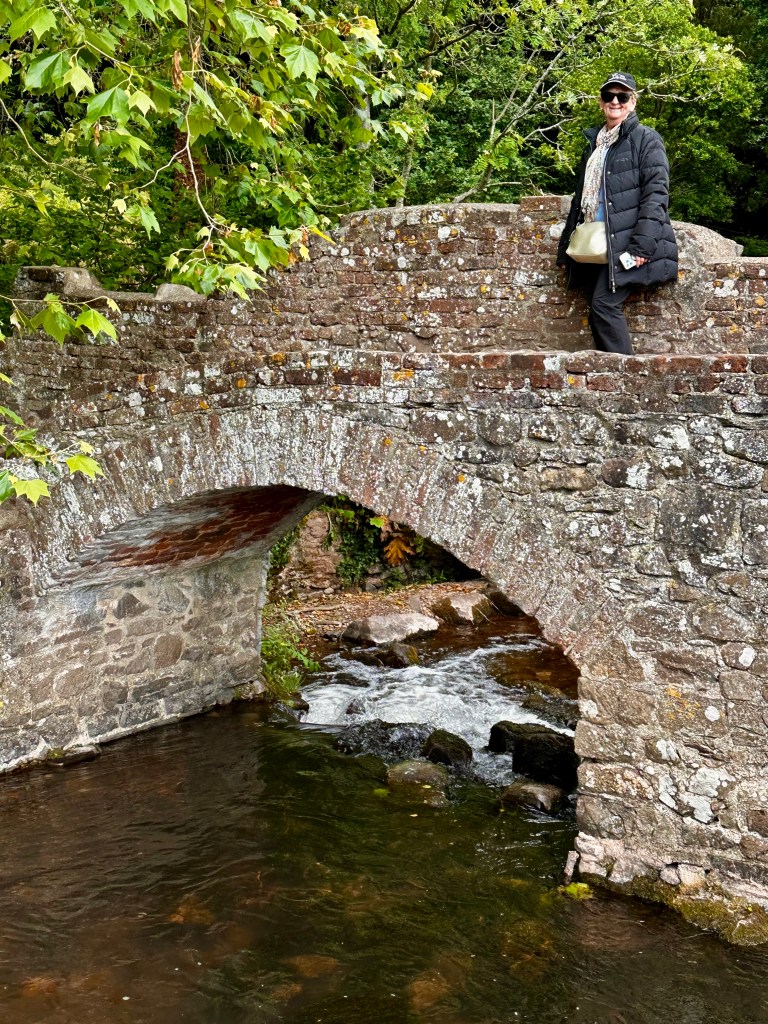
and the most magnificent well kept gardens complete with old stone bridges.
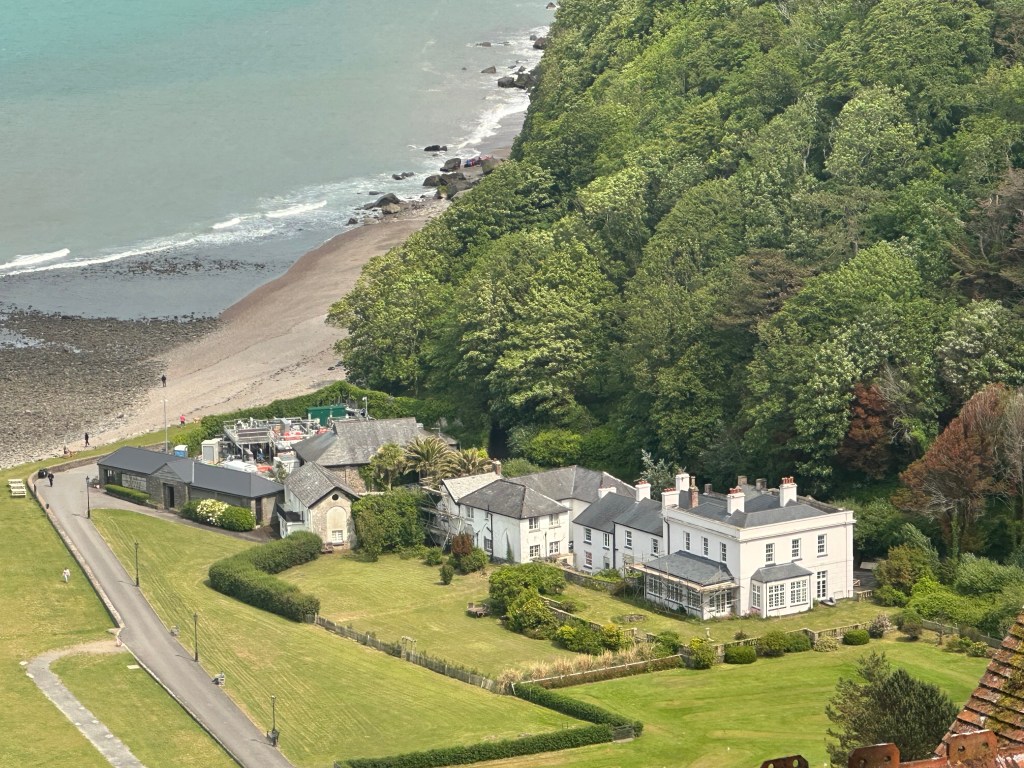
It was then onto the coastal town of Lynmouth where you catch a very old cable car built in 1888 and amazing technology for the time) up to the cliff top town of Lynton to get this amazing view of the coastline.
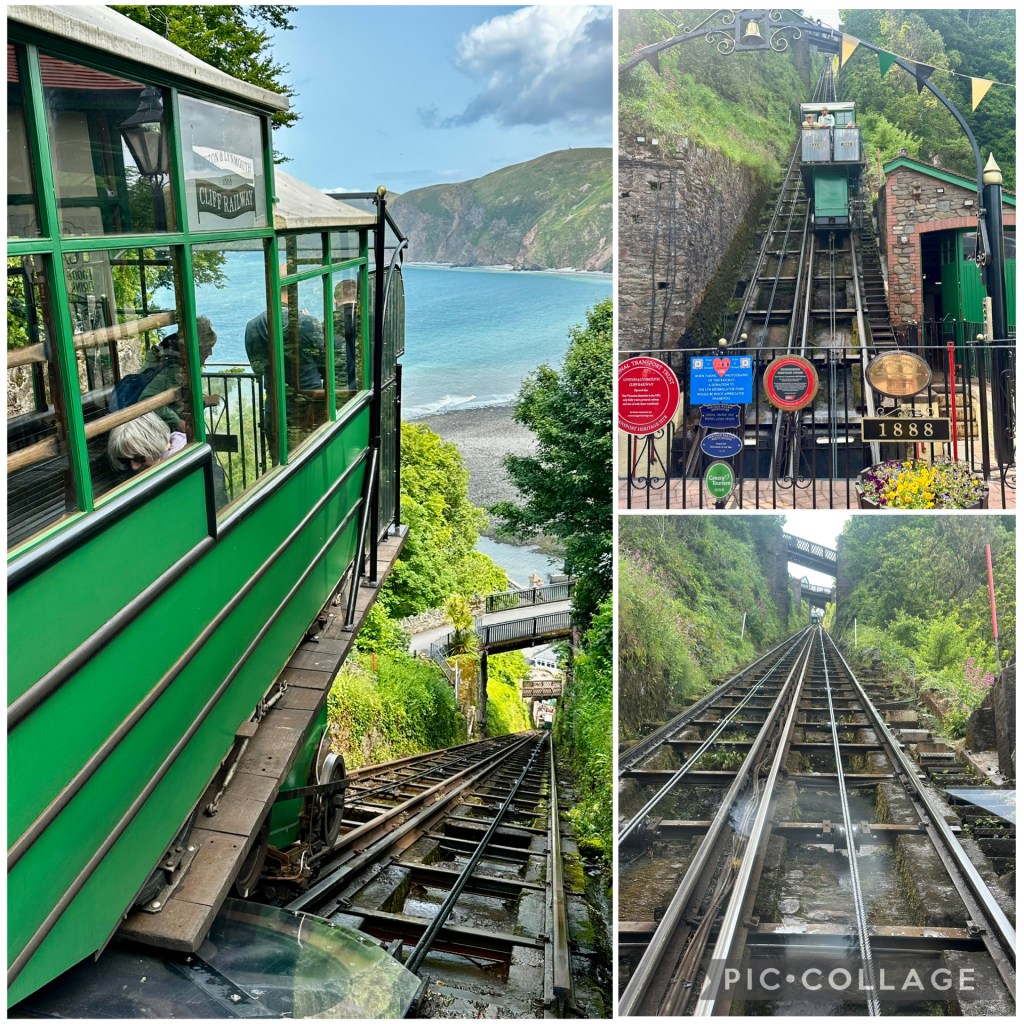

and walk down this ridiculously steep track to get back to your car instead of paying the cable car fee both ways (Travel tip: do not walk back down, pay the fee, your calves will thank you and you will not get stares and shaking of the head from tourist coach drivers when you get near the bottom and have to walk along the road clearly not made for pedestrians).
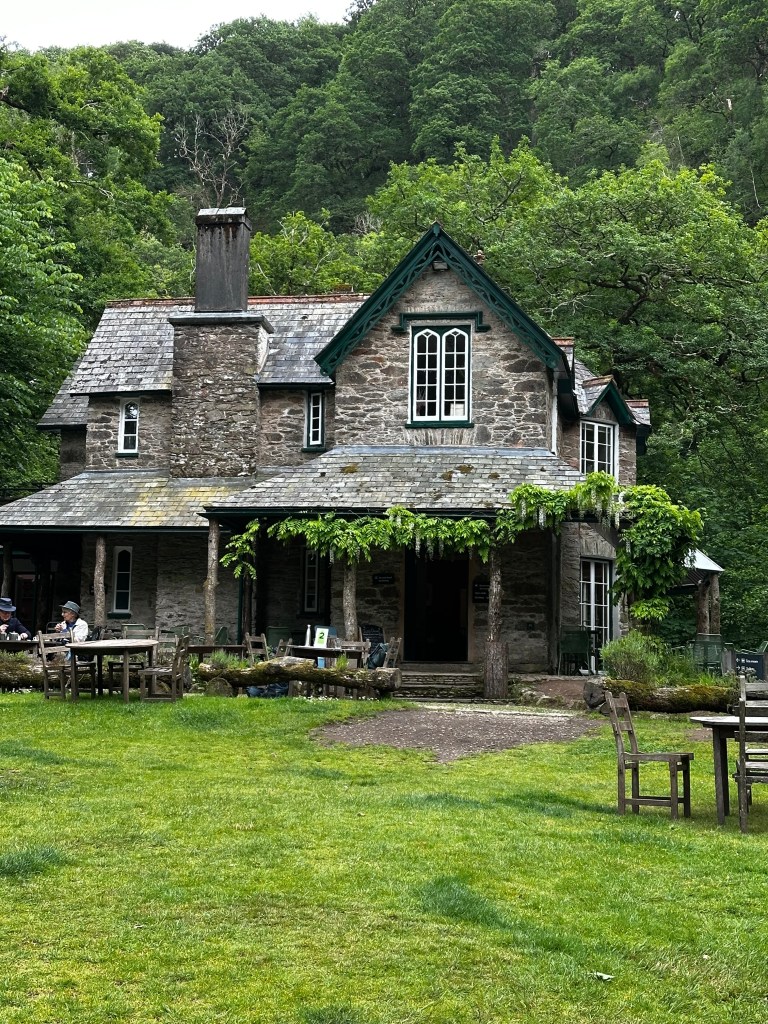
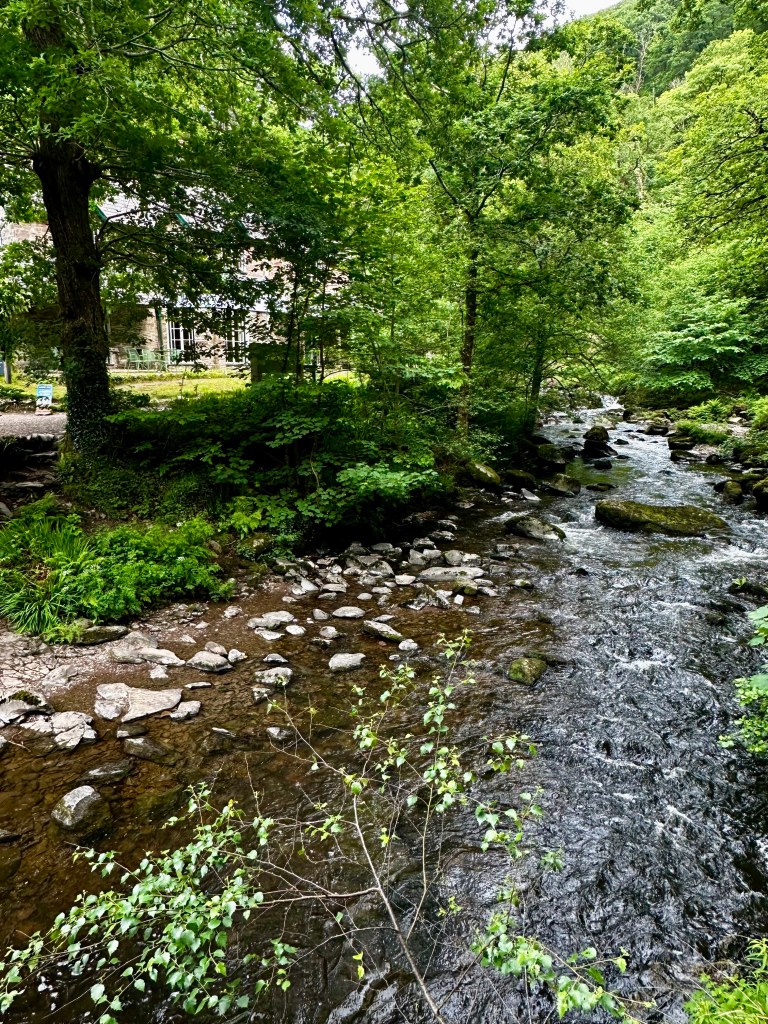
The route then travelled up into the hills to a place called Watersmeet which as the name suggests is in a beautiful valley where two rivers meet and where a wooden hut café sits in the most tranquil of settings. Pauline’s mum had told us about this place as she had visited here with Pauline’s late father Geoff, so we were very keen to see it for ourselves.
Normally you can drive directly up to the Watersmeet car park from Lynmouth, but a recent landslide had wiped the road out and it was closed so we thought we would not be able to get there. Fortunately, the lady at the local Information Bureau provided us with an alternate route coming in from the mountains so after a longer drive we made it to the car park and completed the walk down into the valley to find at least 12 people sitting outside in the cleared grass area having a very serene experience in the bush with a quaint cottage serving drinks and snacks (amazing location for a cafe although not sure how they get their supplies in from the road). We joined them, it had been worth the effort in getting to this magic place.

After an exhausting day we arrived back at the inn and decided a drink or two and dinner in the homely bar was the requirement for the evening and had a wonderful night talking to the locals.
The next day it was back in the car and the drive to Land’s End, the western most point of the UK and one of the places on Pauline’s bucket list although I had also wanted to visit this place myself, I must say.
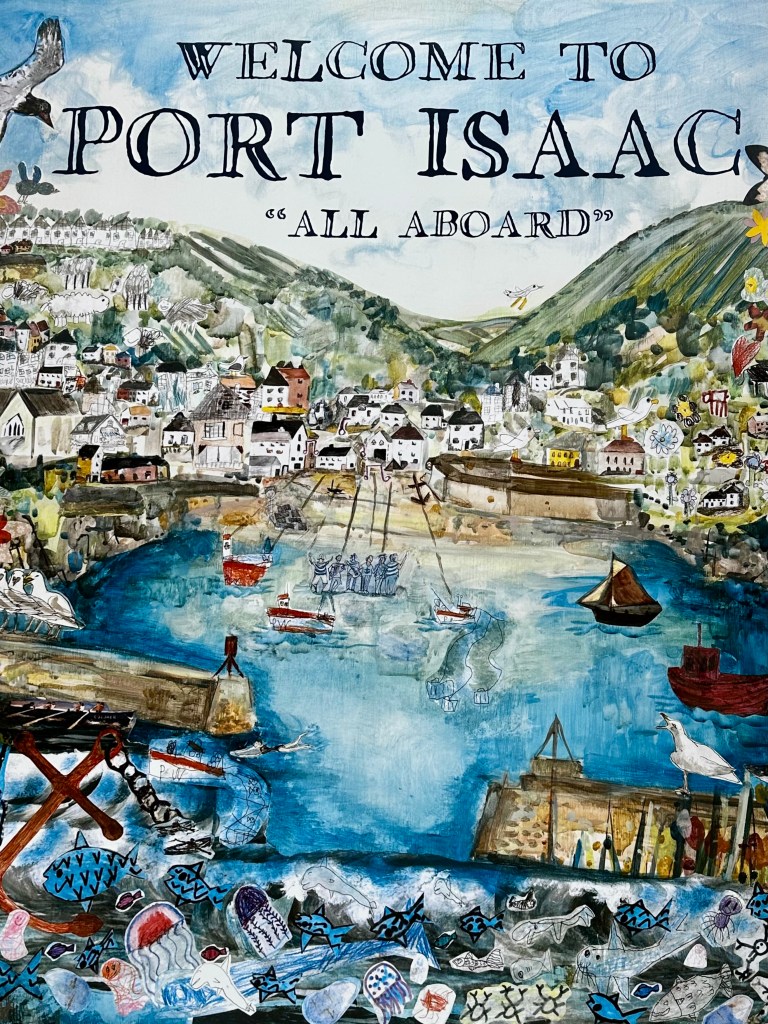
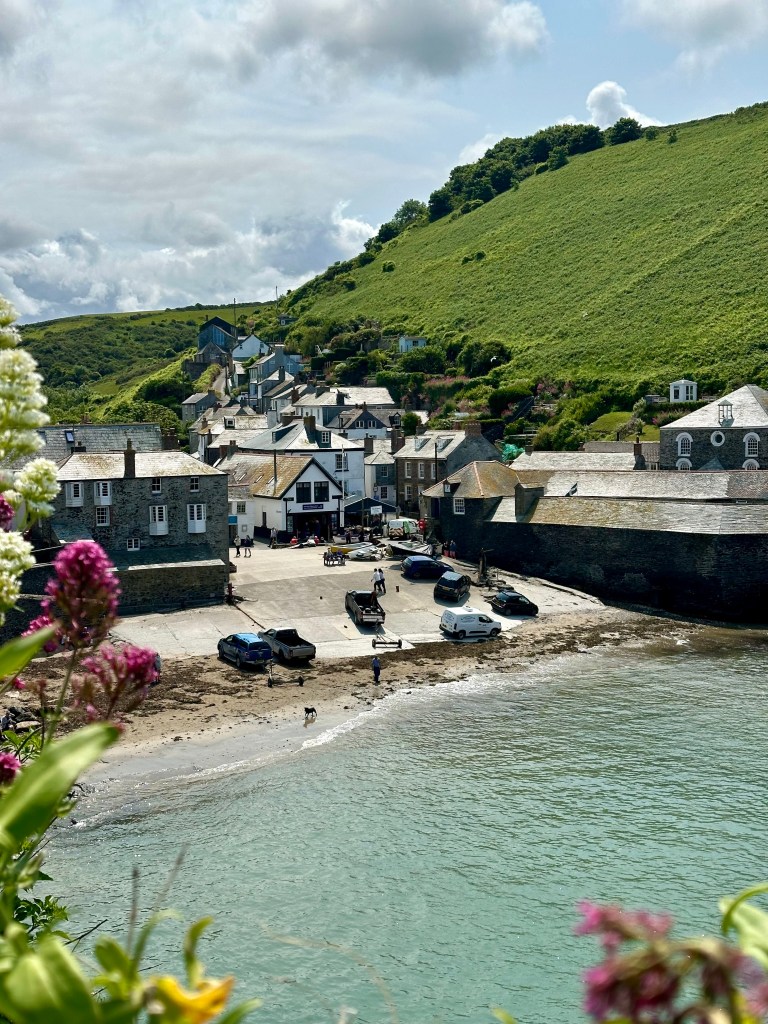
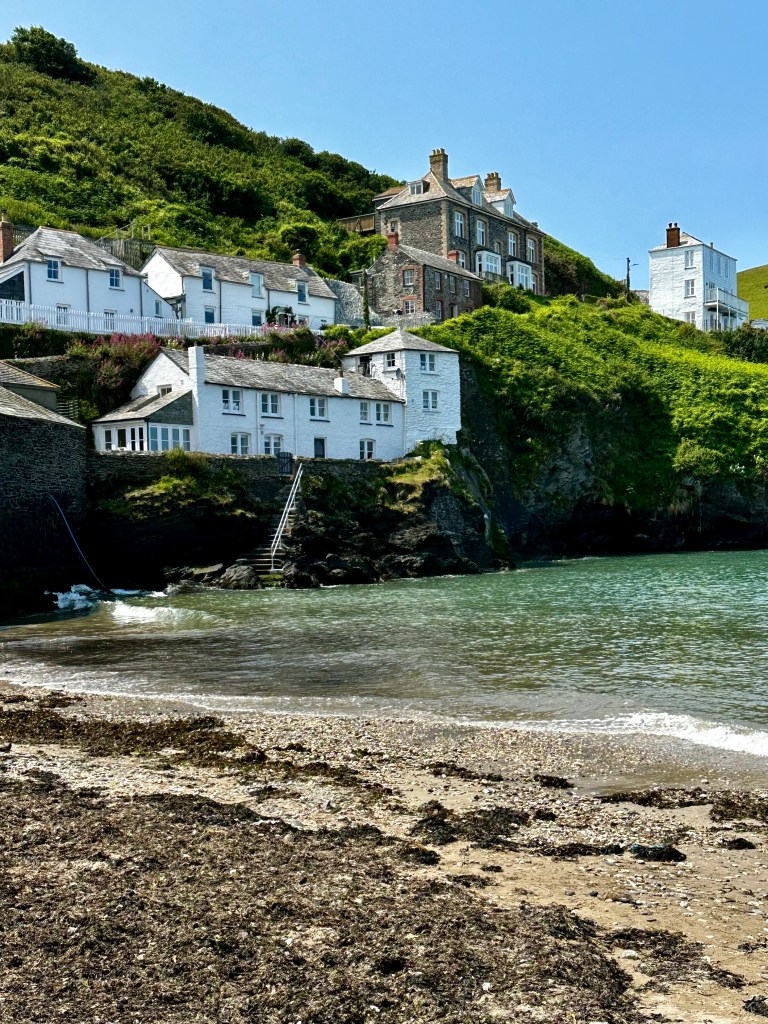
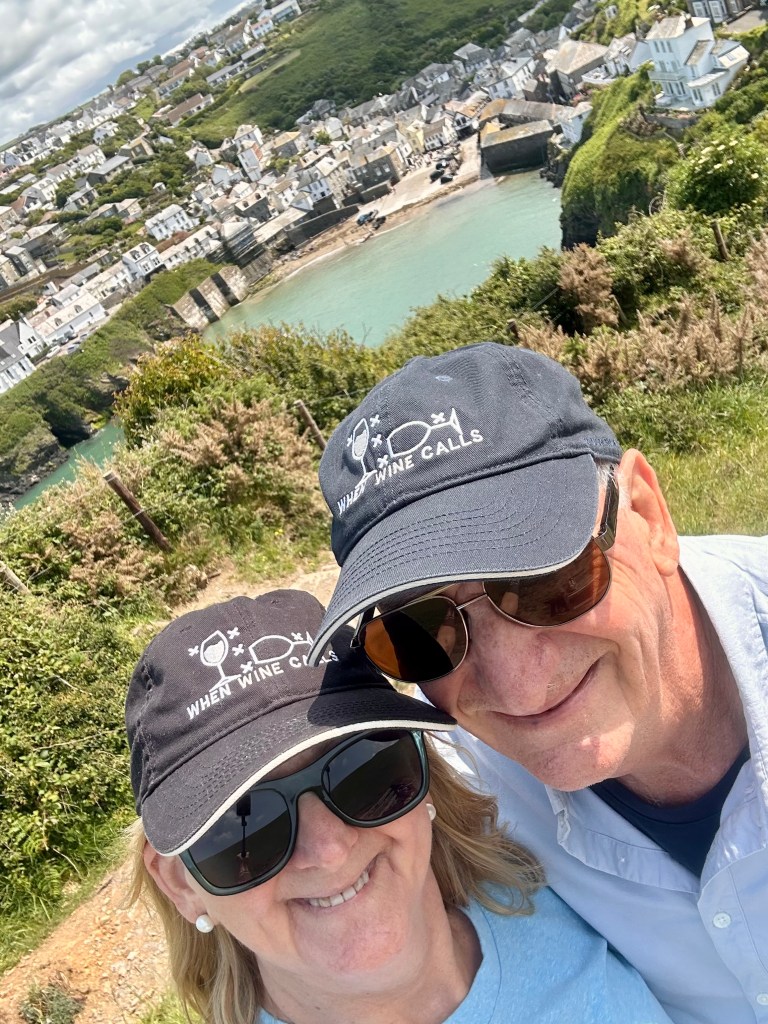
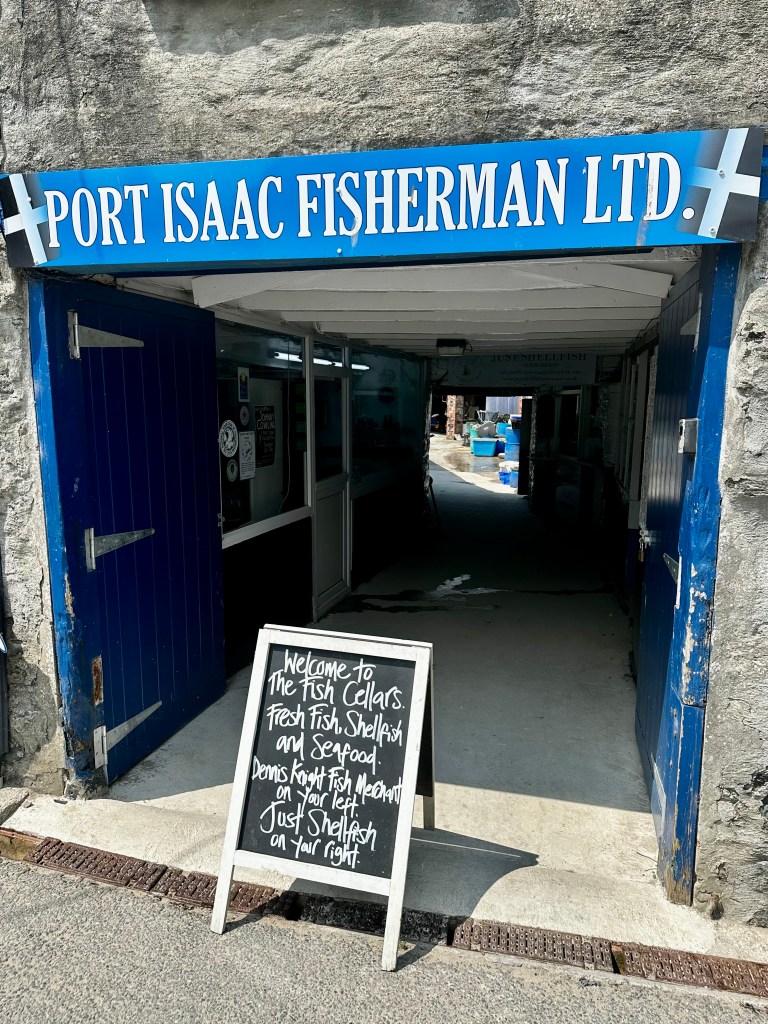
Along the way we called into Port Isaac, an iconic fishing village along the Cornwall coast made famous by the Doctor Who TV series and more recently by the “Fisherman Friends” movies portraying the local fisherman who became famous singing sea shanties.
These days, due to its popularity you are required to park at the top of the hill and walk down to the fishing village, but it is worth every step. The view on the way down and on the opposite hill is fantastic and while walking around the village is more commercial these days the atmosphere of a local fishing town is not lost, for now at least.
We were lucky with the weather while we were there with the sun out for some great photos. The downside for us was that while there were many references in the village to Doctor Who there was little to no mention about the filming locations for the Fisherman Friends movies. Nevetheless, it was still certainly worth the visit to this lovely seaside village and the walk back up the long hill..


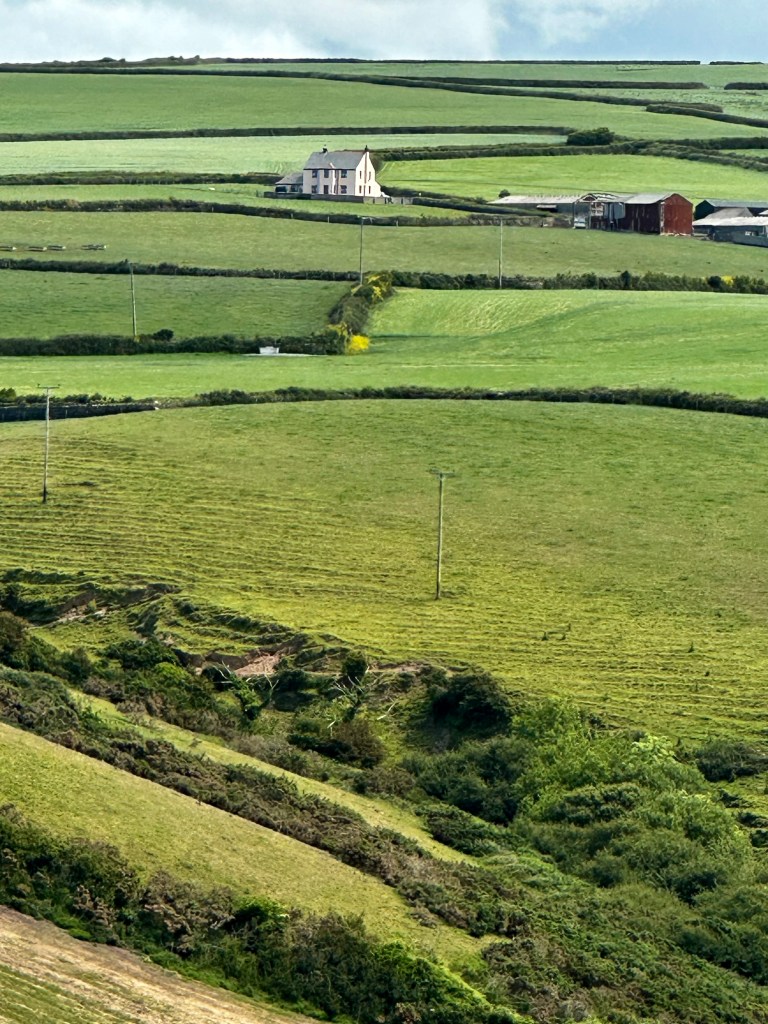
After leaving Port Isaac it was back into the car and the long drive down to Lands’ End, the most southern point of the UK through some stunning countryside.
On the way on a so-called short cut along a local road, we came around a corner and had to make a sudden stop as a large tree had fallen over the road ahead. Two young tradies were in a ute in front of us that had also been taking the short cut and had gotten out their work tools and started on clearing the tree debris. The owner of the adjacent property had also come out and contacted her husband and he arrived with his large tractor to assist. We had a wonderful conversation with the owner while all the work was going on and she was amazed about our travels. Once the road was clear we headed off again with the drive to Lands’ End still a distance away having added an unusual adventure to our travels.

Other than the pictures of the Land’s End Hotel and the famous direction sign we had little other knowledge of this part of the UK so we were looking forward to our few days here.
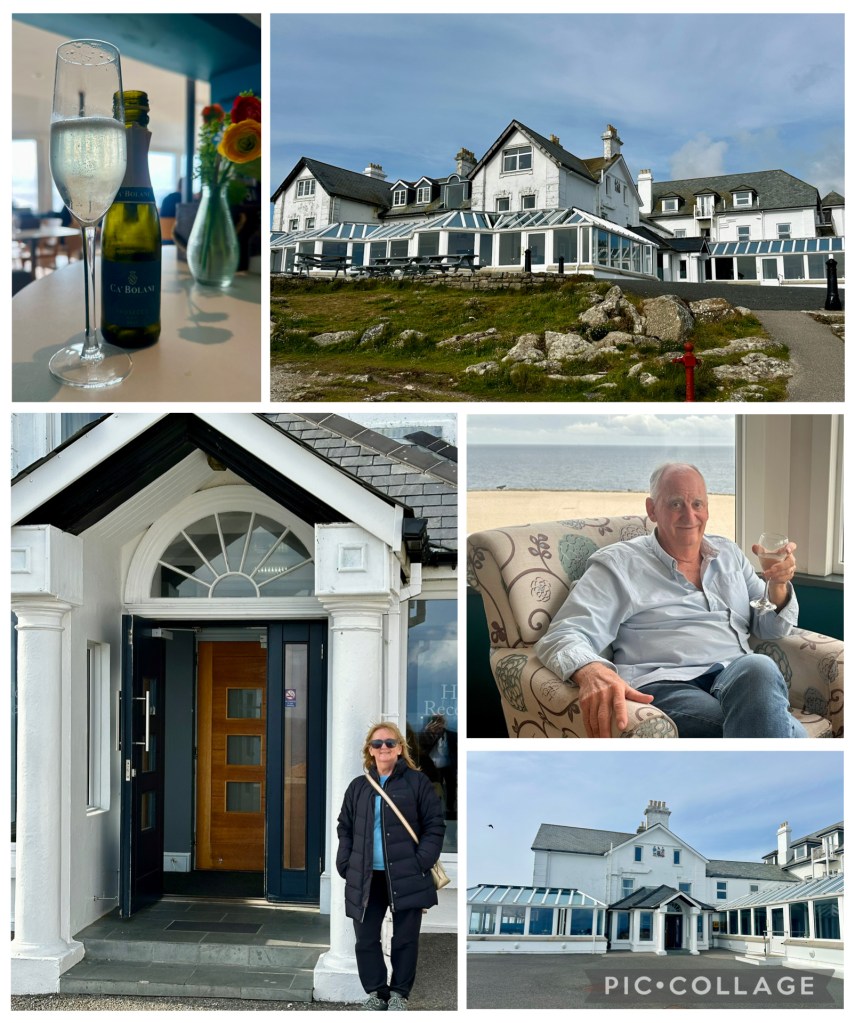

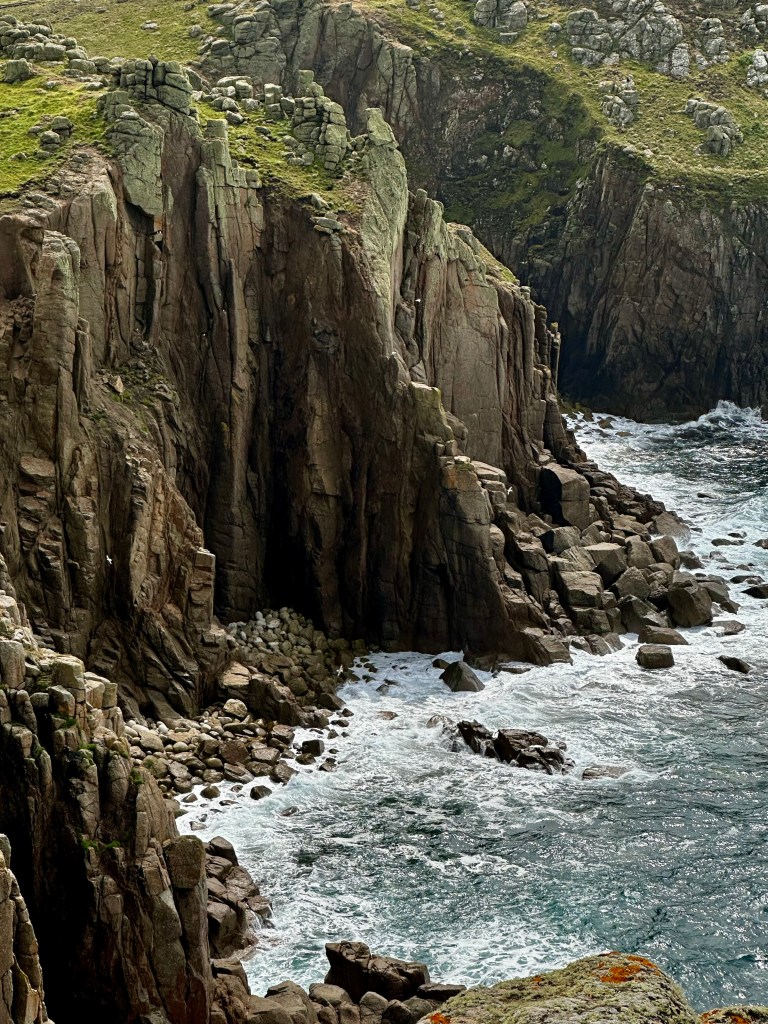
When we arrived, the weather was still holding so after checking in we rushed outside to take as many pictures as we could of the magnificent cliff face and spectacular lighthouse located off the coast on this rocky outcrop. It was hard to believe that someone lived in the lighthouse way up until 1988 before it was converted to being automatically operated.
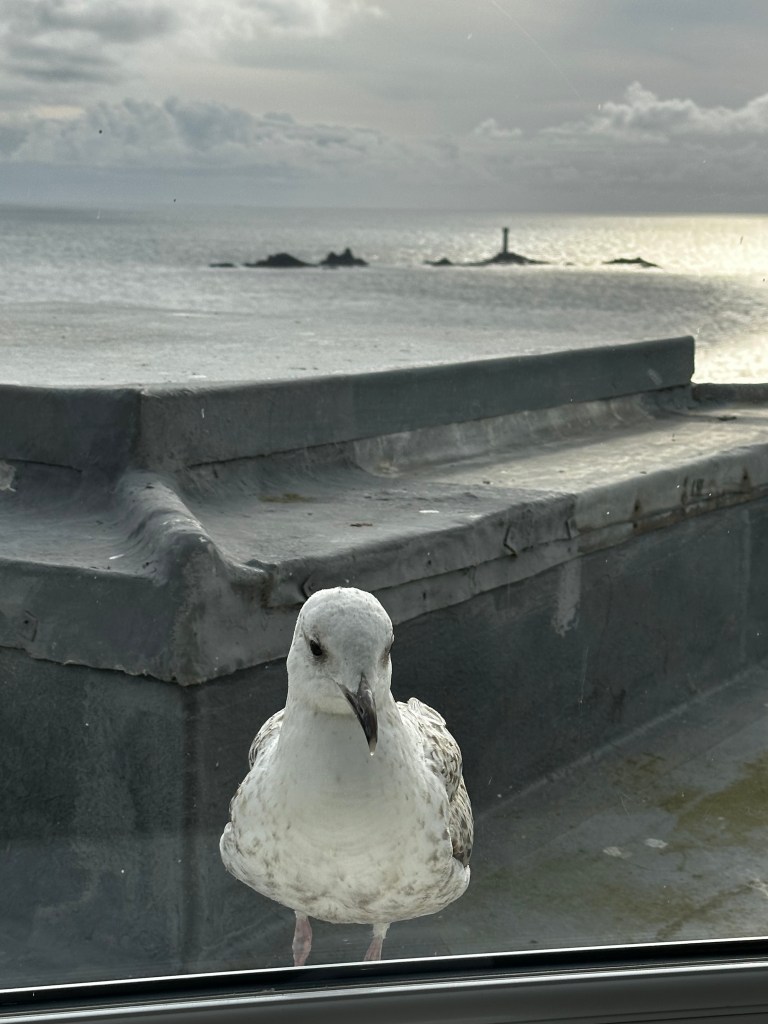
The view from our room out to the wild Alantic even fascinated the local birdlife.
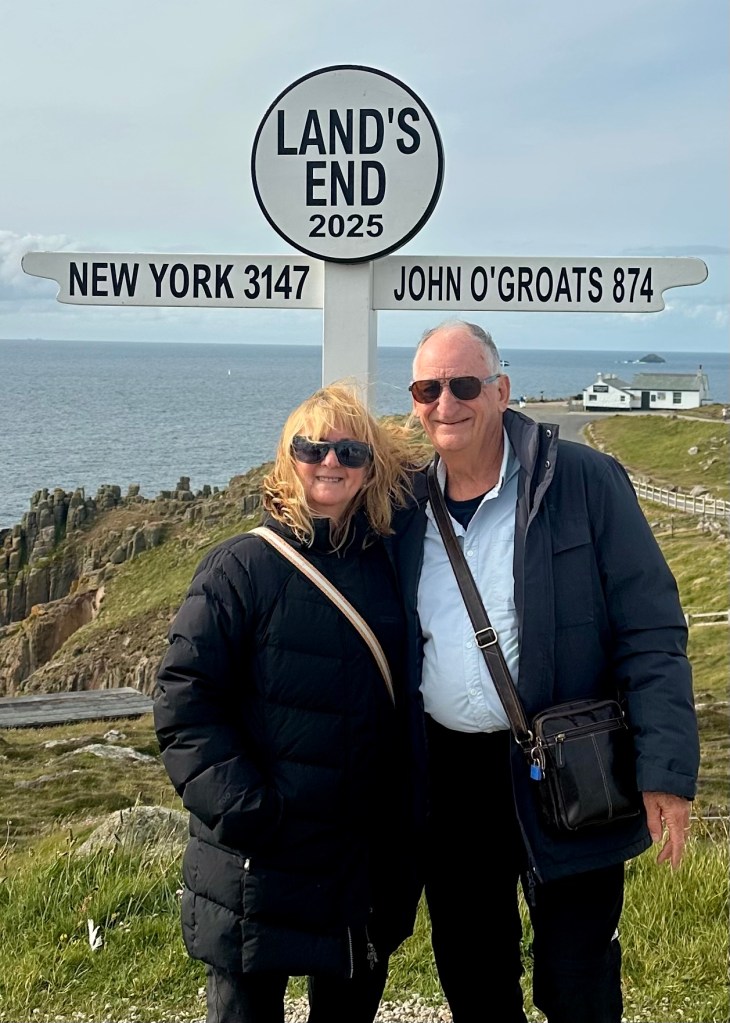
We also wanted to take a picture of ourselves standing adjacent to the famous signpost while the weather was still good – we were so glad we did as the next morning we found that tourists had to pay a fee to have their photo with the sign in exchange for a printed and digital copy. If you wanted to do what we did you had to wait until the staff went home for the day – commercial tourism at its finest.
The next day we went for a long walk along the cliff tops away from the hotel and took in the most amazing rugged coastal scenery.
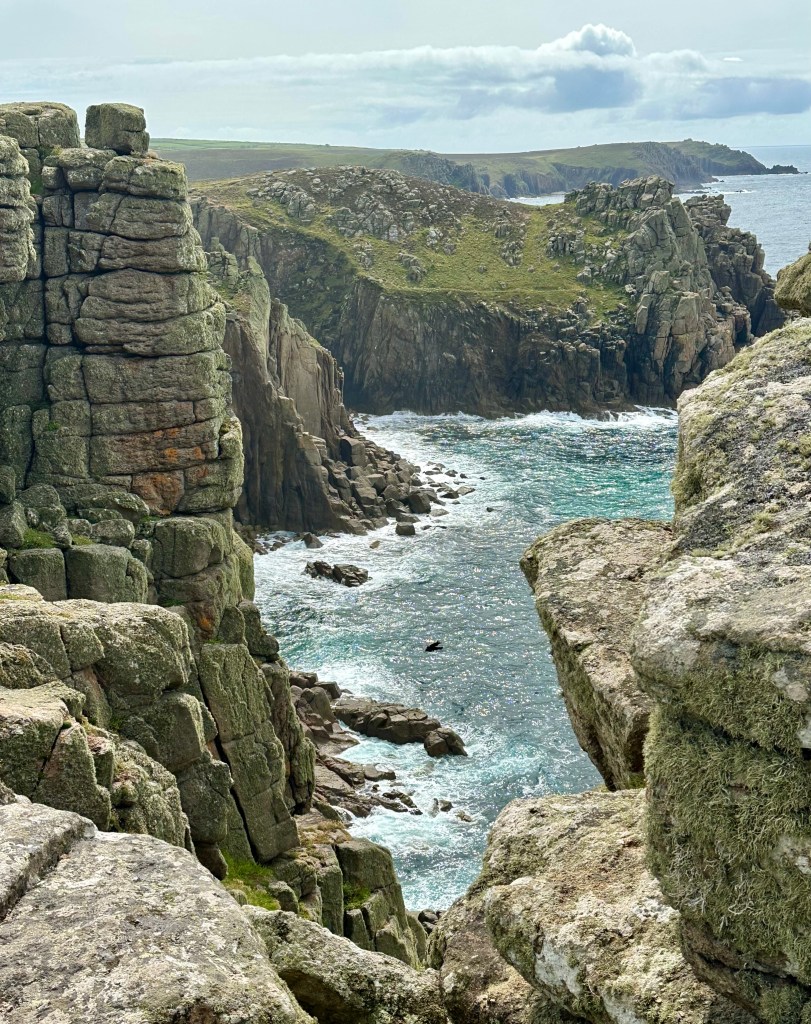
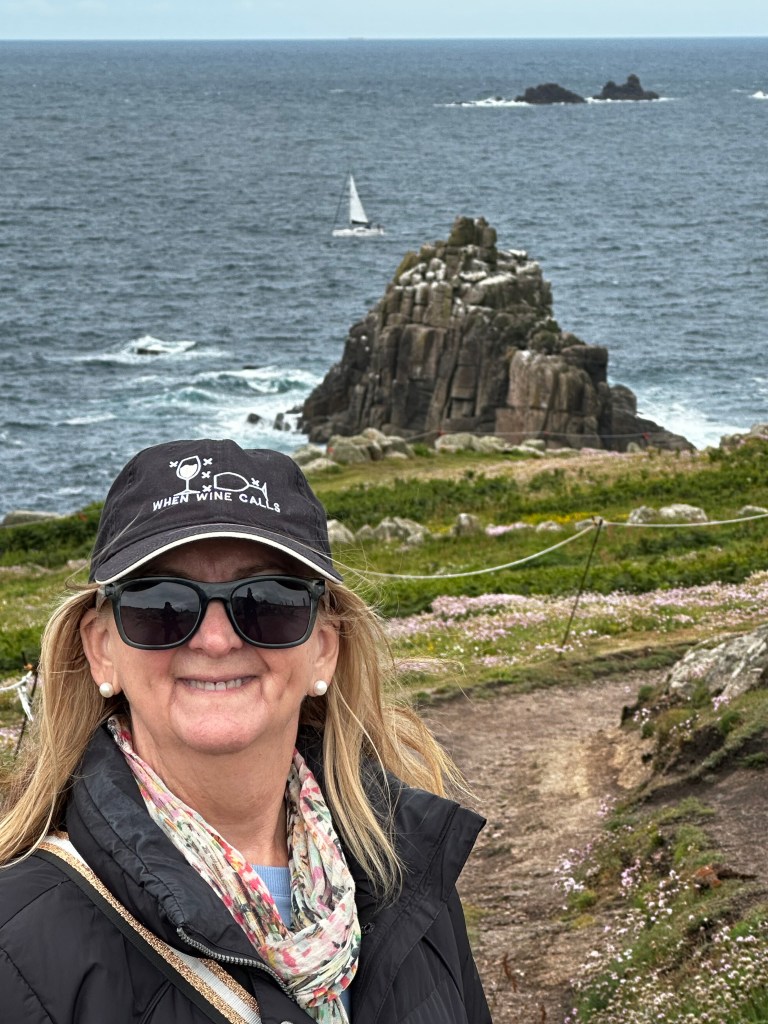

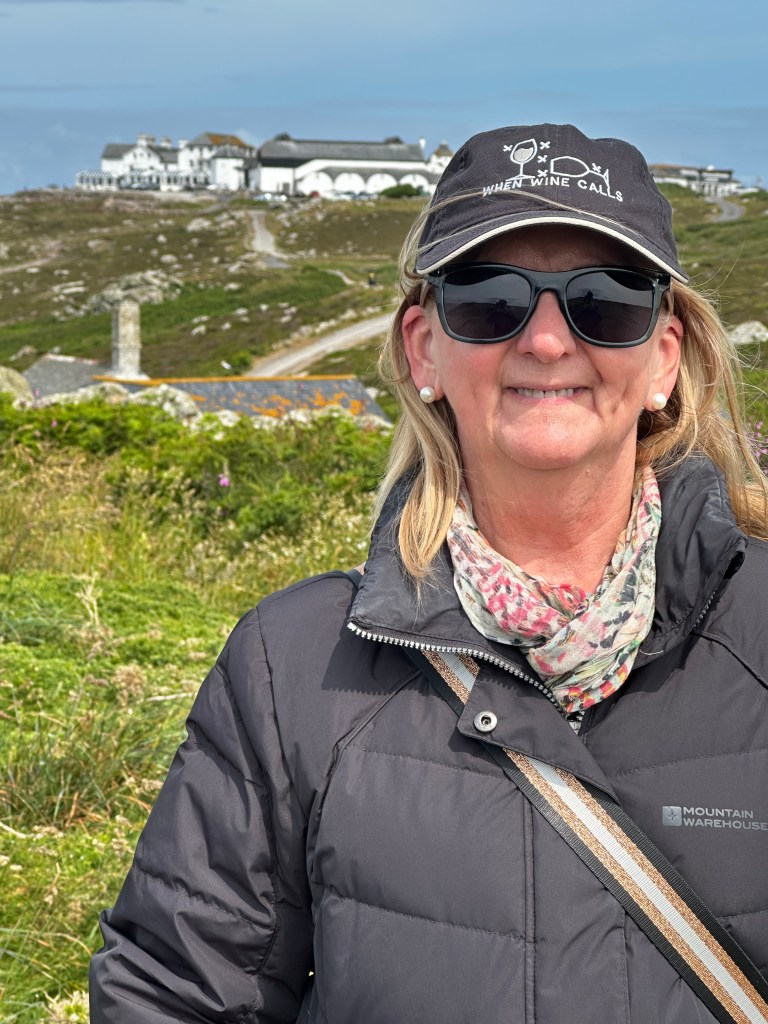
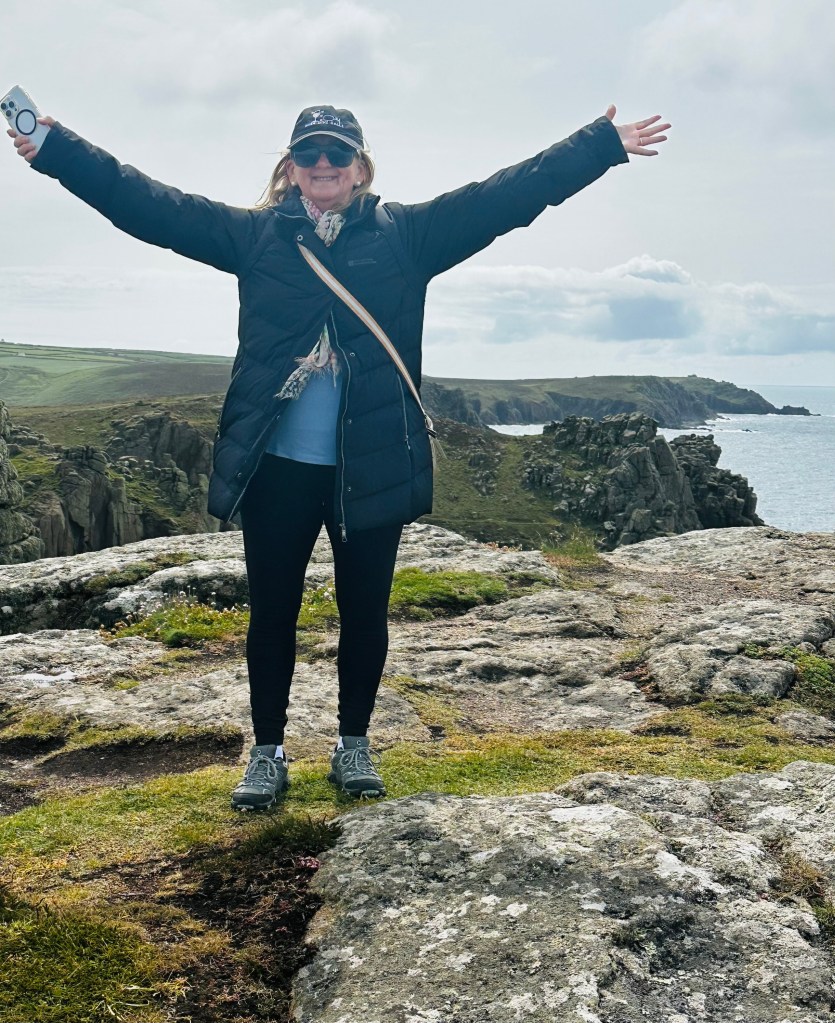

and had a drink in the local pub, aptly named the First and Last Inn in England.
Land’s End is a magic place if you ignore the tourist amusements they have established around the back of the hotel with the sunsets overlooking the Atlantic from the hotel simply amazing.
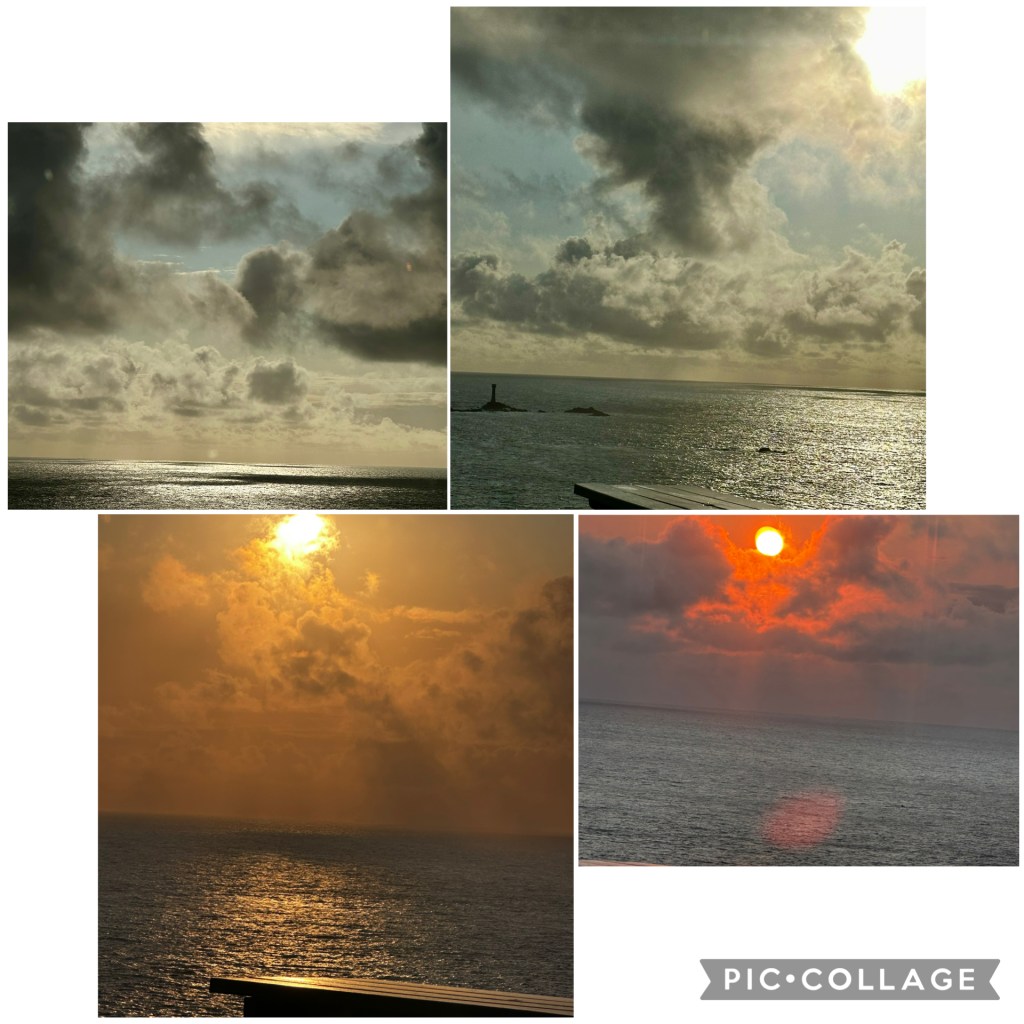
After leaving Land’s End we headed along the south coast for our next stop, Plymouth – a large naval town with stacks of nautical history. At Plymouth Pauline had located an apartment in what they called Admiralty House which previously had accommodated many of the Admirals of the British Navy prior to it being turned into private apartments.
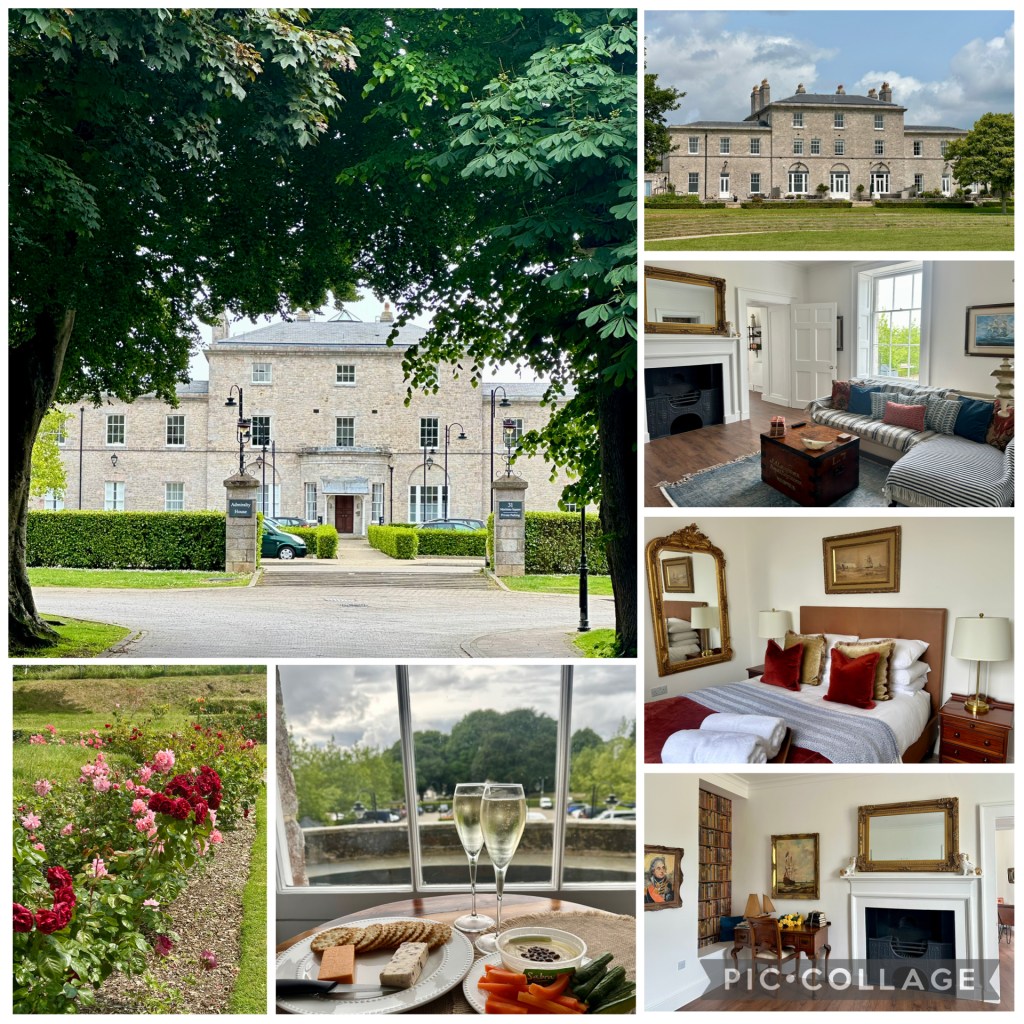

On the foyer walls were boards outlining all the navy hierarchy that stayed in the building over time enjoying a view over the harbour entrance. This would have to be one of the best apartments we stayed in our travels and was beautifully appointed throughout.
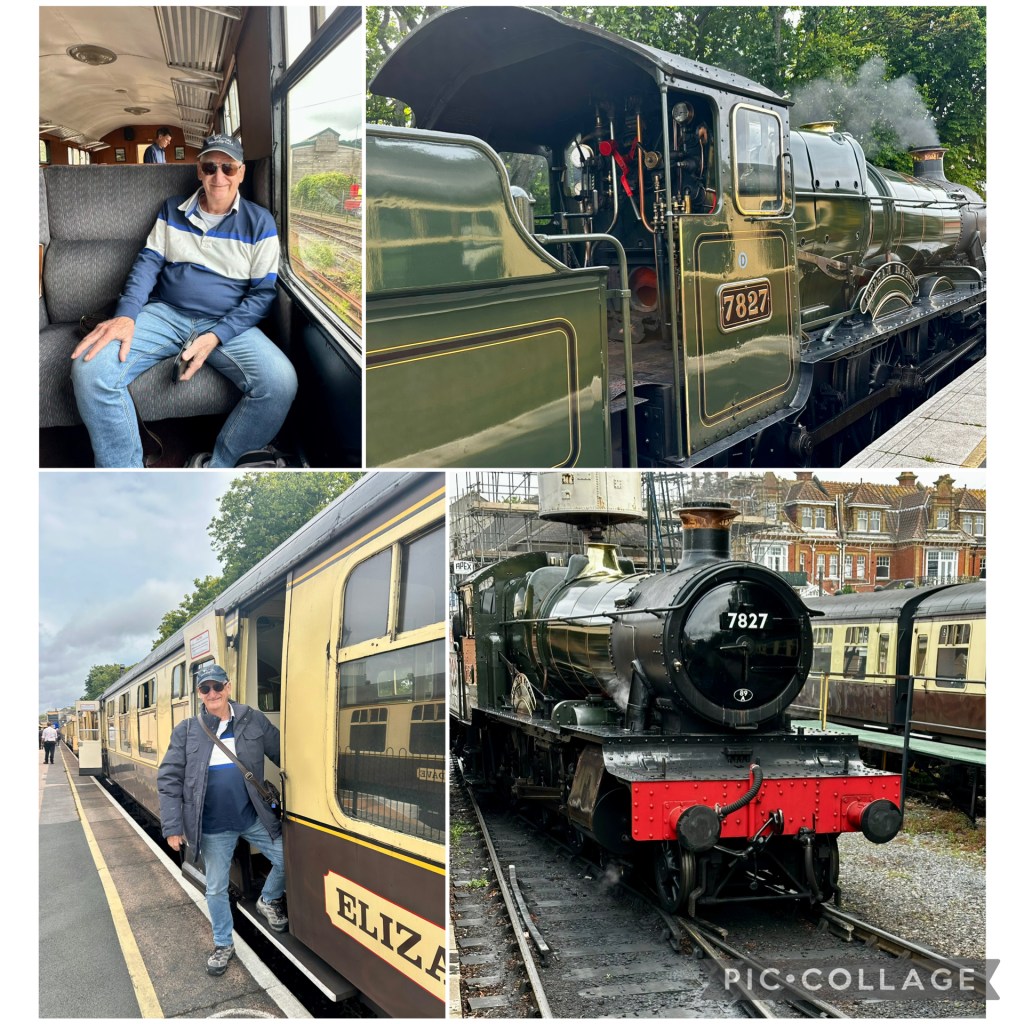
We had booked a unique trip for the next day through the Dartmoor National Park involving a bus trip from the market town, Totnes to Paignton at the head of the estuary of the River Dart in Devon, a steam train ride down to Kingswear/ Dartmouth and a cruise winding back up the river to our starting point.
On the way down to Kingswear you could see a row of colourful beach huts lined up on one of the beaches.

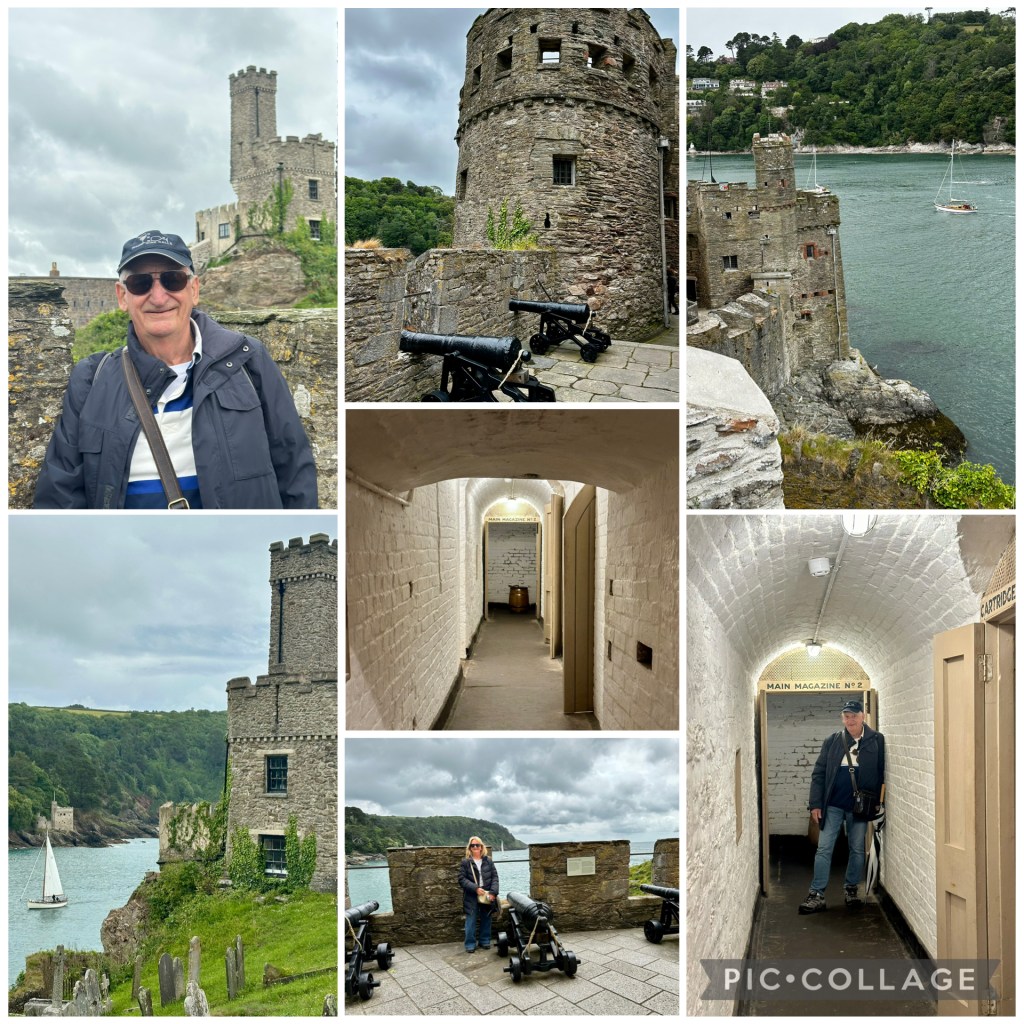
While the weather was not great it still was a fascinating trip which included a look through the artillery fort, Dartmouth Castle (built back in the 14th century to protect the town and harbour against French raids during the Hundred Years War) and on the cruise passing The Brittania Royal Naval College (BRNC) where purportedly Queen Elizabeth II met Prince Philip and also Prince William and Prince Harry attended.

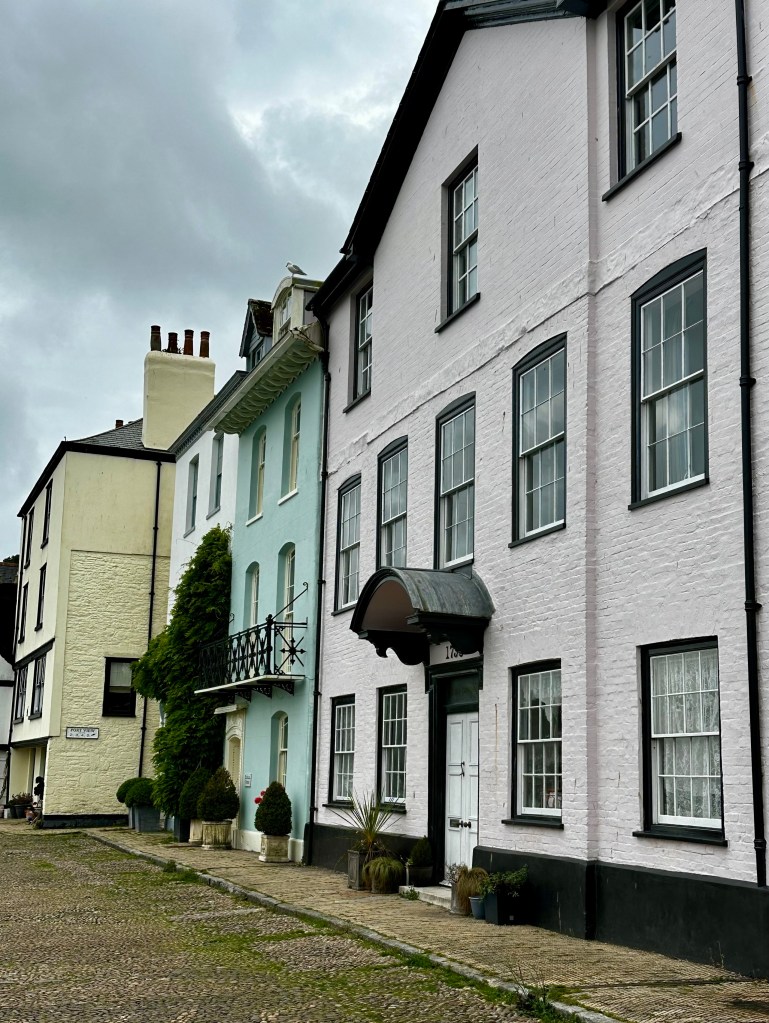
Our time in Devon and Cornwall had come to an end so the next day we headed back towards Bristol where we had booked accommodation in the enchanting city of Bath for a few days to conclude our UK countryside adventure.
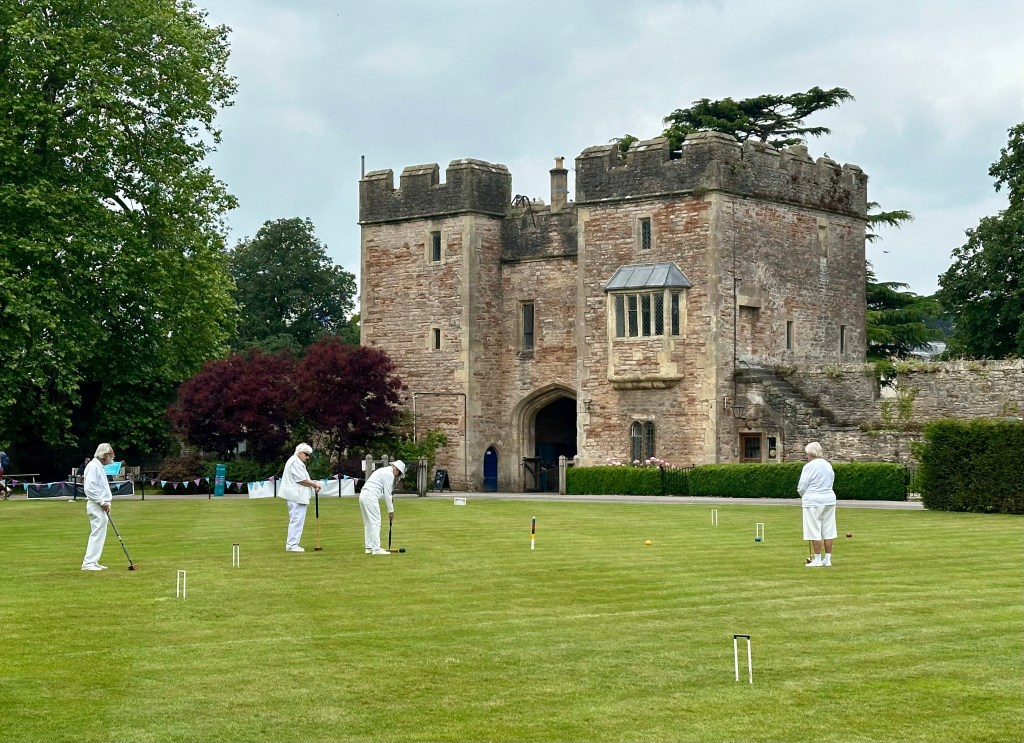
On the way we called in on Bishop’s Palace and Gardens at Wells (where the term “wells” purportedly originated from). The Palace and associate gardens have been home to the Bishop of Bath and Wells for over 800 years and is a stunning medieval palace complete with its own moat and water emanating from underground (albeit cold unlike the thermal hot waters in Bath a short distance away).
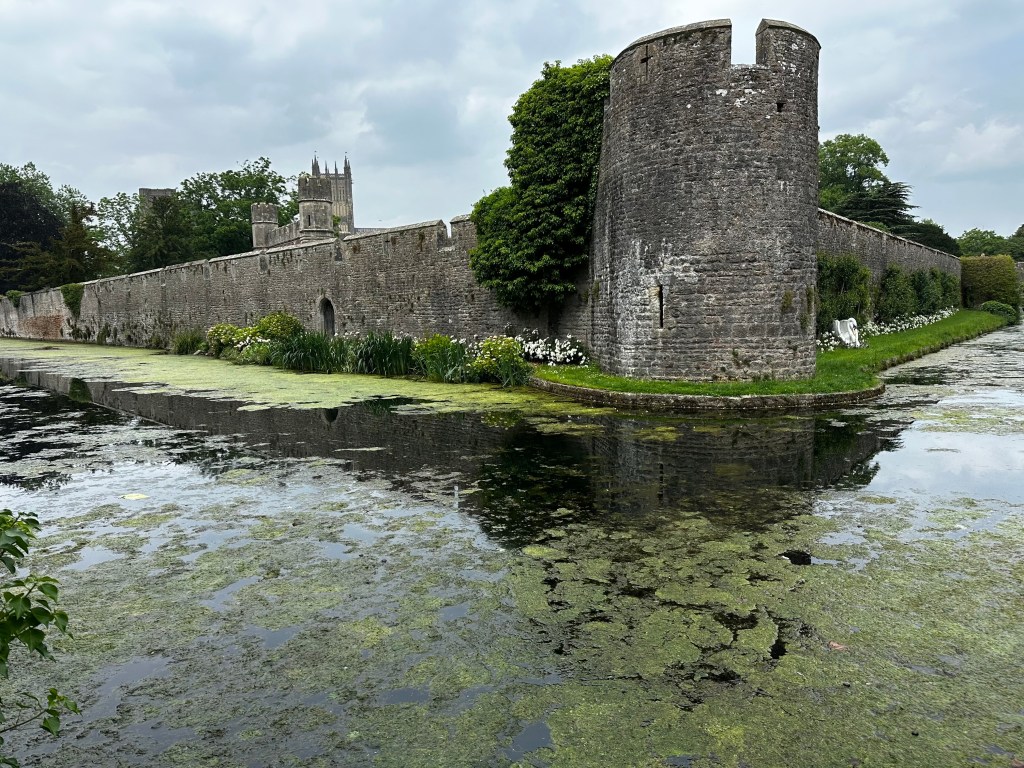
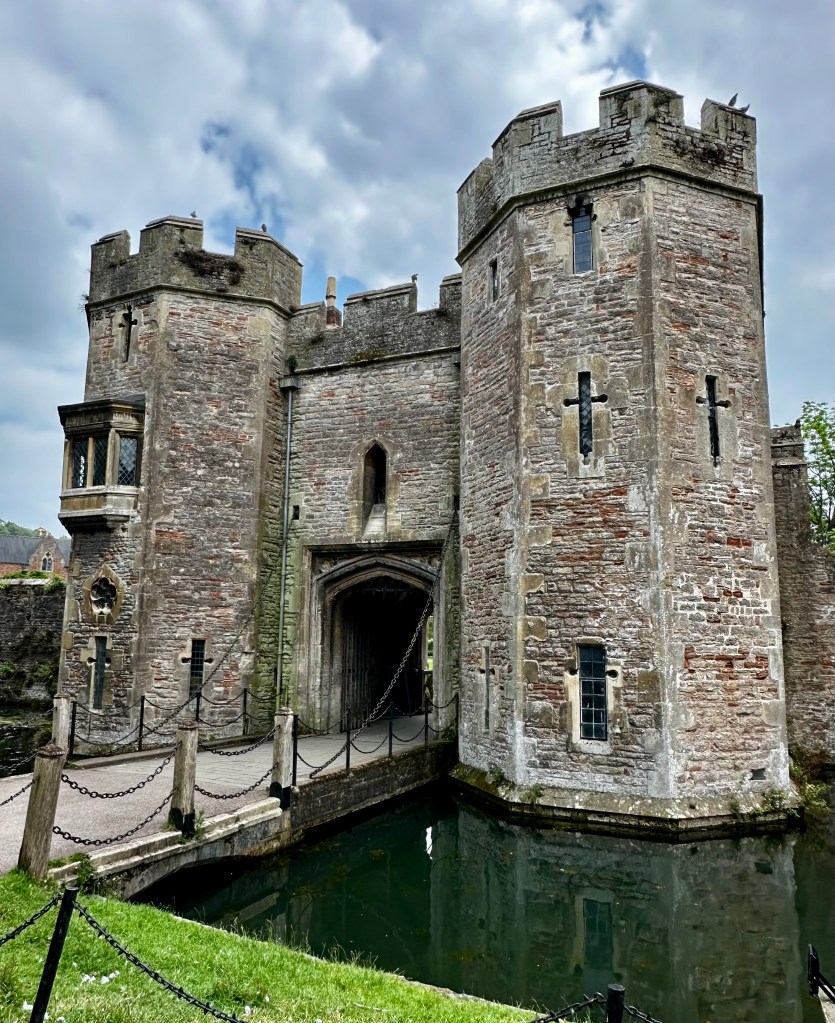
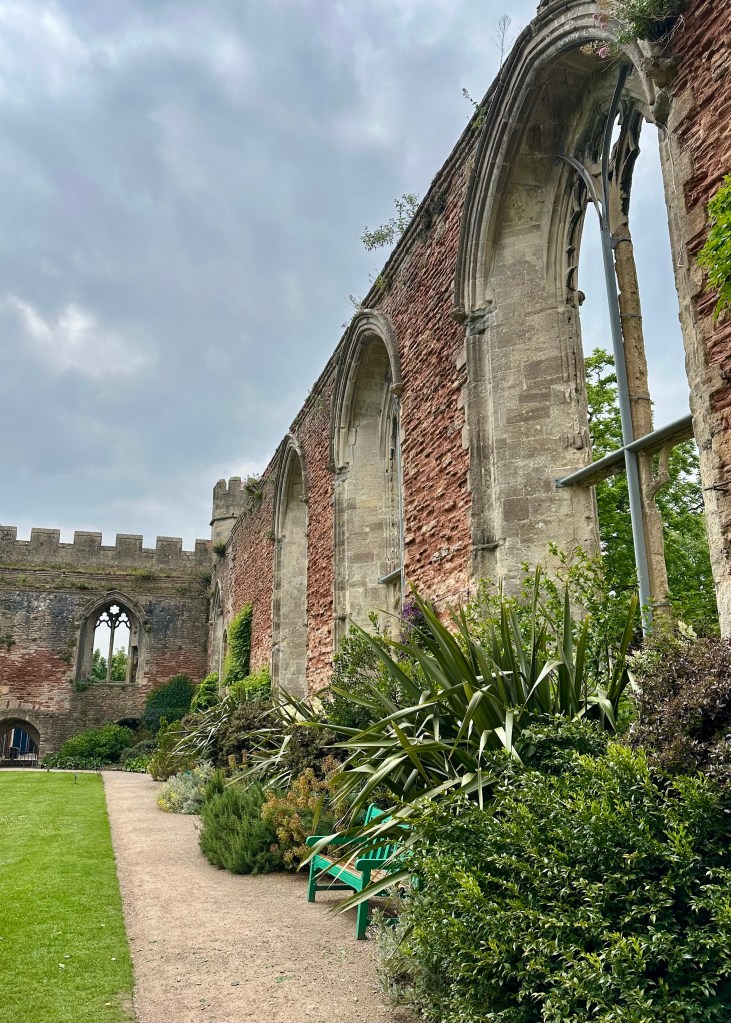

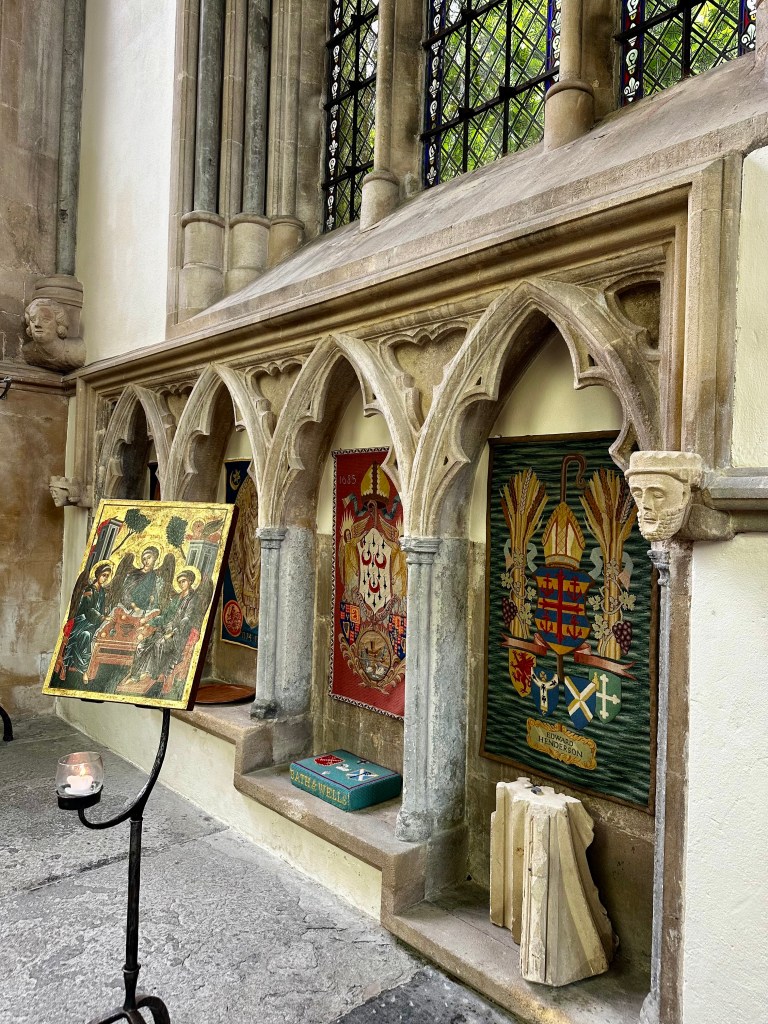

The lawns and gardens are magnificent and being located in the middle of the town are used by the locals for many activities including a game of croquet.

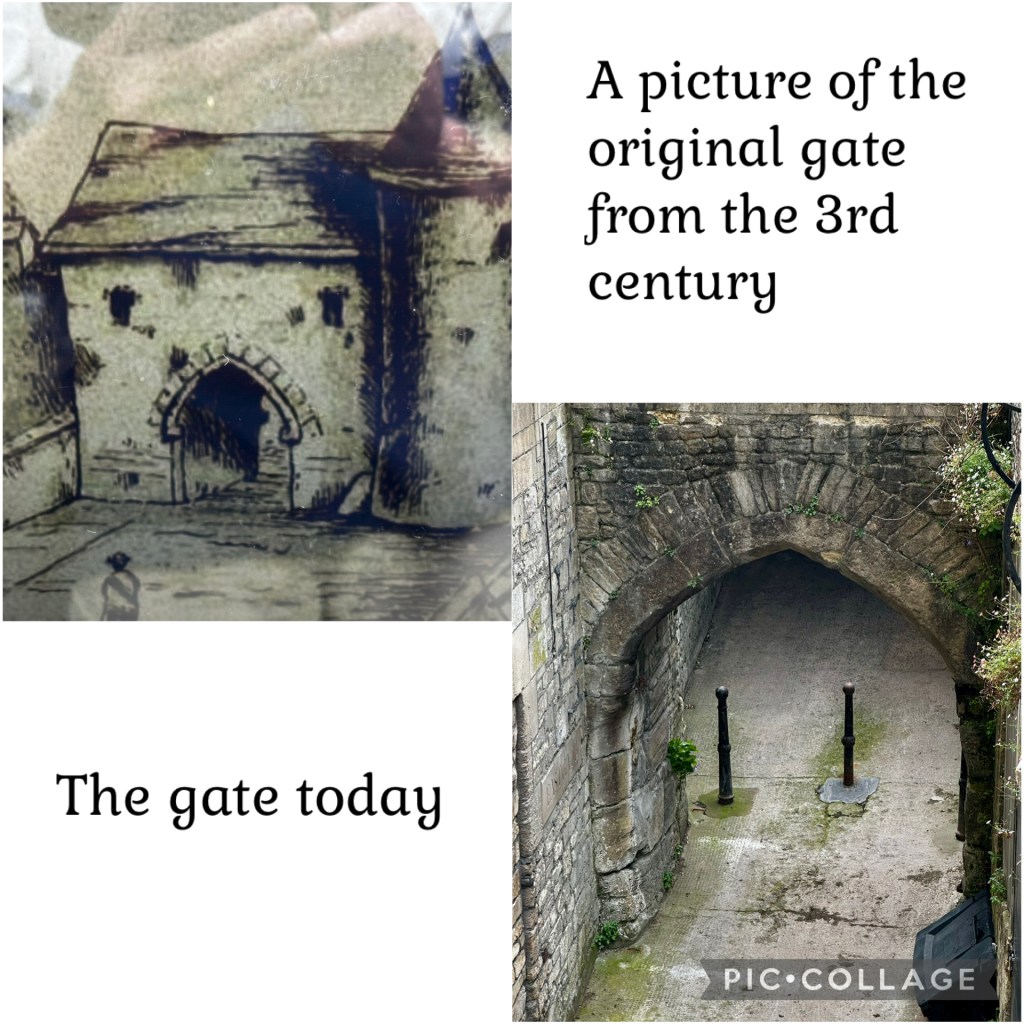
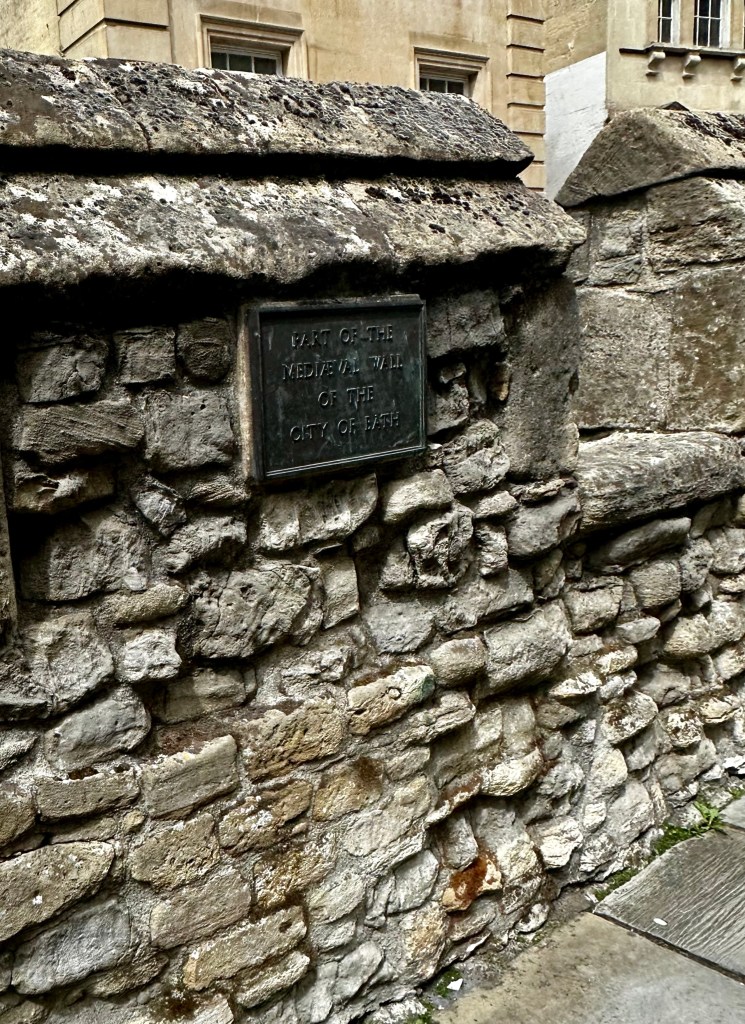
We last had been to Bath back in the late 1980’s and as you could imagine from a city dating back to the Romans it has not been allowed to change much, particularly in the old part of the city. It was great to be back to re-explore this famous city, so we arranged a city walking tour that traced around the path of the old Roman wall to discover what was left and that which is now hidden under years of rebuilding that has raised the street level considerably.
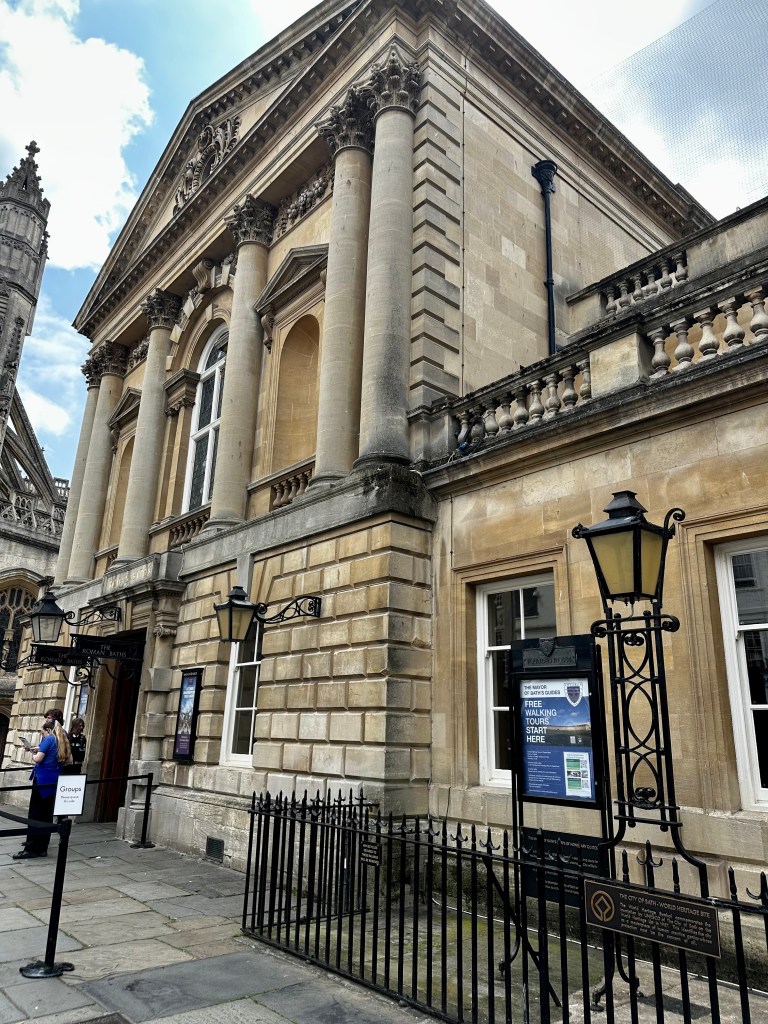
Bath is famous, of course, for The Roman Baths,
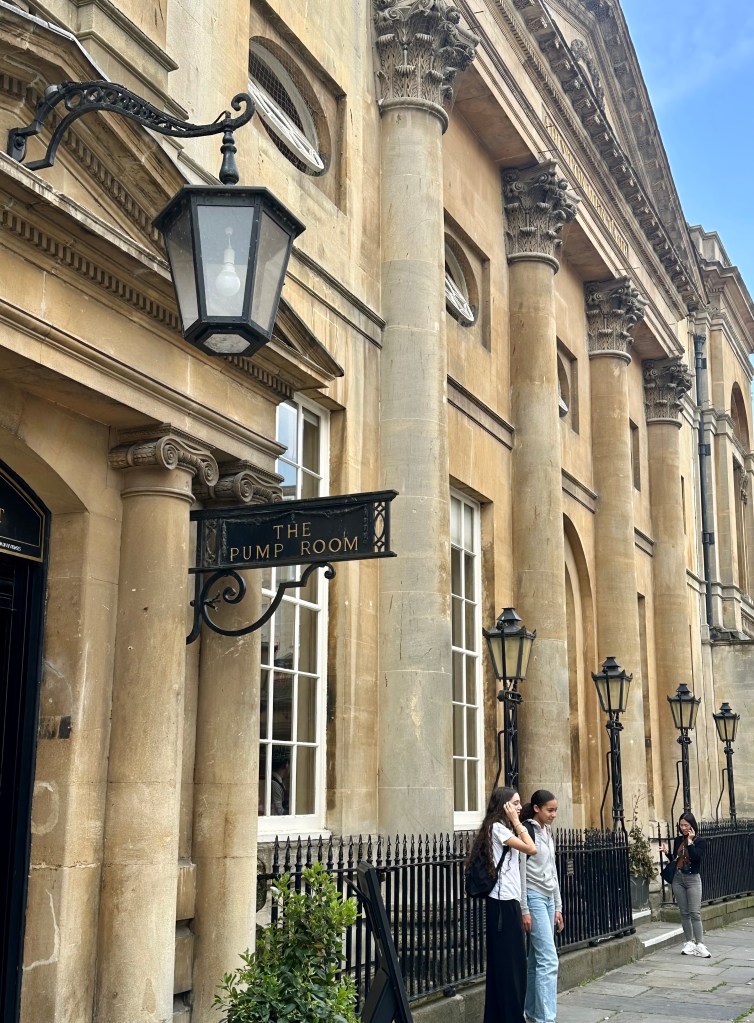
The Pump Room,

the Jane Austen Centre,
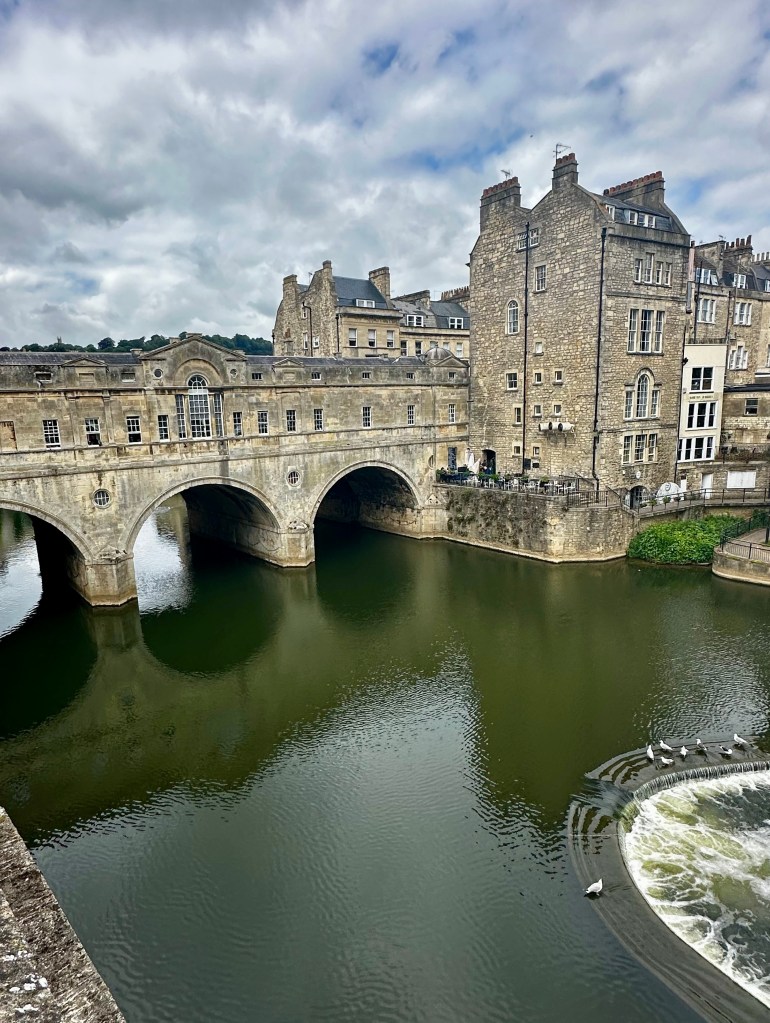
Pulteney Bridge,
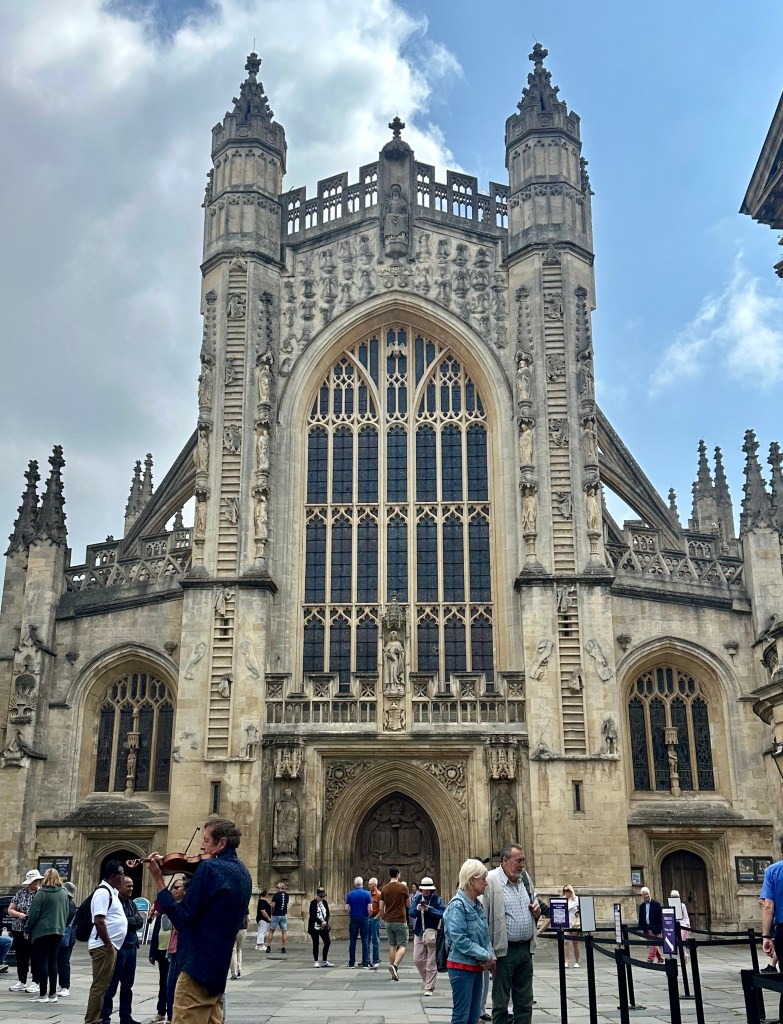
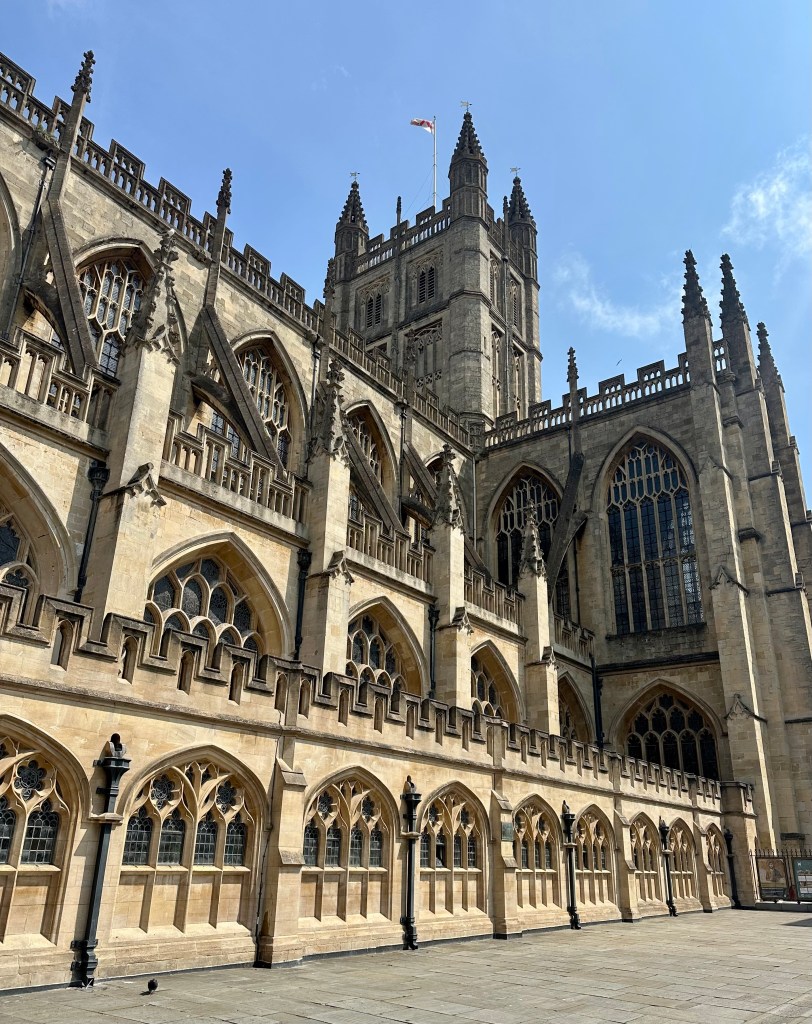
Bath Abbey,
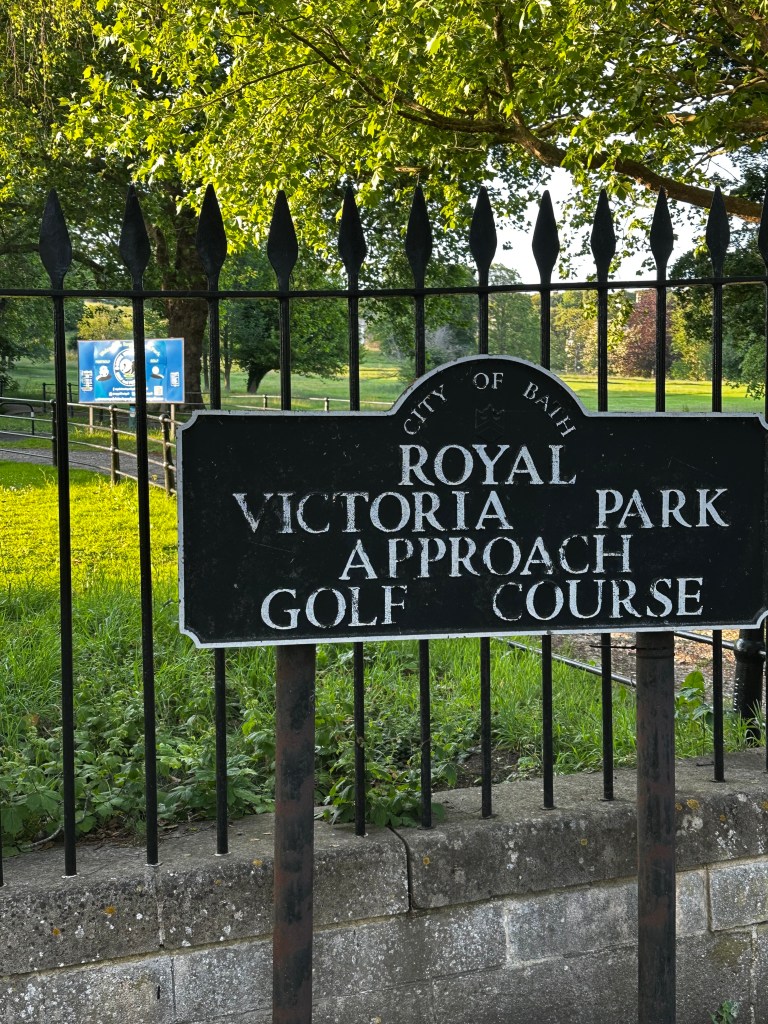
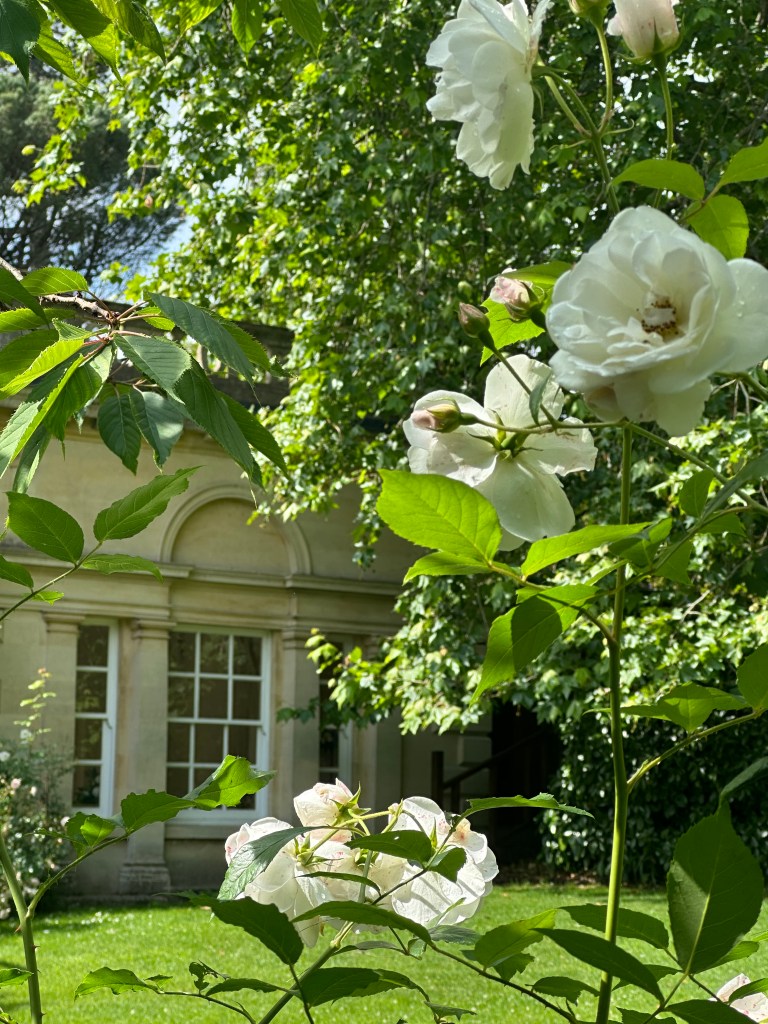
and the Royal Victoria Park & Botanical Gardens to name just a few.

We did not visit inside The Roman Baths or the newer alternate thermal baths on offer as tourism has made them unduly expensive and we have had similar experiences on our previous travels. Same for Bath Abbey which is now also charging to see inside like other abbeys and cathedrals in the UK and Europe.


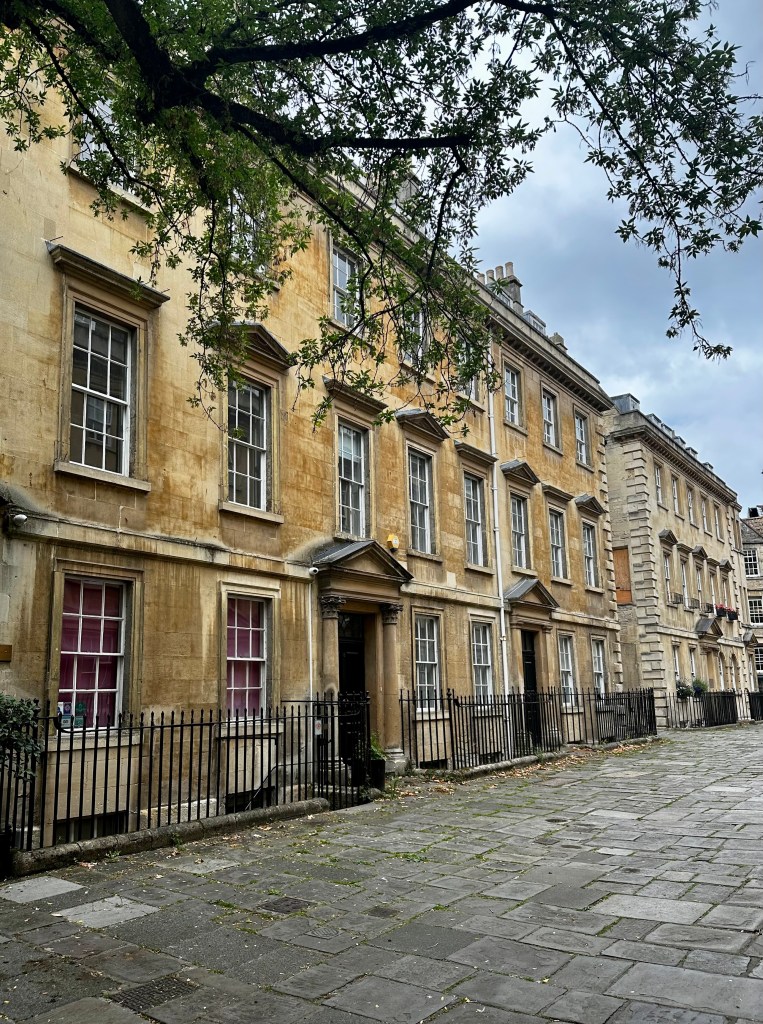
The architecture of the buildings in Bath is stunning and everywhere you look you see such gorgeous streetscapes.
On walking up through the majestic The Circus (a historic ring of townhouses forming a circle with three entrances built in the mid 1700’s)


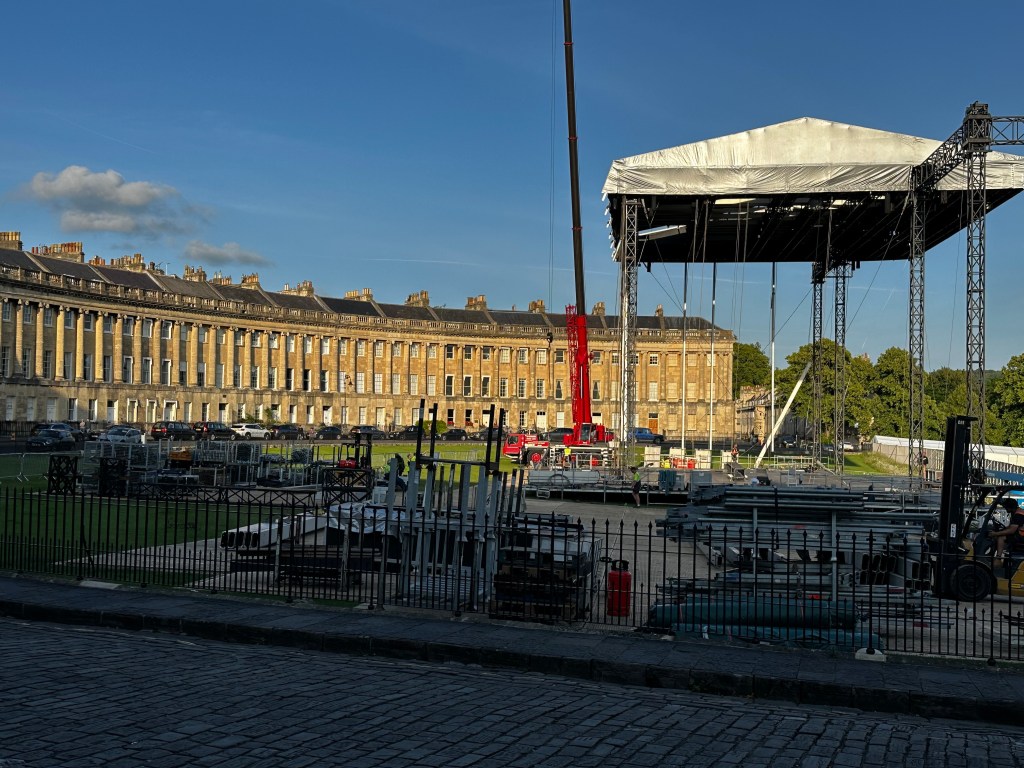
we reached the renowned Royal Crescent. The Crescent comprises a row of 30 terrace houses laid out in a sweeping crescent and one of the greatest examples of Georgina architecture in the UK. We were lucky enough to sight a red balloon above in the wonderful blue afternoon sky cruising over the city .

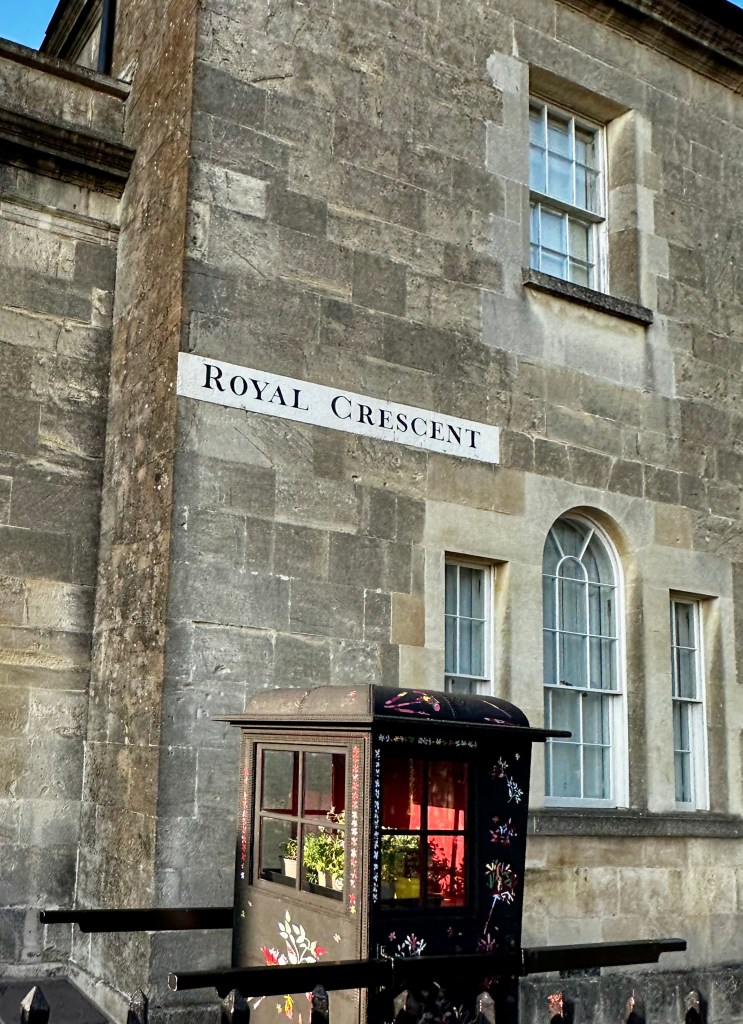

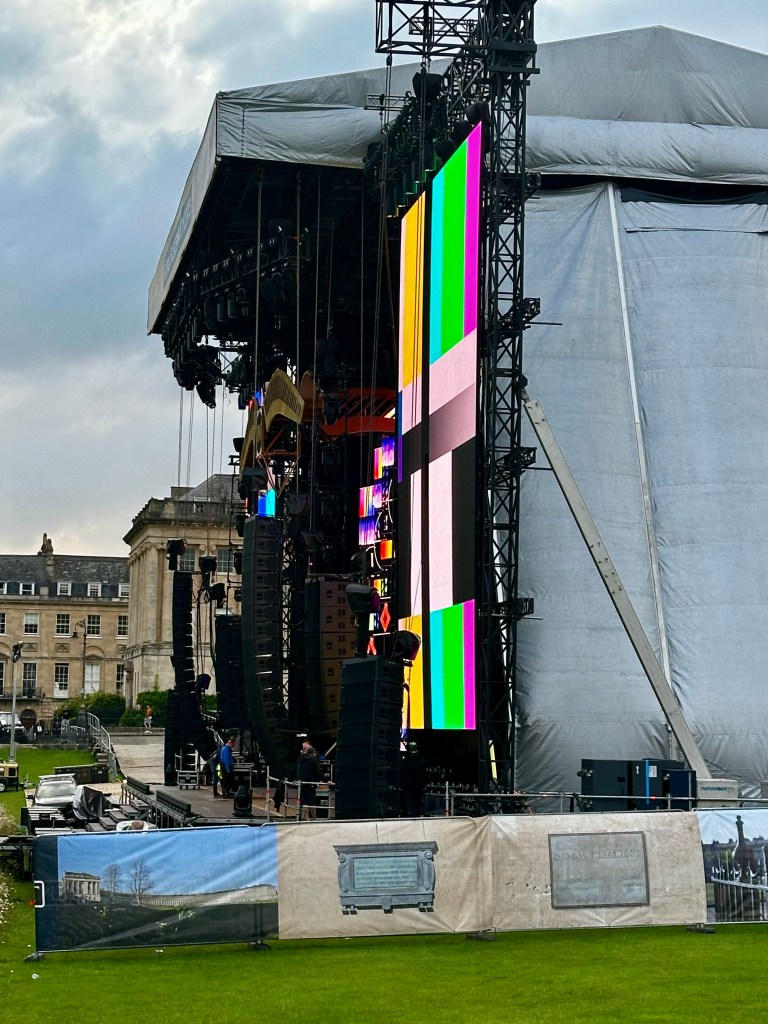
On arrival at the Royal Crescent we found to our surprise that on the lawn in front of the terraces was a huge stage being constructed for a Robbie Williams Concert being performed on the upcoming weekend. As impressive as the stage was it certainly detracted from the view of these impressive terraces overlooking Royal Victoria Park and down to the city.

During our exploratory walks each day we searched out the best local pubs and came across the oldest pub in Bath, Saracens Head dating back to 1713,
and the city’s smallest pub Coeur De Lion.

We enjoyed having a drink in both these wonderful, truly authentic establishments.
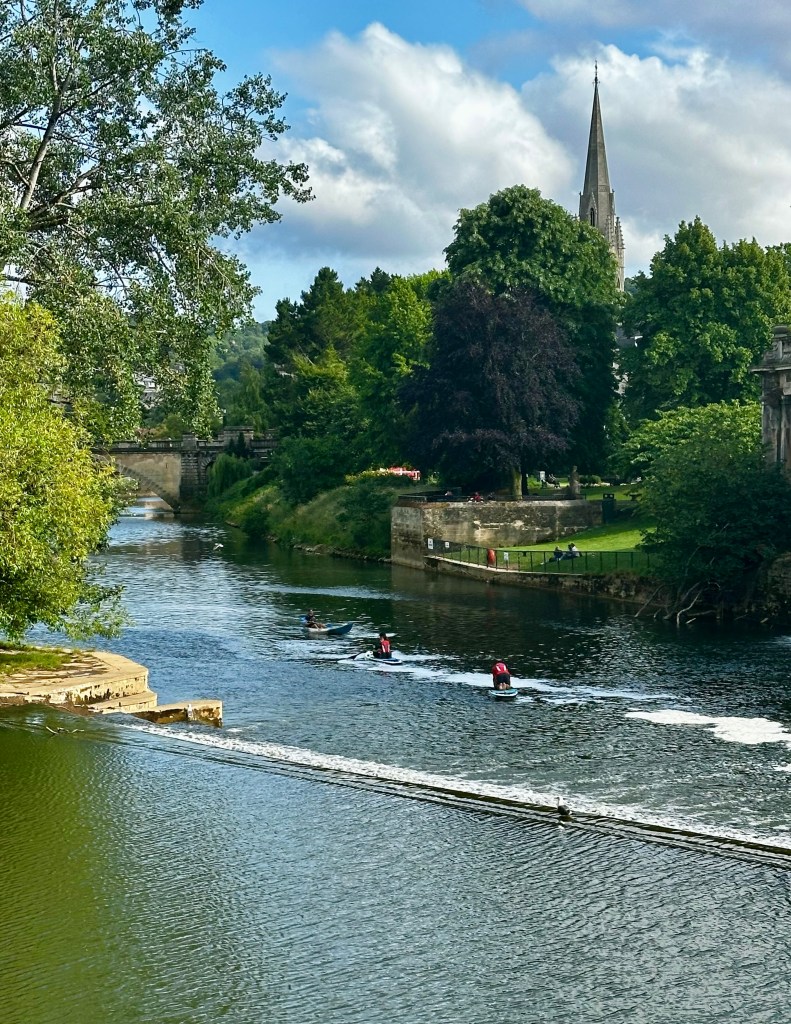
In the centre of the city near the Bath Abbey and the Pulteney Bridge is the River Avon than runs along the perimeter of one side of the old Roman wall and has a tremendous park providing space for tourists and locals to enjoy the city’s architecture.


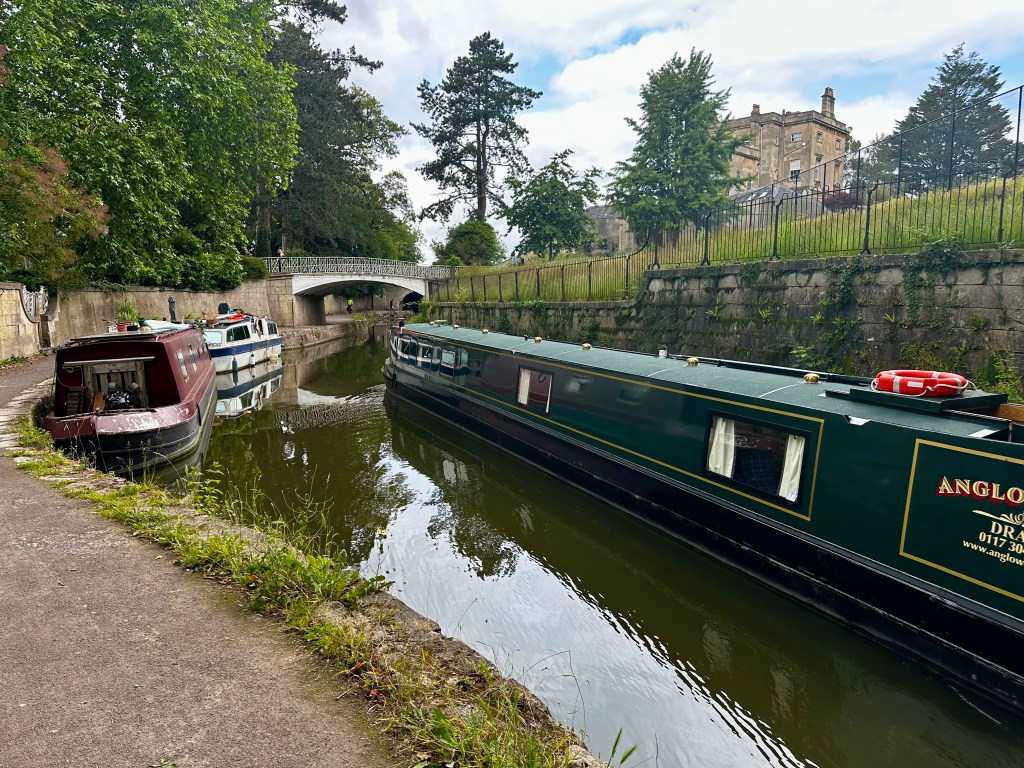
Walking over the Pulteney Bridge (interestingy one of only four bridges in the world to have shops across its full span on both sides dating back to 1770) we visited Sydney Gardens. Sydney Gardens is the oldest park in the city of Bath laid out in 1795 and was frequently visited by Jane Austen when she lived nearby No 4 Sydney Place. While there we came across a houseboat cruising up one of the many canals crossing the UK presumably on their way up to Bristol – this is certainly something we would love to do on one of our future travels to the UK.
Bath is a wonderful city with so much history and beauty, and we thoroughly enjoyed the days we had there walking around soaking up the atmosphere. If you get the opportunity to visit you wont be disappointed.
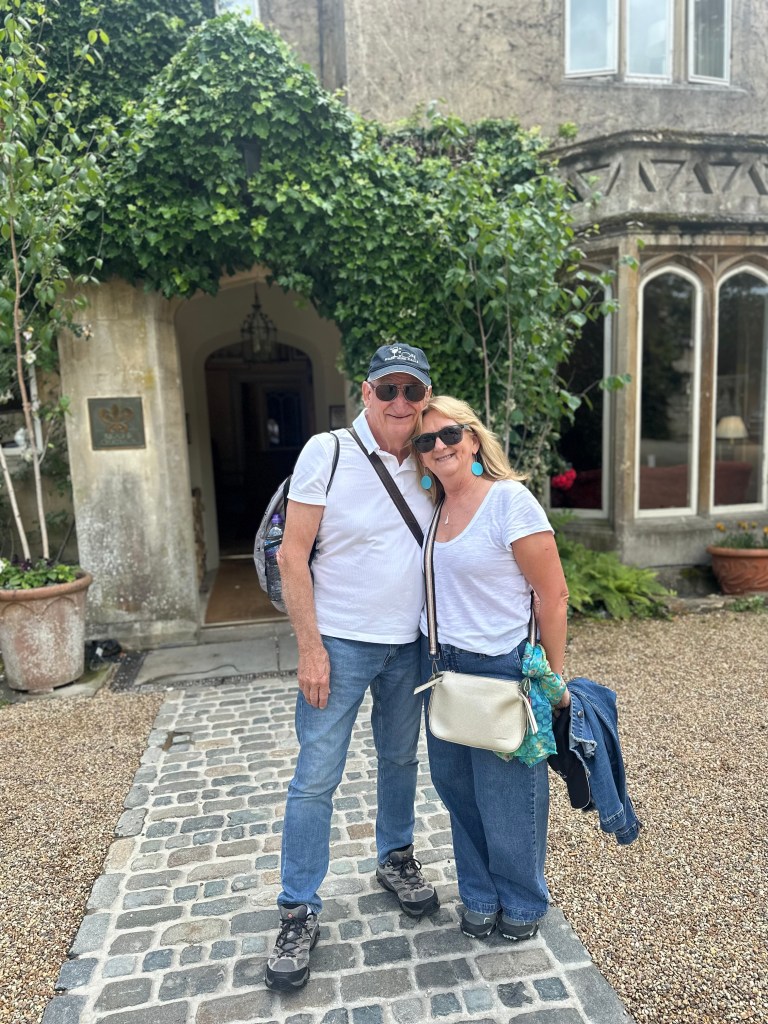
The next day it was time to drive back to Bristol Airport but not before our GPS map again sent us down some dubious country roads as short cuts to the airport. They certainly were not “A” or “B” rated roads and tested you’re driving skill and nerve with sharp blind bends and high hedges on both sides extending onto the small roadway preventing any visibility ahead at all.

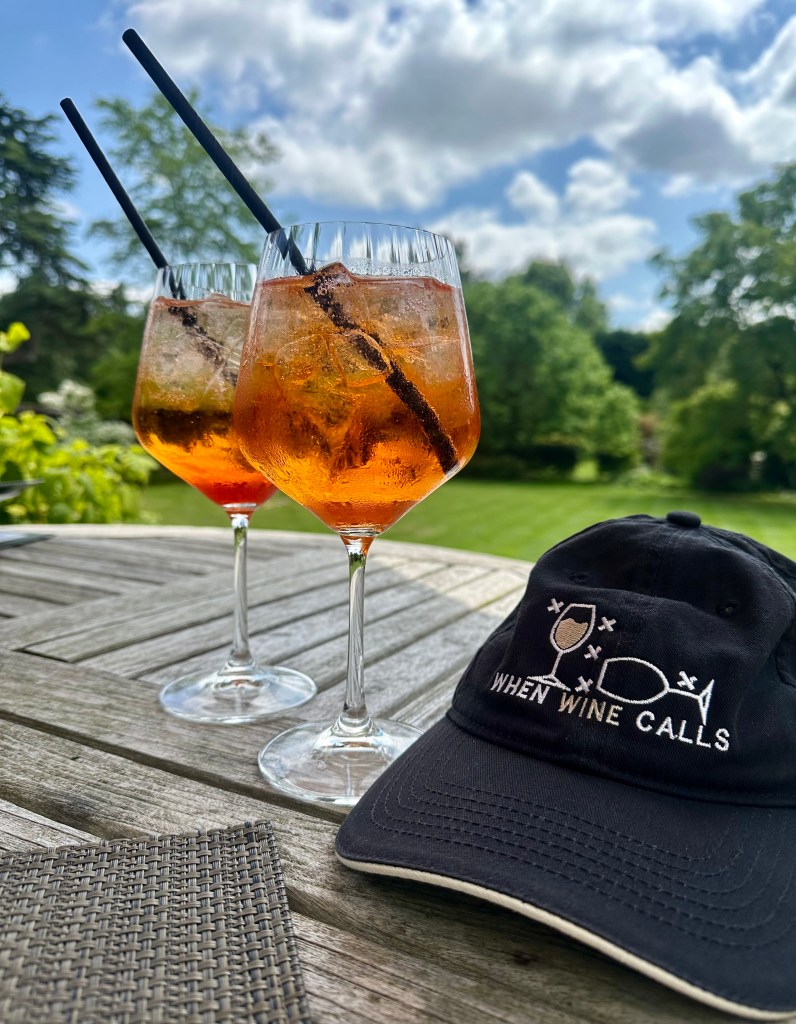
We eventually made it to the airport though and after passing through security headed to the bar for a few wines to discuss the future use of this navigational aid.
Join us next time as we head to Dublin for our tour of Ireland – until then as always, take care.
Bruce & Pauline
 When Wine Calls
Leave a comment